
Jade bracelets, as treasures of Eastern jewelry culture, not only embody the profound heritage of millennia-old jade culture but also integrate the exquisite aesthetics of modern times. Whether serving as a collection investment, a daily accessory, or a gift to convey blessings, jade bracelets hold a significant position with their unique charm. However, given the vast price range in the market, spanning from a few hundred yuan to hundreds of millions of yuan, how to select, wear, and understand the cultural connotations of jade bracelets has become a focal point for many consumers. This article will unveil the mysteries of jade bracelets from four key dimensions: selection tips, pricing logic, wearing taboos, and the symbolic meanings of bead counts.
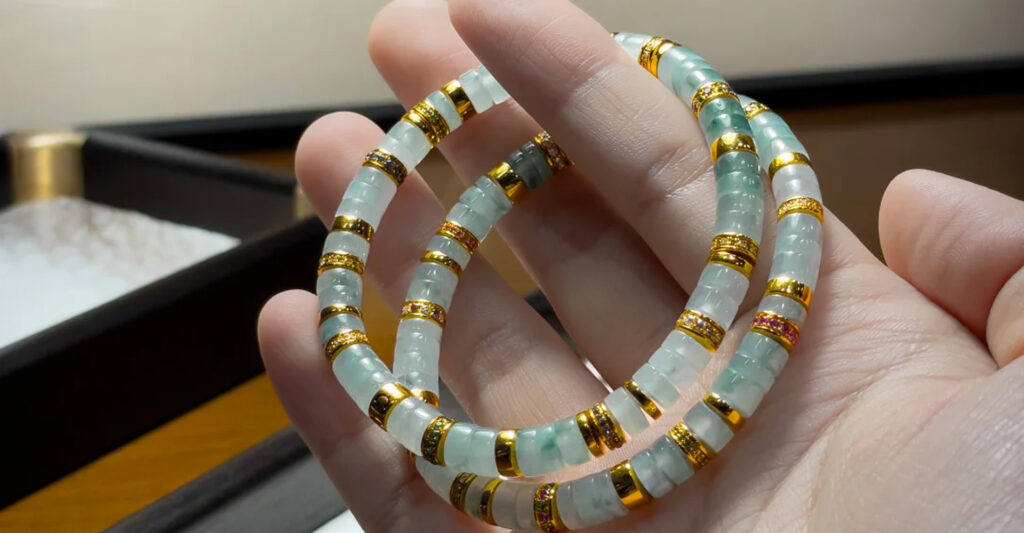
How to Choose a Jade Bracelet? Here Are 5 Key Points You Must Know!
Among jade products, common styles include rings, bangles, bracelets, pendants, and decorative pieces. Among them, the knowledge about jade bracelets is not widely known, leading many people to feel perplexed about how to choose a cost-effective one when making a purchase. Moreover, some believe that selecting an outstanding jade bracelet can give them an edge in showcasing personal charm. So, how do you choose a suitable jade bracelet? Today, I’ll explain how to make the right selection.
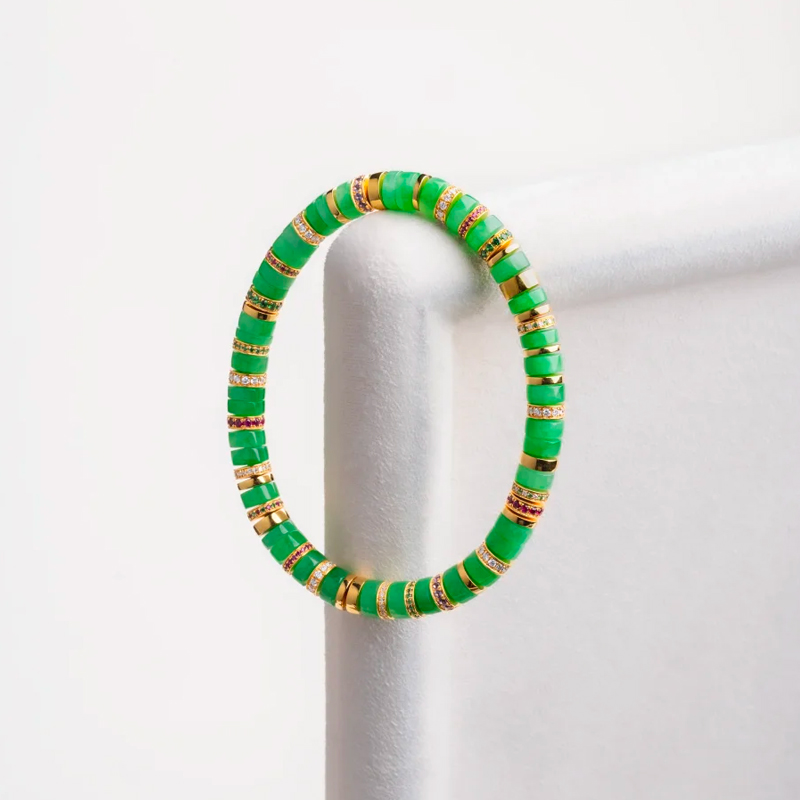
Color of the Jade Bracelet
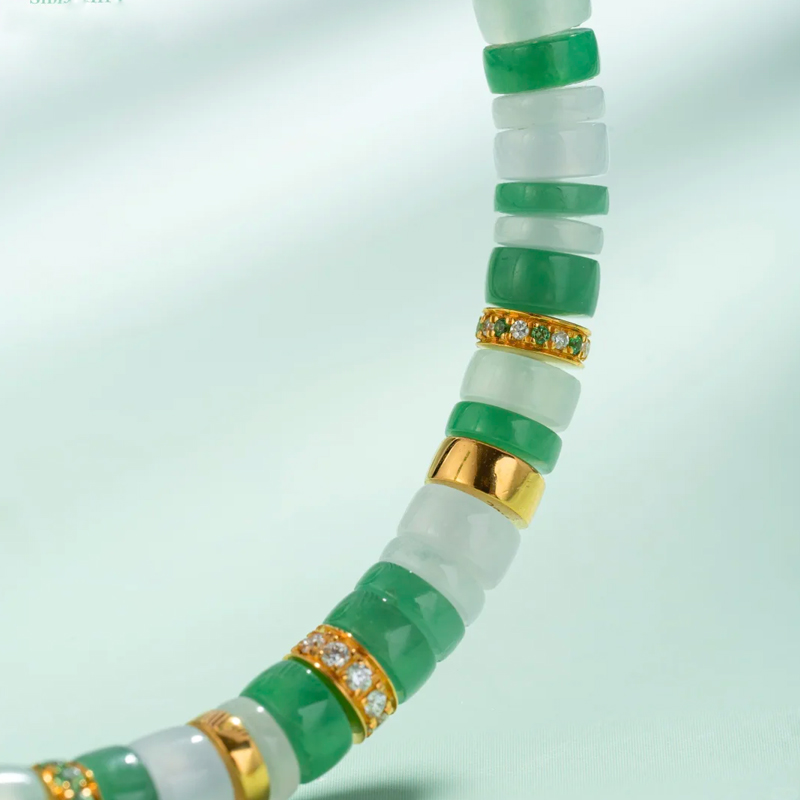
When selecting a jade bracelet, start by examining its color. Check if the color is pure, vibrant, and uniform, and use a spotlight flashlight to inspect for any hidden color variations. Jade with vibrant, pure, and uniform colors is of higher quality.
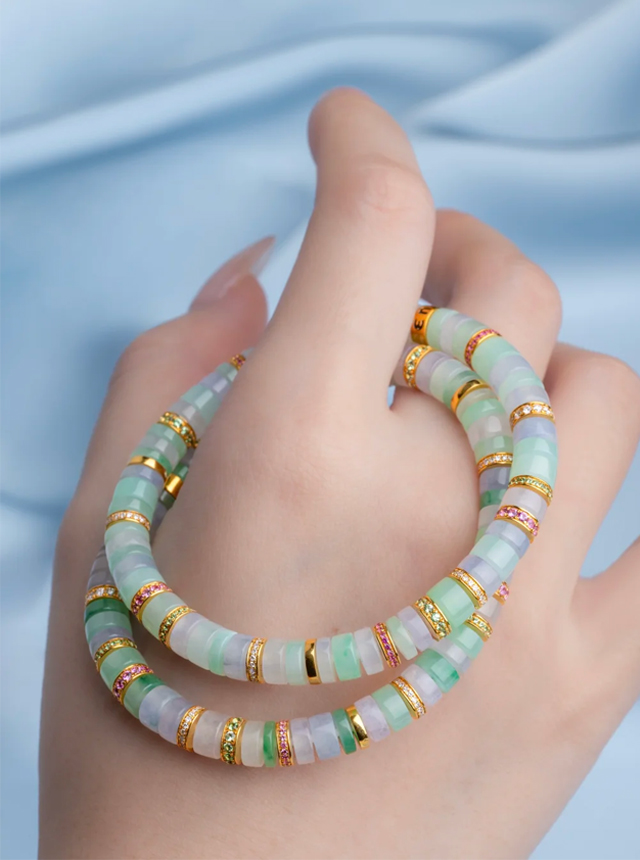
The beads of a jade bracelet should ideally have a consistent and orderly color distribution. Otherwise, it will lack aesthetic appeal and negatively impact its appearance and value. If each bead features multiple color tones, the value of the bracelet can significantly increase, surprising many. A good jade bracelet boasts pure and bright colors, with better saturation translating to higher value. Among them, green jade bracelets are the most abundant and popular in the market.
Since the colors of natural jade often appear in block, spot, or filamentous distributions, a bracelet with color spread throughout its entirety commands a high market value and is considered high-grade jade. Among jade colors, emerald green holds the highest value, followed by red and purple. Within green hues, a fresh, slightly yellowish “seedling green” is of superior quality, followed by gemstone green, river water green, and oily green, with uniform distribution being preferable.
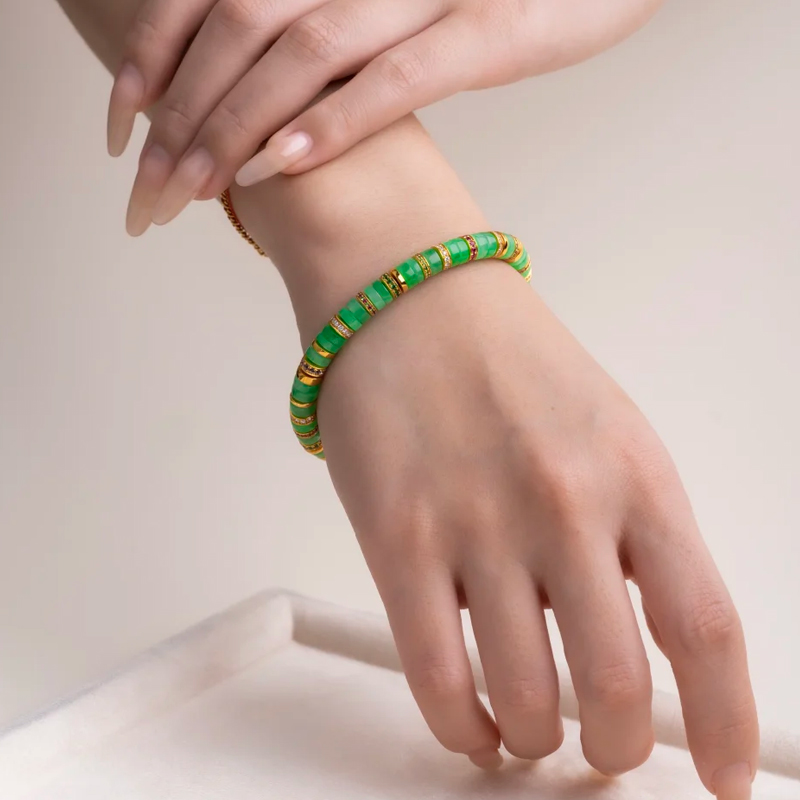
Beads of the Jade Bracelet
Generally, jade bracelets with beads of different diameters are suitable for different types of individuals. For example, a bracelet with 12mm beads is suitable for slender men or women with wider wrists, as it looks neither too conspicuous nor understated, subtly enhancing the wearer’s temperament. However, most men are better suited to wearing jade bracelets with 14mm beads, which are also more abundant in the market.
Water Head of the Jade Bracelet
In the jade industry, the term “jade’s kind and water” combines the concepts of the jade’s texture (kind) and transparency (water). Texture refers to the fineness of the jade’s flesh, while water refers to its transparency. Since the kind and water of jade are synonymous with the quality of its flesh and are crucial factors determining its price, it’s essential to first examine the kind and water when selecting a jade bracelet.
The water head has a critical impact on a jade bracelet, closely related to its transparency. People often describe it using terms like “a few points of water.” The longer the water head, the better the impression it gives. Therefore, a piece of jewelry cannot rely solely on color; it must also possess a good water head. You can also observe the transparency of the jade bracelet under strong light; higher transparency indicates better jade quality. Additionally, consider the craftsmanship of the bracelet; look for smooth surfaces, good polishing, and proper shaping. Some bracelets may have cracks, so it’s best to choose those without or with minimal flaws.
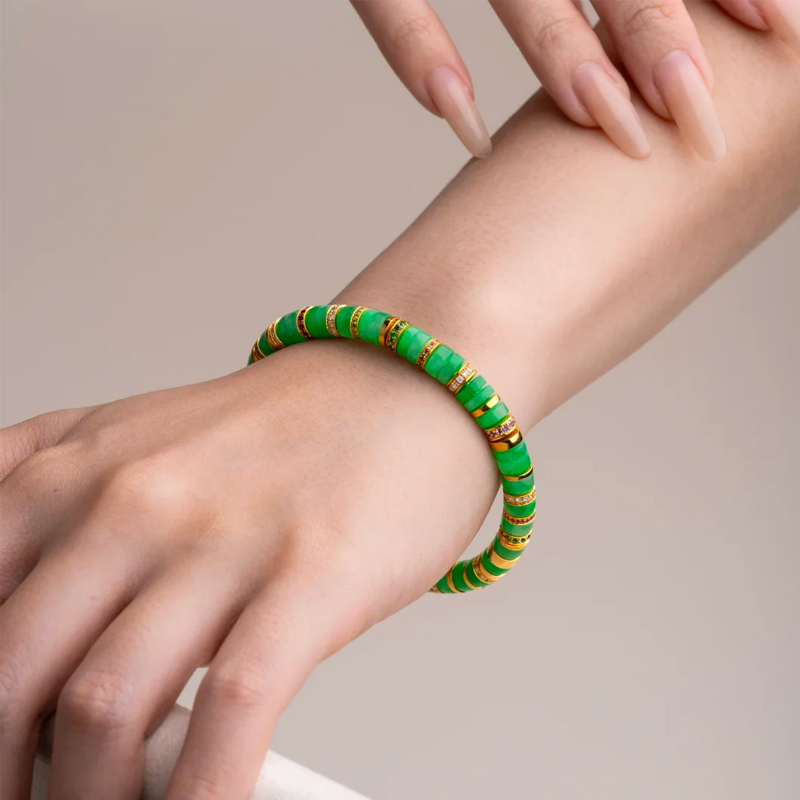
Kind of the Jade Bracelet
In fact, the kind and water of jade are often discussed together. Only when both are present can the overall appearance of the jade bracelet be significantly enhanced, giving it unique charm. The better the kind and water, the more valuable the bracelet. Each bead should also be uniform and consistent. Furthermore, examine the craftsmanship; check if the beads are perfectly round, as irregularly shaped beads are less valuable. Look for scratches; numerous scratches significantly reduce its value. Ensure the beads are of consistent size; a bracelet with beads of varying sizes also affects its value.
Style of the Jade Bracelet
Currently, jade bracelets on the market come in roughly two styles. One style incorporates various motifs, with jade beads carved into different shapes to form the bracelet. This style features complex carving and clever design. The other style is entirely plain-carved, with a simple and elegant shape.
In fact, the beads of a jade bracelet have high requirements for the size of the jade material. After all, the larger the size, the more beads of a specific diameter or quantity are needed.
Why Is There Such a Big Price Gap in Jade Bracelets? Unveiling the 5 Major Factors Affecting Their Value!
Through long-term experience accumulated in the industry, there exists a set of visual criteria for assessing the quality of jade, summarized by the five characters: “kind, color, water, base, and cracks.” Mastering these criteria enables one to judge the value of jade. Below, I will explain these five key factors influencing the price of jade.
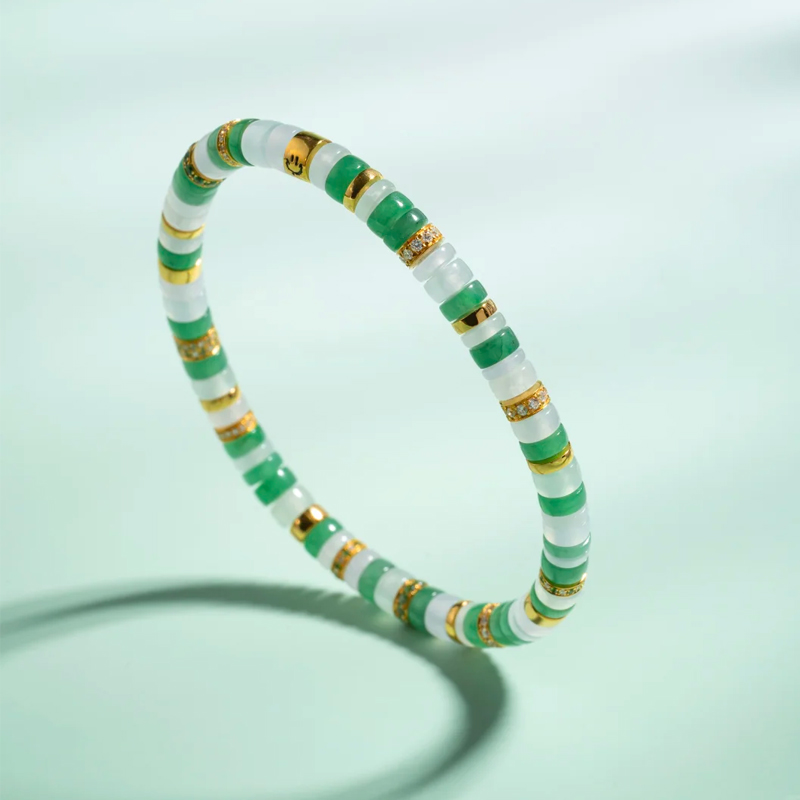
Key Points Regarding “Kind”
The “kind” refers to the structural condition of jade, representing its overall quality. Jade with a fine, uniform, and dense structure is termed “old kind,” while the opposite is referred to as “new kind.” Jade of good kind, due to its high structural density, exhibits strong reflectivity and refractive index, giving it an appearance surrounded by a “halo” or “treasure glow,” making it visually stunning.
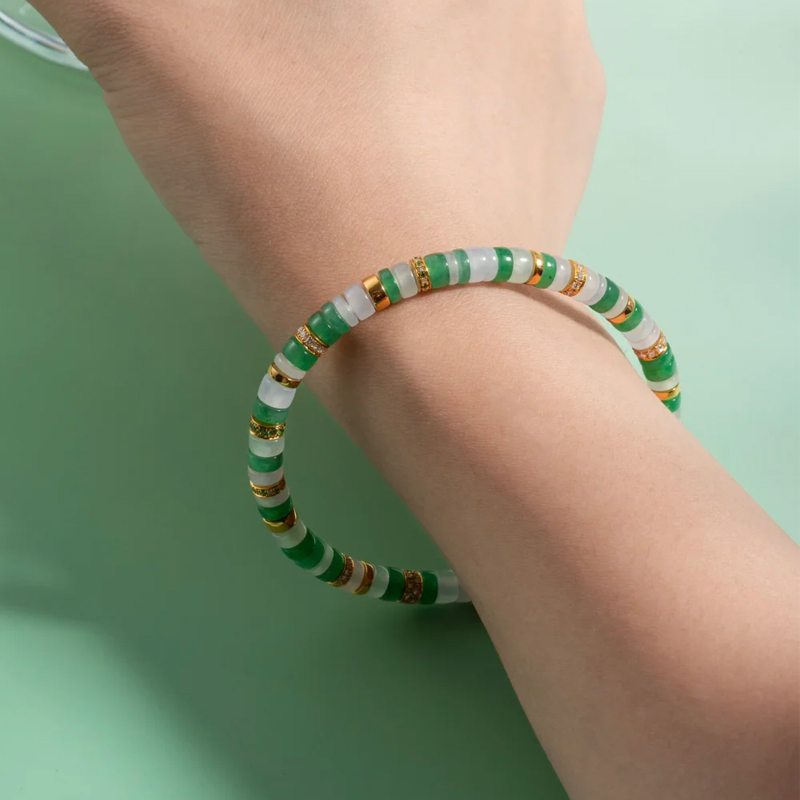
Key Points Regarding “Color”
“Color” refers to the hue of jade and is another crucial factor in evaluating its value. Jade comes in a variety of colors, with green being the most precious. The assessment of color typically includes the following aspects:
Intensity: The depth of the color; generally, the more intense the color, the higher the value.
Purity: The cleanliness of the color; colors without impurities or mixed hues are more desirable.
Uniformity: The evenness of color distribution; the more uniform the color, the more valuable the jade.
Among green jades, imperial green and vivid green are the most precious. Additionally, jades with purple, red, and yellow hues also have a certain market presence.
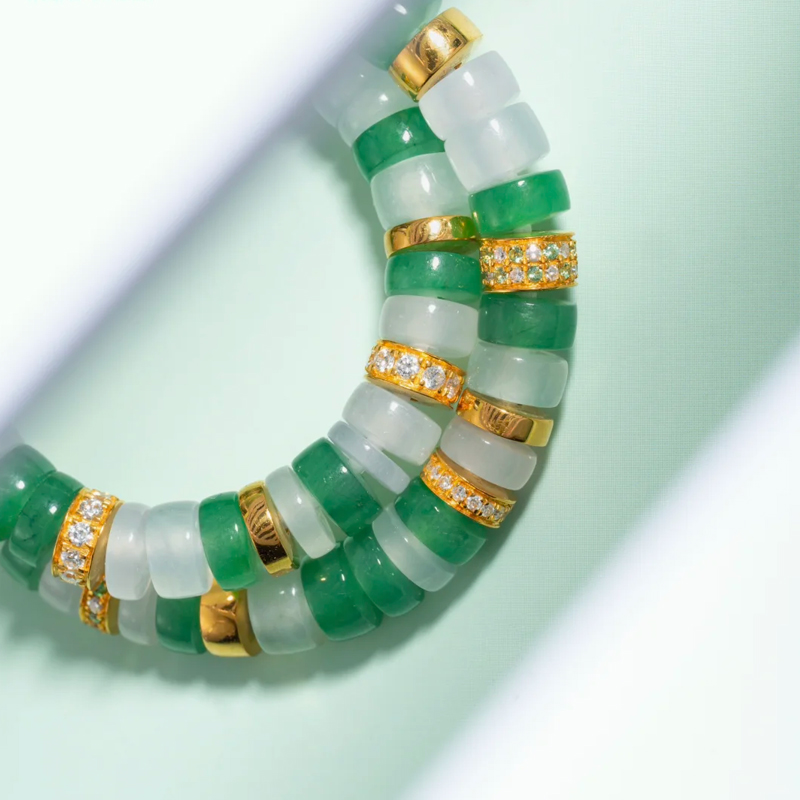
Key Points Regarding “Water”
“Water” refers to the transparency of jade, reflecting its ability to transmit light. The “water head” of jade is typically classified into the following grades:
Ten points of water: Jade is almost completely transparent, allowing light to pass through entirely.
Nine points of water: Extremely high transparency, achieved by only a very few jades.
Seven points of water: High transparency, but slightly lower than “ten points of water.”
Five points of water: Moderate transparency, a common grade in the market.
Three points of water: Low transparency, making it difficult for light to pass through.
The better the “water head,” the higher the value of jade, as highly transparent jade is rarer.
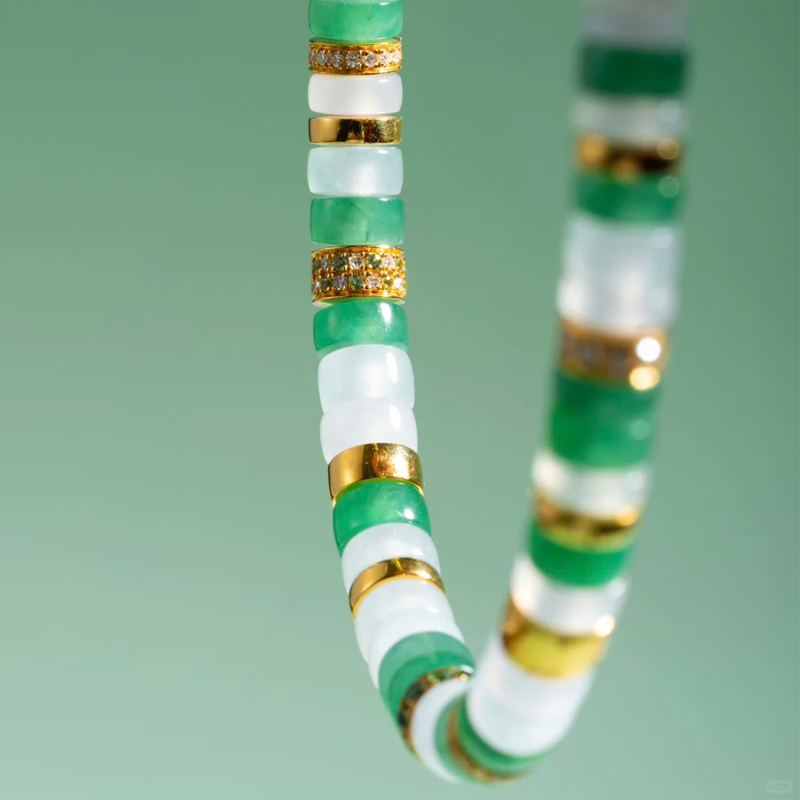
Key Points Regarding “Base”
The “base” refers to the purity of the part of jade excluding its color. It is closely related to both the kind and water of jade and serves to complement and enhance the color.
Key Points Regarding “Cracks”
“Cracks” refer to fissures or fractures within jade. Top-quality jade artifacts almost never allow any cracks, while ordinary artifacts should also exclude significant breaks or large cracks.
These five factors determining the value of jade, especially the first four, can be considered both interrelated and independently existing. Generally speaking, artifacts with excellent kind and color also possess superior water and base qualities. However, if the water quality is poor, the jade will appear murky and lack clarity, directly affecting the value of its kind and color. Cracks are also a significant factor influencing the value of kind and color.
What Are the Considerations When Wearing Jade Buddhist Bead Bracelets? Avoid These Taboos at All Costs!
In the resplendent galaxy of jade culture, jade Buddhist bead bracelets have become a favorite among numerous jade enthusiasts due to their unique charm and profound cultural connotations. They are not only exquisite ornaments but also carry people’s prayers and blessings for a better life. Ninety percent of jade lovers across the country are following us, where you can access the most professional and comprehensive jade knowledge. Have you followed us yet? Next, let’s delve into the ten major taboos associated with wearing jade Buddhist bead bracelets. Don’t wear them blindly anymore!
Avoid Wearing Beads into the Bathroom
The bathroom is a place of filth, filled with impure air and unclean substances. When wearing a jade Buddhist bead bracelet on your wrist into the bathroom, these impurities can easily adhere to the beads, thus contaminating the purity and sanctity they embody. This is not only disrespectful to the beads but may also affect the wearer’s own aura and fortune. If you must enter the bathroom due to special circumstances, place the beads securely in your shirt pocket to prevent them from being affected by negative energies.
Avoid Wearing or Placing Beads Beside the Bed During Couples’ Sleep
When couples sleep together, the atmosphere in the bedroom is intimate and sensual. Wearing a jade Buddhist bead bracelet or placing it beside the bed at this time contradicts the purity and solemnity symbolized by the beads. The beads represent the wisdom and compassion of Buddhist teachings, and in such an environment, they are prone to interference from worldly distractions, losing their original spiritual essence. Therefore, remove the bead bracelet and place it in a clean, tidy area away from the bed when sleeping with your partner.
Avoid Wearing Beads While Smoking or Drinking, and Do Not Exhale Smoke onto Them
While smoking or drinking, the air around the body is filled with the odors of tobacco and alcohol, which carry a certain amount of impurity and irritancy. When wearing a jade Buddhist bead bracelet, these impurities can adhere to the surface of the beads, affecting their luster and texture. Exhaling smoke onto the beads is even more disrespectful and will contaminate them with filth, destroying their original purity and beauty. Before smoking or drinking, it is best to remove the bead bracelet and store it properly.
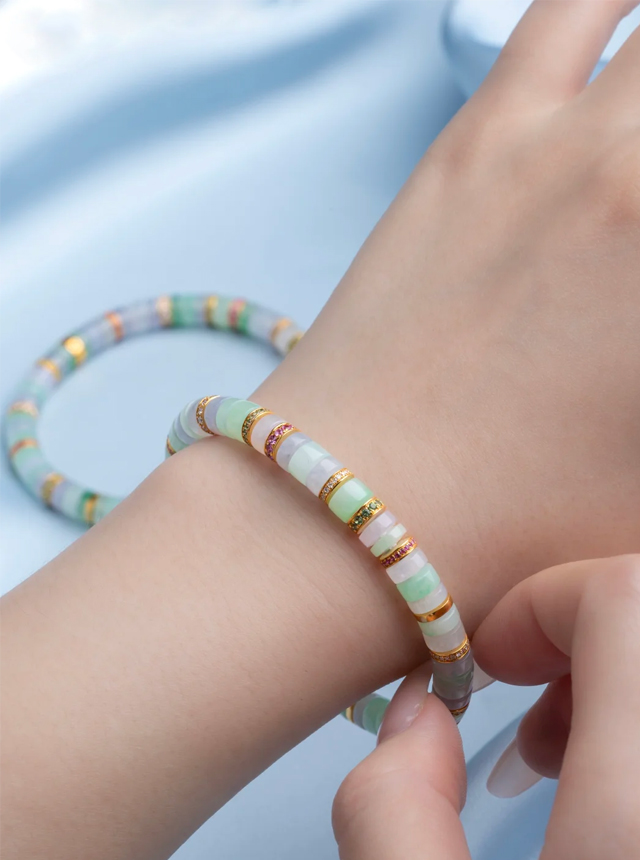
Avoid Placing Beads Randomly When Not in Use
When not wearing or using a jade Buddhist bead bracelet, it should be placed in a Buddhist shrine or in front of a Buddha statue. Buddhist shrines and Buddha statues are places filled with Buddhist teachings and positive energy. Placing the beads there allows them to be bathed in Buddhist light, maintaining their spiritual essence and purity. For those who have the habit of burning incense, they can gently fumigate the beads with incense every morning before use. The fragrance of the incense can purify the beads, removing any impurities they may have acquired, while also adding a touch of serenity to them.
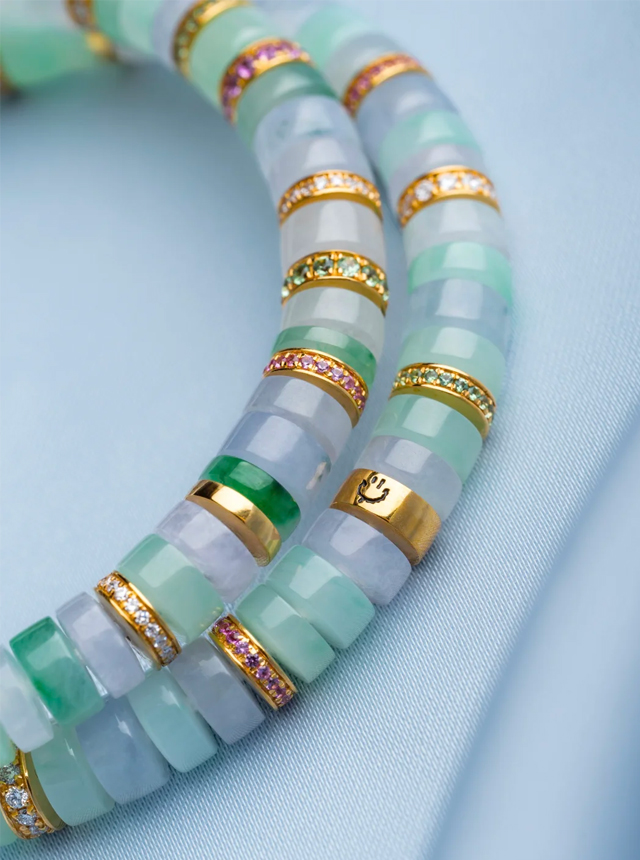
Avoid Touching Others’ Beads Randomly
Each person’s beads carry their unique beliefs and energies. Randomly touching someone else’s jade Buddhist bead bracelet may interfere with the original aura and energy balance of the beads. This is not only disrespectful to the other person’s beliefs but may also bring unnecessary trouble to yourself. Therefore, when interacting with others, respect their belongings and avoid touching their beads randomly.
Avoid Placing Beads in Trouser Pockets or Back Pockets
Trouser pockets and back pockets are located on the lower part of the body, which is considered an unclean area in traditional culture. Placing a jade Buddhist bead bracelet in trouser pockets or back pockets exposes the beads to the impure air of the body, thus contaminating their sanctity. Moreover, during daily activities, trouser pockets and back pockets are prone to friction and compression, which may damage the beads. Therefore, place the bead bracelet in shirt pockets or other clean and safe locations.
Avoid Hanging Beads with the Stupa Facing Downwards
When hanging a jade Buddhist bead bracelet around your neck or on a wall, always ensure that the stupa faces upwards. The stupa is an important part of the beads, symbolizing the Dharma body of the Buddha and carrying profound sacred significance. Hanging the stupa upwards represents respect and reverence for the Buddha, highlighting the solemnity and sanctity of the beads. Hanging the stupa downwards is considered disrespectful and may bring negative consequences.
Avoid Touching Beads with Unclean Hands
In daily life, our hands come into contact with various items, including foods with strong odors and impurities such as meat, fish, onions, garlic, and leeks. Touching a jade Buddhist bead bracelet directly with hands that have handled these items will contaminate the beads with filth, affecting their quality and spiritual essence. Therefore, wash your hands thoroughly before touching the beads to show respect and reverence for them.
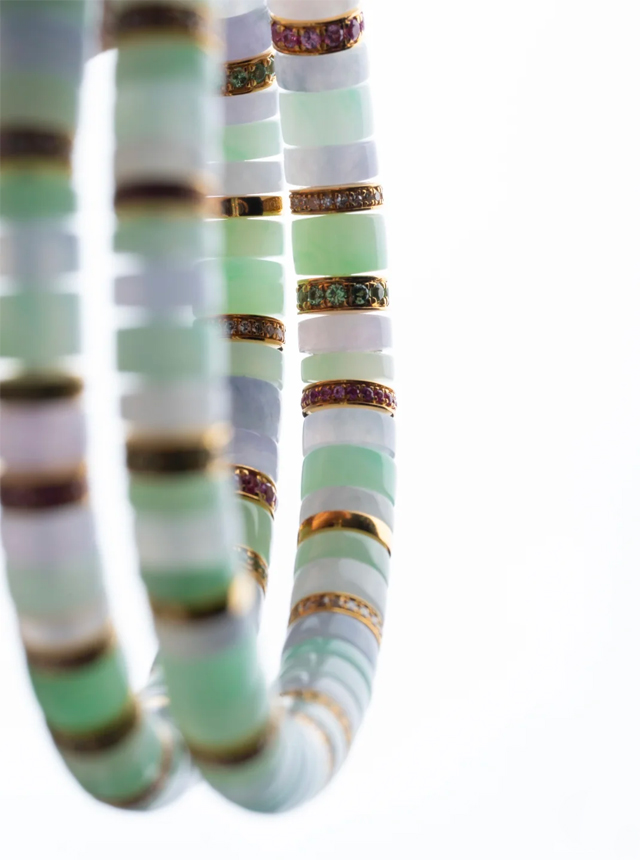
Avoid Flipping Beads Over for Counting
When counting, maintain uninterrupted circular counting and always move the beads in the same direction. Do not flip the beads over before counting, as this disrupts their original aura and energy flow and is considered an unlucky act. Moreover, uninterrupted circular counting symbolizes the eternity and infinity of Buddhist teachings, allowing us to better comprehend the wisdom and compassion of Buddhism during the counting process.
Avoid Swinging or Flailing Beads Randomly
A jade Buddhist bead bracelet is a sacred item and should be treated with seriousness and solemnity when used. Do not swing or flail the beads randomly, especially below the waist. Such behavior is not only disrespectful but may also damage the beads. When counting, place the beads above the waist and gently move them with your fingers in a slow and elegant manner to show respect for the beads and devotion to Buddhist teachings.
There are numerous considerations and taboos associated with wearing jade Buddhist bead bracelets. These taboos are not superstitions but embody profound cultural connotations and respect for Buddhist teachings. Only by wearing and maintaining jade Buddhist bead bracelets correctly can they better serve as decorations and bring good luck and blessings to us. I hope every jade enthusiast will remember these taboos and take good care of their jade Buddhist bead bracelets.
Does the Number of Beads in a Jade Bracelet Matter? What Meanings Do Different Numbers Represent?
Bracelets were extremely rare in ancient times, making them highly precious. A significant reason was the difficulty in crafting them due to the technological limitations of the era, and those that have survived are mostly royal artifacts.
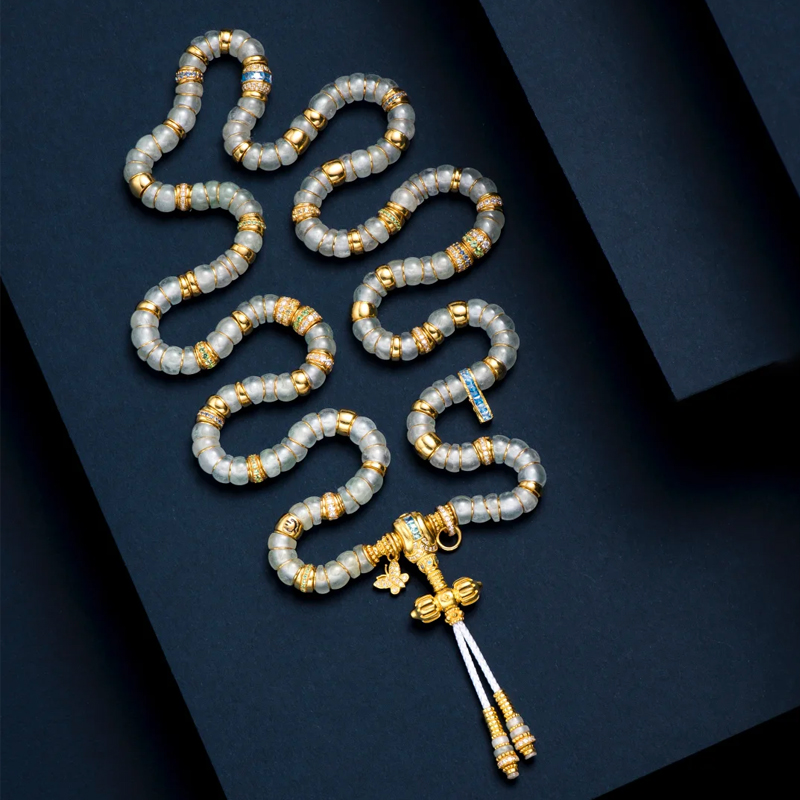
Jade bracelets became popular during the Qing Dynasty when the economy was stable and craftsmanship had gradually matured. With a large influx of Burmese jade into China, bracelets held a status comparable to that of jade bangles in modern society.
Curiously, from the Qing Dynasty to the present, the majority of bracelets consist of eighteen beads.
Why is there such a tradition?
Initially, bracelets originated from Buddhist prayer beads, which typically had eighteen beads, each carved with a different depiction of the Eighteen Arhats.
Imperial concubines in the Qing Dynasty, who were avid followers of Buddhism, would often hold these prayer beads while chanting, eventually transforming them into a type of ornament.
In ancient times, patriarchal values prevailed, and a woman’s status rose with the birth of sons. The prayer beads, referred to as “zi” (meaning son), came to be known as “shiba zi” (eighteen sons), symbolizing the hope for imperial favor and numerous offspring.
Thus, jade bracelets with eighteen beads have carried the auspicious meaning of abundant offspring and blessings from ancient times to the present. The number of beads in a jade bracelet each holds a specific meaning.
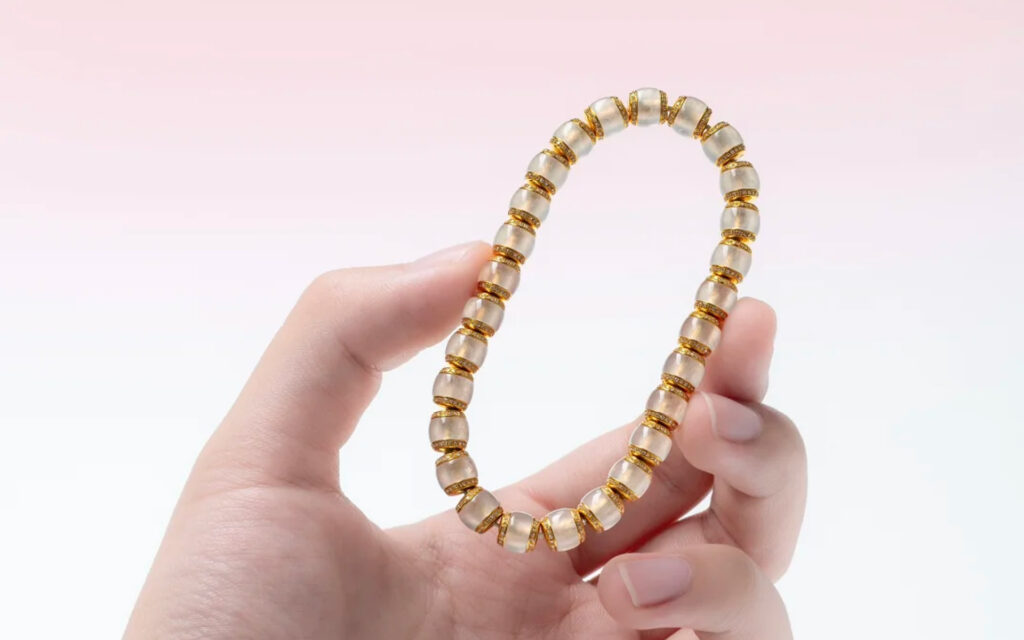
Meanings Behind the Number of Jade Beads:
48 beads: Symbolize a stable and prosperous life, with steady progress and consistent victories.
36 beads: Represent the six senses (sight, hearing, smell, taste, touch, consciousness) and three types of feelings (suffering, pleasure, indifference), as well as three attitudes (liking, disliking, indifference). They signify the overcoming of thirty-six types of worldly troubles and the attainment of ultimate freedom.
27 beads: Convey the wishes for longevity of heaven, earth, and humanity.
18 beads: Known as “shiba zi,” they represent the six senses, six dusts (objects of the senses), and six consciousnesses. They now also symbolize abundant offspring and prosperity, with “18” sounding similar to “to prosper” in Chinese, making an eighteen-bead bracelet an auspicious choice.
14 beads: Represent the fourteen kinds of merits bestowed by the Goddess of Mercy (Guanyin) upon all living beings, granting them peace and protection.
13 beads: In Buddhism, signify the perfection of merits.
8 beads: Symbolize the eight virtues of a gentleman: benevolence, righteousness, wisdom, courage, purity, propriety, loyalty, and trustworthiness. Additionally, the number eight sounds similar to “prosper” in Chinese.
Apart from the number of beads, the shape of the bracelet also affects its value. Most jade bracelets on the market today are crafted from leftover materials after making jade bangles, making a high-quality jade bracelet a rare find.
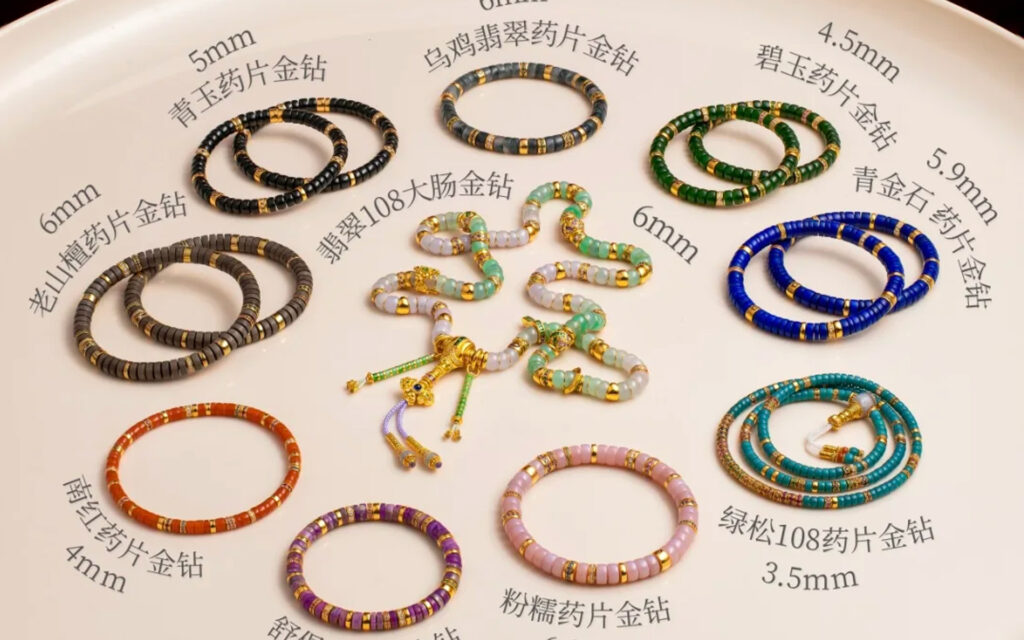
Round Bracelets:
Round bracelets are the most valuable among jade bead bracelets. This is because each bead is similar in size and quality, almost always carved from the same piece of jade, which requires a significant amount of material. Round beads are also popular, symbolizing perfection and smooth sailing in all endeavors.
Pagoda-Shaped Bead Bracelets:
Composed of beads of varying sizes, typically with the largest bead in the center and gradually decreasing in size towards both ends, these bracelets symbolize increasing wealth and blessings. They are suitable for individuals with round faces, as they can elongate the face and create a strong sense of facial lines.
Inlaid Bead Bracelets:
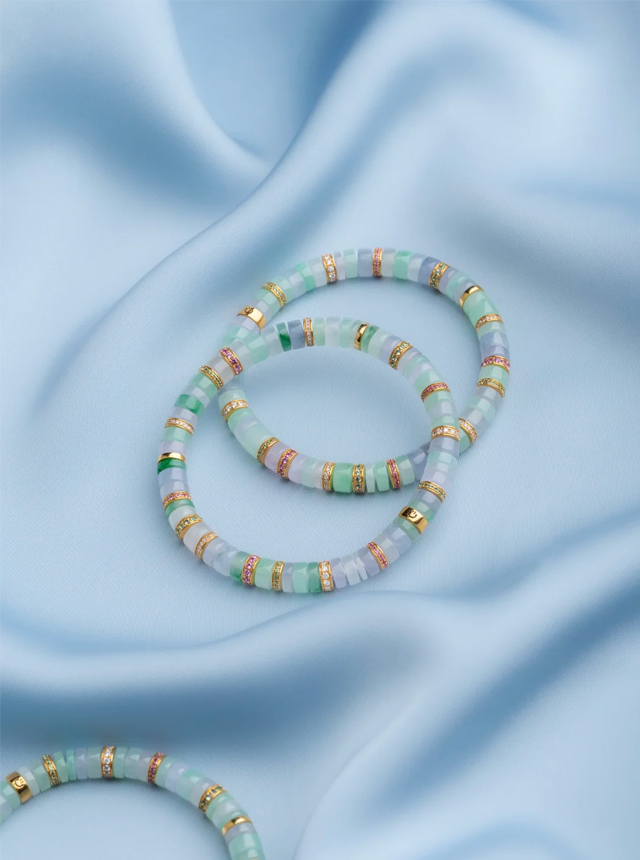
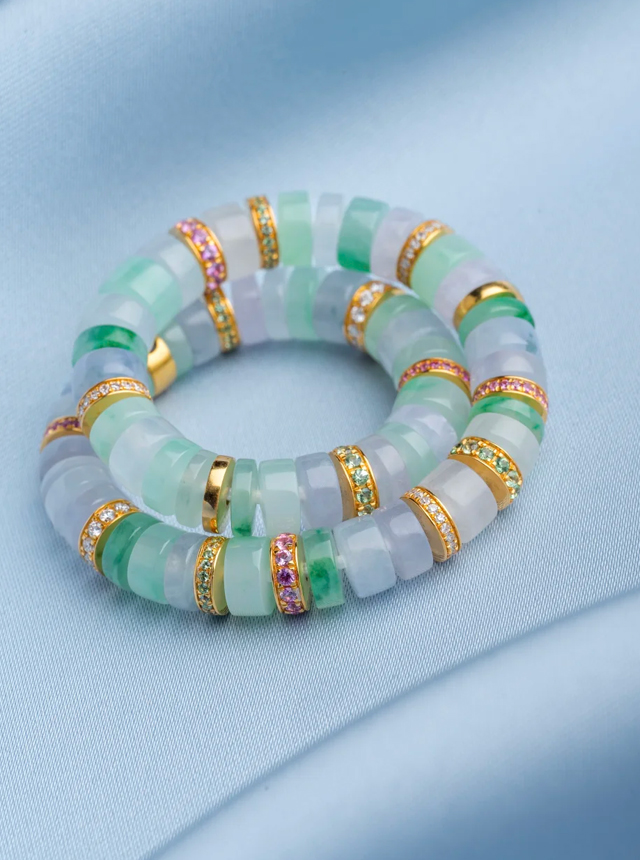
When considering inlaid bead bracelets, pay attention to the size and thickness of the inlaid beads, as well as the stability of the inlay. Metal inlays can also protect the beads from external damage, giving the bracelet a grand and fashionable appearance. They symbolize the perfect union of gold and jade, representing a harmonious marriage.
Jade bracelets represent a perfect fusion of nature and human culture, with each bead carrying the sedimentation of time and the inheritance of culture. From the meticulous selection process to the reverent attitude when wearing them, and then to the comprehension of the cultural meanings behind them, we can not only appreciate the physical beauty of jade but also perceive the profoundness and wisdom of Oriental jewelry culture. May you be able to select a jade bracelet that you cherish, gaining health, wealth, and good fortune through wearing it, and allowing this time-honored treasure to become the most exquisite embellishment in your life.