
In the world of collectibles, turquoise is considered one of the “Four Great Gems,” captivating the hearts of countless collectors and enthusiasts with its elegant and refined blue-green hue. It is not only the soulmate of Tibetan Buddhist prayer beads but also a favorite in the Western jewelry world—historically, only turquoise was permitted to adorn the finials of Qing Dynasty emperors’ official hats, a testament to its prestigious status. However, the market is a mixed bag where it’s hard to tell the real from the fake, causing many newcomers to stumble into countless pitfalls. Today, we’re presenting you with a comprehensive ultimate guide packed with practical insights, covering three key areas: how to distinguish authenticity, its benefits and value, and daily care.
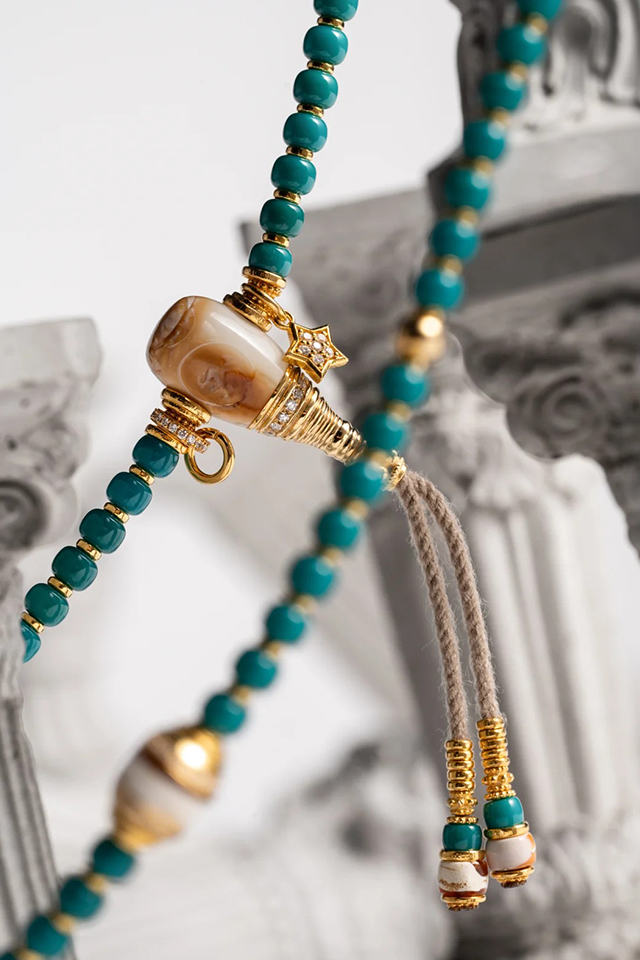
Guide to Authenticating Turquoise Bracelets: Four Key Points to Look For
Turquoise bracelets are a type of jewelry and gemstone that have been highly prized since ancient times. Due to their unique beauty and rarity, turquoise bracelets command high prices; today, high-quality bracelets made from raw turquoise can cost over 1,000 yuan per gram.
However, as the price of turquoise bracelets has skyrocketed, a flood of counterfeit products has emerged on the market, deceiving many turquoise enthusiasts.
I have personally purchased fake turquoise beads that had been chemically treated, so I have gained both experience and lessons in distinguishing genuine from fake turquoise bracelets. Below, drawing on my own knowledge and research, I will share several key points for identifying the authenticity of turquoise bracelets on your own:
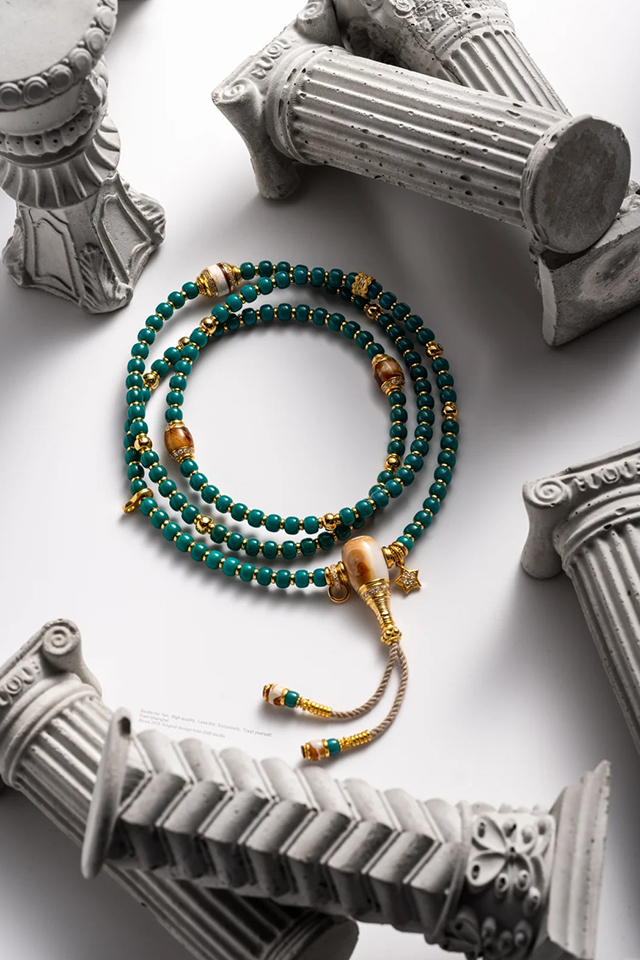
1. Examine the Color and Luster
Natural turquoise beads come in a rich variety of colors and possess a jade-like luster on their surface; synthetic turquoise beads, on the other hand, tend to have a more monotonous color that is unevenly distributed. They exhibit a waxy or resinous sheen, resulting in a dull and unnatural overall appearance that lacks the unique charm of natural gemstones.
In 2018, I purchased a turquoise bead to add to a peach pit bracelet. After acquiring it, I had a knowledgeable artisan appraise it, and I was told it was “treated turquoise.”
At the time, I didn’t understand what “treated” meant. As a result, even after handling it for many years, it remained dull and lifeless, with no iron-line patterns.
Later, this artisan explained to me: Because fake turquoise is mass-produced, its color is often uniform; whereas natural, raw turquoise comes in a rich variety of colors, and it’s even difficult to find two pieces with exactly the same color.
If the turquoise is a low-quality product enhanced with resin, the uneven penetration of the resin may result in uneven color distribution; the color of synthetic fake turquoise, on the other hand, appears even more monotonous and lifeless.
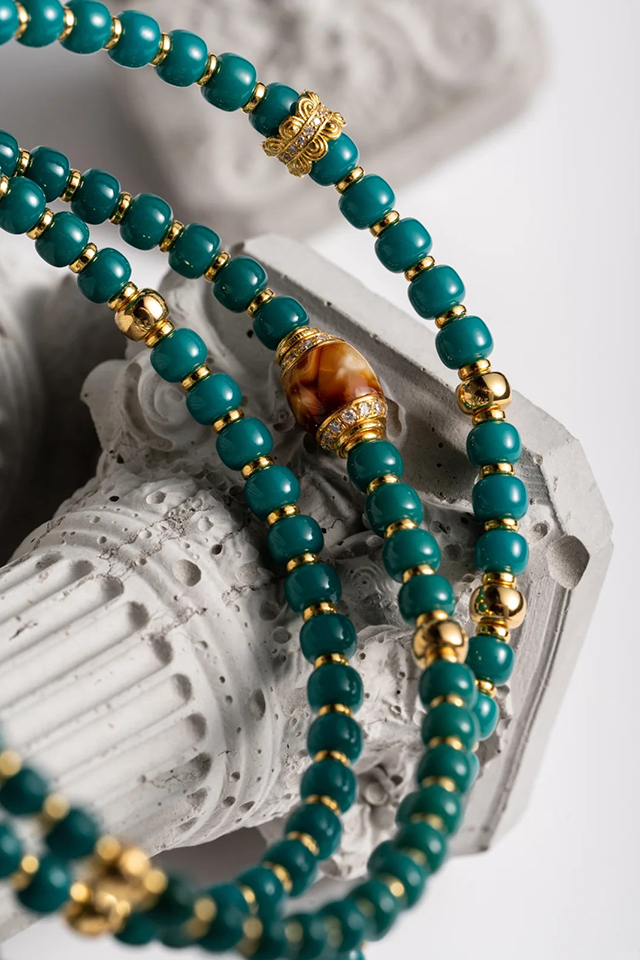
2. Listen to the Sound
When natural turquoise bracelets are tapped together, they produce a crisp, pleasant sound. However, the optimized turquoise I purchased produced a somewhat dull, muffled sound when tapped.
That said, imitations made of materials like glass or glassware may also produce a crisp sound when tapped. Additionally, natural turquoise with low vitreousness may not produce a crisp sound either. It is important to distinguish between these factors to avoid misjudgment.
3. Water Soak Test
According to relevant data, the structure of turquoise bracelets contains structural water, crystalline water, and adsorbed water, as well as numerous microscopic pores. Water is essential for their formation, growth, and subsequent handling.
This is why many merchants who sell turquoise bracelets soak them in water as part of their care routine.
Therefore, when testing a turquoise bracelet by soaking it in water, a natural turquoise bracelet will release bubbles after absorbing water, and its color will also change.
In contrast, resin-injected turquoise, with its pores blocked, will not release bubbles—a very noticeable difference.
4. Observing the Iron Veins
The iron veins in natural turquoise are natural and flowing, exhibiting a naturally curved and extended form.
In contrast, the iron veins in synthetic or fake turquoise often appear unnatural—stiff, rigid, and lacking in natural beauty. This characteristic provides an intuitive basis for distinguishing between genuine and fake pieces.
Additionally, there is the fire test. When synthetic or resin-treated turquoise is exposed to fire, the resin inside melts and emits a distinct resinous odor. This is an effective method for identifying such imitation turquoise.
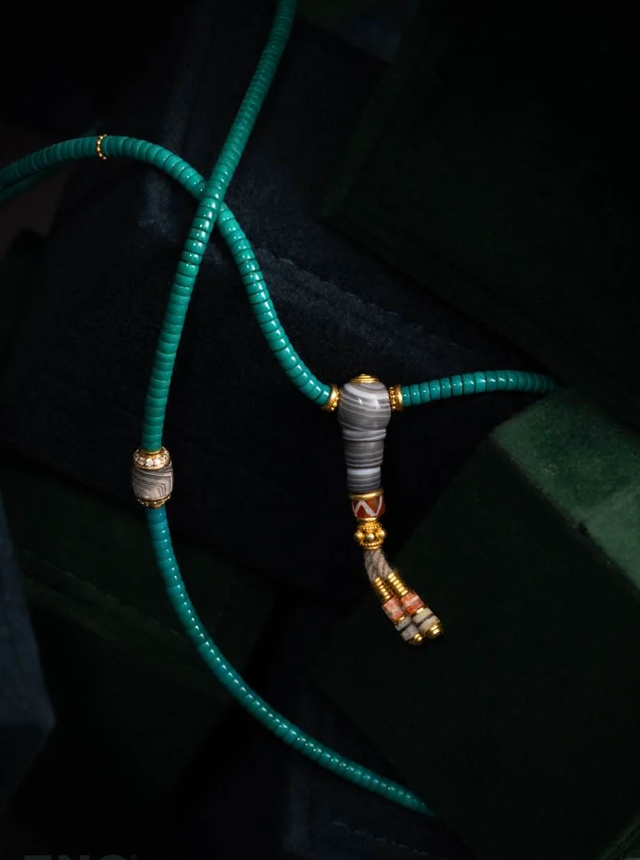
The Benefits and Effects of Turquoise Bracelets
Nowadays, many people wear various types of collectible bracelets, often paired with other beads, pendants, and accessories. As a relatively rare type of gemstone, turquoise bracelets are highly favored by collectors.
Turquoise bracelets possess gentle energy and are considered a gemstone with nourishing properties. Their primary function is to absorb negative energy, thereby bringing a sense of peace and tranquility to the wearer. Furthermore, because the energy field of a turquoise bracelet is gentle, even those who are highly sensitive to subtle changes in energy fields will not be adversely affected. It subtly eliminates harmful energy fields around you, which is the main reason it is known for its nourishing qualities.
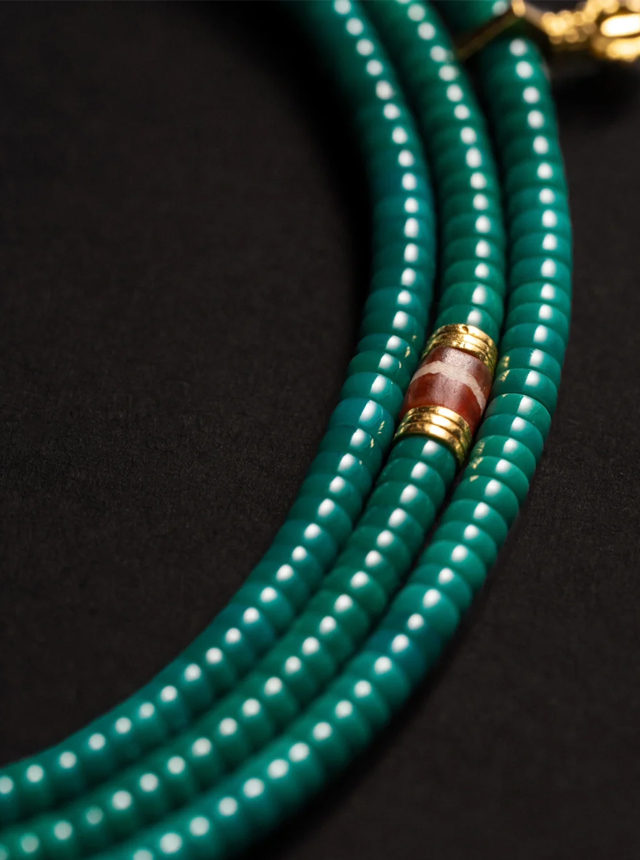
1. Attracting Wealth
Turquoise bracelets and citrine share similar properties in attracting wealth. As a noble and unique accessory with a regal aura, a turquoise bracelet can enhance the wearer’s fortune and financial prosperity. Moreover, turquoise is relatively gentle, lacking the intense and fiery qualities of citrine. Therefore, individuals with a fiery temperament who wish to strengthen their financial luck should choose a turquoise bracelet.
2. Warding Off Evil and Neutralizing Negative Energy
The ancient Romans have long worn turquoise to ward off evil and protect themselves. It absorbs negative energy from the surroundings, shielding the wearer from harmful influences. Those who travel frequently can wear it as a protective amulet. Furthermore, turquoise represents the moon and has a close connection to water; wearing it can help prevent drowning and accidents, as well as ward off the effects of witchcraft.
3. Promotes Health
According to foreign literature, turquoise can help alleviate eye ailments and is beneficial for the gallbladder, liver, bladder, bones, and circulatory system.
4. Beauty and Skin Care
Turquoise promotes blood circulation, boosts metabolism, and stimulates liver function, aiding in the elimination of toxins from the body. For women, wearing it offers beauty and skin care benefits, and it also provides relief for conditions such as liver disease, rheumatism, neuralgia, and varicose veins.
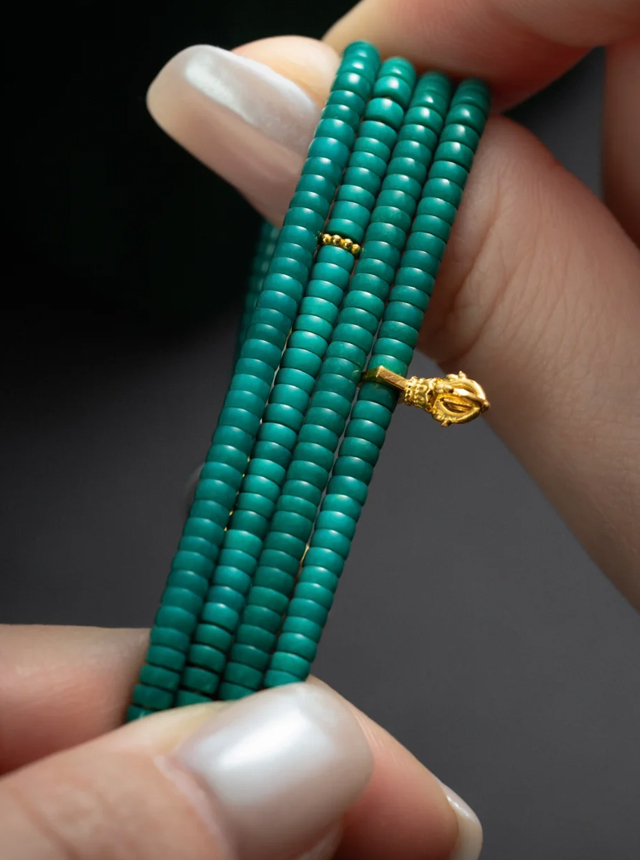
Daily Care and Storage of Turquoise Bracelets
Before discussing care, we must understand why turquoise bracelets require special treatment. In Eastern culture, turquoise bracelets are hailed as the “Stone of Success” and the “Stone of Good Luck,” symbolizing auspiciousness and authority. However, unlike extremely hard gemstones such as diamonds and sapphires, turquoise bracelets are naturally delicate; they are porous and susceptible to contamination. To preserve their captivating luster and spiritual essence over time, meticulous daily care and proper storage are essential.
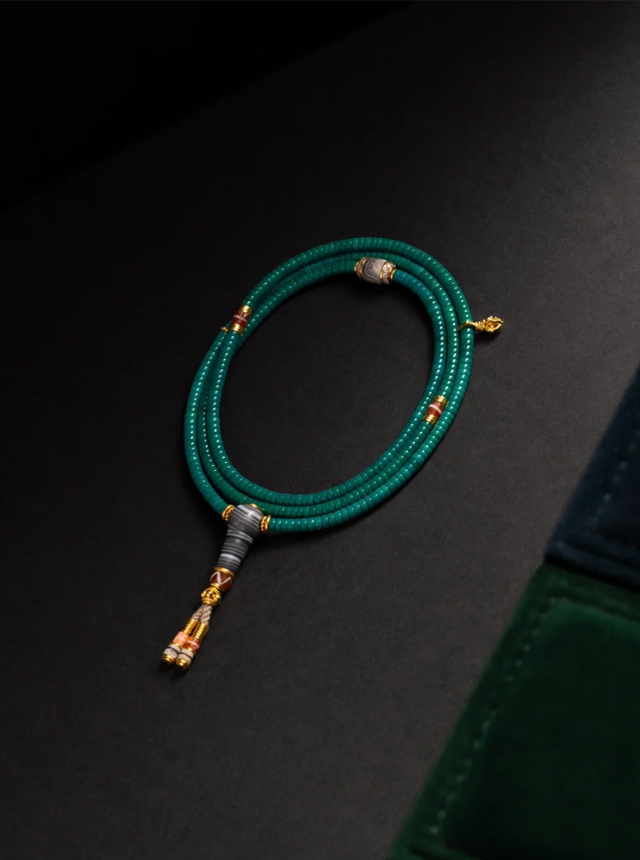
1. Understanding the “Nature” of Turquoise Bracelets
Porosity: Turquoise is a hydrated copper-aluminum phosphate mineral with a loose, porous structure. This means it readily absorbs liquids such as oils, sweat, perfume, and cleaning agents. Once absorbed, these contaminants penetrate deep into the stone, causing the color to become dull, yellowish, or greenish, and even resulting in stubborn stains that are difficult to remove, permanently damaging its aesthetic appeal.
Low Hardness: The Mohs hardness of turquoise bracelets typically ranges between 5 and 6, which is significantly lower than that of common quartz dust encountered in daily life (Mohs hardness of 7). This means even accidental friction can leave fine scratches on the surface, which over time will cause the surface to lose its luster.
Sensitivity to high temperatures and chemicals: High temperatures and prolonged exposure to sunlight can cause the turquoise bracelet to lose moisture, making it brittle and even causing cracks. At the same time, chemicals such as strong acids and alkalis can corrode the surface and damage the crystal structure.
Understanding these characteristics helps us realize that the key to caring for a turquoise bracelet lies in “avoid, prevent, and be cautious”—avoid contamination, prevent scratches, and handle with care.
2. When worn frequently or handled often
In this case, maintenance is relatively simple. As the turquoise bracelet comes into contact with the skin while being worn or handled, it naturally absorbs a layer of natural oils secreted by the body. These oils form a thin protective layer on the surface of the turquoise, preventing it from losing moisture too quickly. At the same time, the oils and sweat gradually seep into the interior of the turquoise, causing its color to change—a truly beautiful process.
Of course, during the process of hand-polishing and color transformation, raw turquoise will go through an awkward phase where it begins to change color but has not yet fully transformed; this is known as “polishing blotches.” As long as you continue to handle it, the “spotted” areas will fade away. Of course, some people do not like the color changes in turquoise. In that case, it’s simple: just regularly clean the oils from the surface. Simply rinse it with clean water; never use any chemical detergents. For turquoise that is being worn or handled regularly, there is no need for special care. However, if you have turquoise that is not being worn or handled, you’ll need to pay a bit more attention to it.
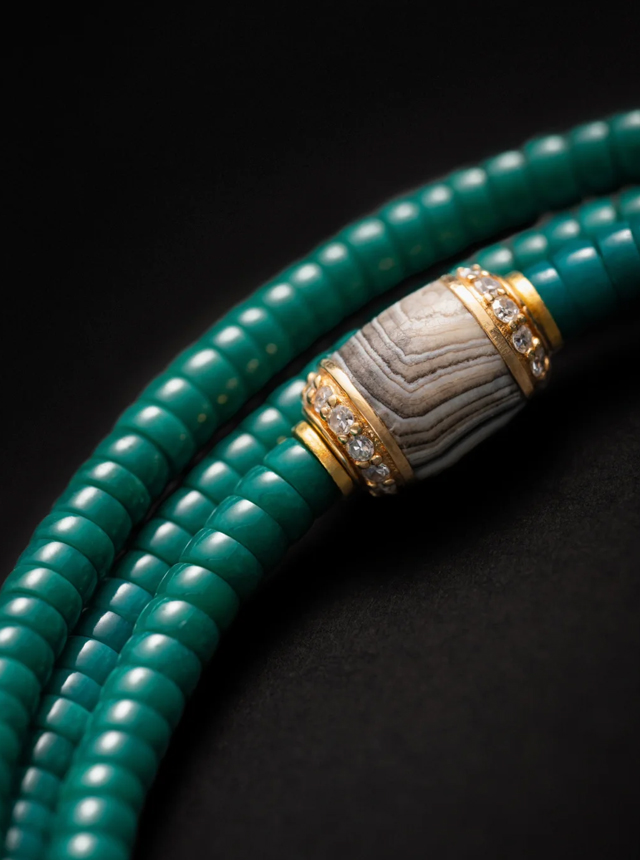
3. Storage for Display (Not Worn or Handled)
How should you store and care for a turquoise bracelet when you’re not wearing or handling it? If left unworn for an extended period, turquoise bracelets can lose moisture and luster. Therefore, you should regularly rehydrate them during storage.
The simplest method is to place the bracelet directly in a container of water and store it in a cool, dark place. Alternatively, after prolonged soaking (24 hours or more), you should clean the surface with clean water and a soft-bristled toothbrush (avoid using one with overly stiff bristles) before proceeding with maintenance. About once every two weeks, soak the turquoise in purified water to allow it to fully absorb moisture; this process takes about a day, and the bracelet should be stored in a cool, shaded place. If storing a large quantity, it is recommended to change the water frequently or simulate the environment of the turquoise underground, as this is better for both storage and maintenance.
4. Special Notes for Different Types and Qualities
Enhanced Turquoise Bracelets: If the turquoise bracelet you purchased has undergone enhancement treatments such as resin or wax injection to improve stability and color, it has slightly better stain resistance. However, the general care principles remain the same: avoid chemicals and high temperatures, as the enhancement materials may dissolve or be damaged.
Raw High-Porcelain Turquoise Bracelets: High-quality raw turquoise bracelets with a dense texture and porcelain-like luster are relatively more resistant to dirt due to their low porosity. However, their high hardness does not mean they are scratch-proof, so care must still be taken when storing them.
Carved Turquoise Bracelets or Beaded Strings: These items feature complex structures with numerous crevices, making them more prone to accumulating dirt. Cleaning requires extra care; gently brush the crevices with a soft-bristled brush. When storing, it is best to lay them flat to prevent friction between beads or damage to protruding parts of carved pieces caused by hanging.
Owning a turquoise bracelet is like forming a bond with the essence of the universe. Its beauty is not static but depends on the care of its owner. Just like a relationship that requires nurturing, every act of tender care you give it will transform into a more warm and captivating luster.
Turquoise bracelets, the “gem of heaven” that has withstood the test of time for five millennia, have graced everything from Tibetan monks’ prayer beads to the finials of Qing Dynasty imperial hats. From the perfect companion to collectible Buddhist prayer beads to the crowning touch of international haute couture jewelry, their unique blue-green hue brings a soothing comfort to the mind and body of every wearer.