
As the “king of jade,” jadeite has always been a central topic in the collecting community and consumer market when it comes to its value assessment. However, numerous enthusiasts are still troubled by misconceptions such as the belief that “the greener the jadeite, the more valuable it is,” the challenge of distinguishing between natural and artificially dyed jadeite, and the actual impact of cracks on its value. Below, the author will systematically analyze these three key issues by drawing on authoritative industry data and real-world cases.
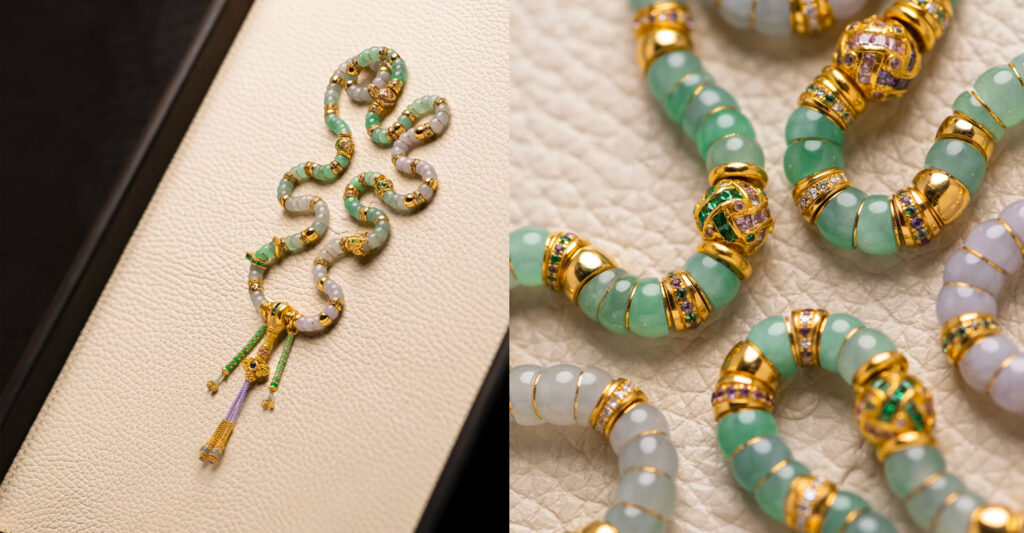
Is Jadeite Really More Valuable the Greener It Is?
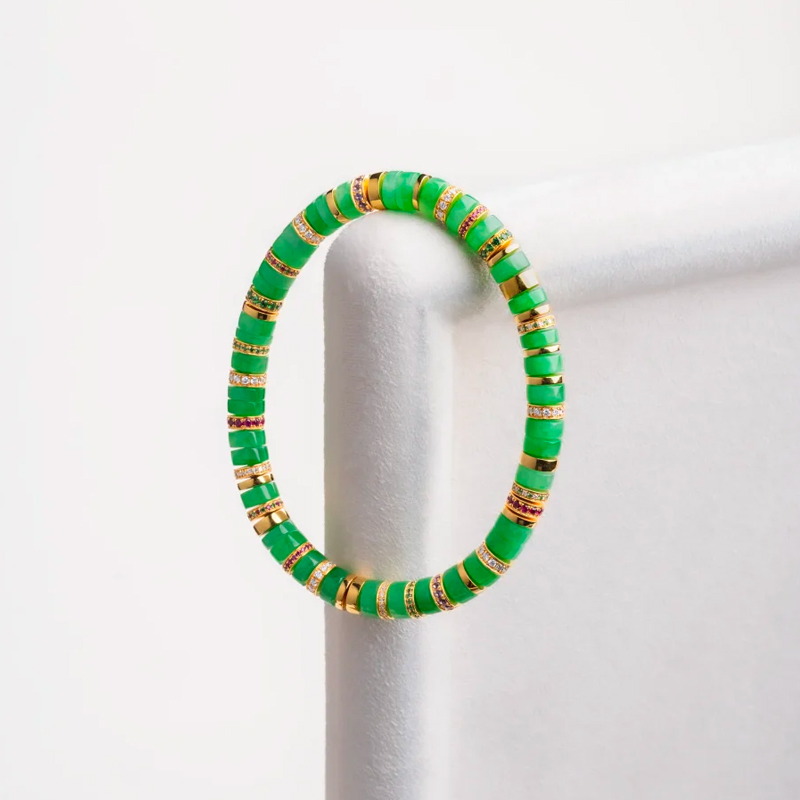
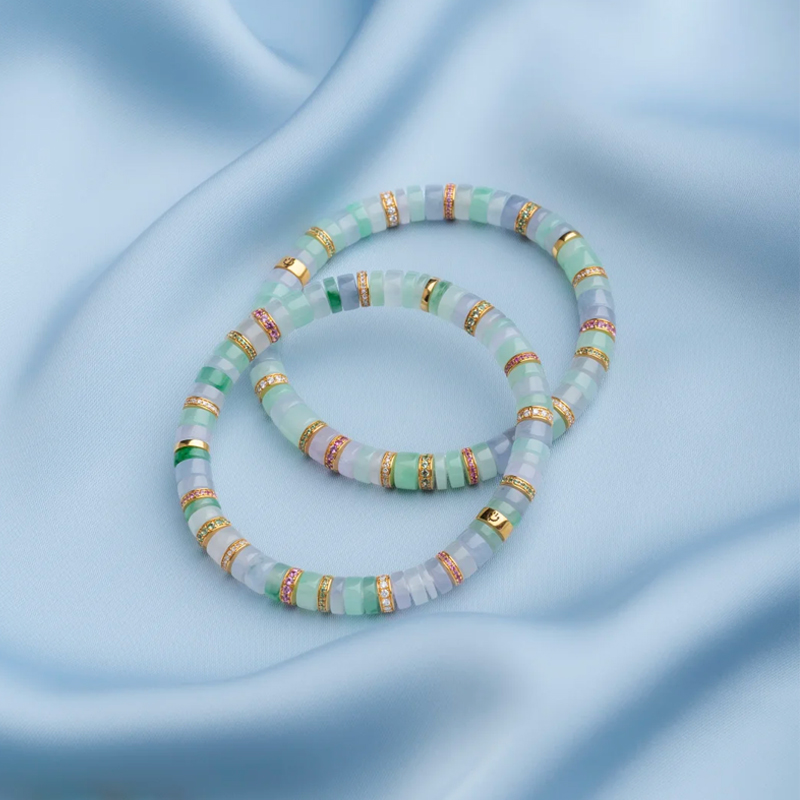
Green jadeite has always been highly sought after in the jadeite market. Nowadays, even many art appreciation events are eager to keep up with the trend. A simple online search using the keyword “jadeite” will reveal that high-priced jadeite pieces are predominantly green, and green jadeite is also deeply loved by the public. Whether given as a gift or collected for personal enjoyment, jadeite is an excellent choice.
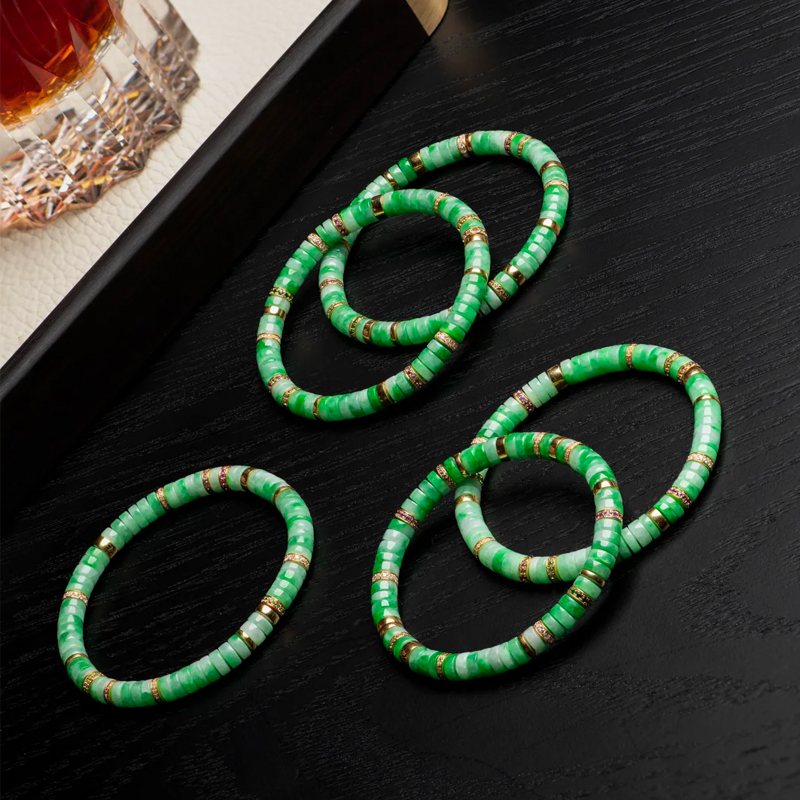
When it comes to jadeite, the first thing that comes to mind is: green! Among common green jadeite varieties, it is often the case that “the greener, the more expensive.” Why is that?
Why is jadeite green?
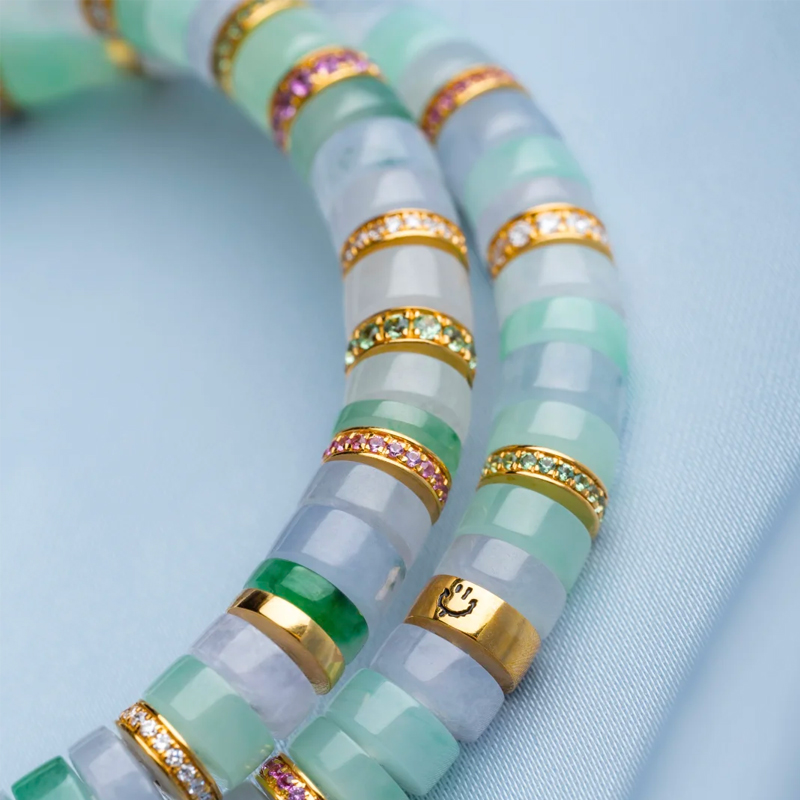
Jadeite is a dense block aggregate formed by the interweaving of countless tiny fibrous mineral microcrystals, primarily consisting of jadeite. The reason green jadeite appears green is due to the presence of chromium and iron elements in the jadeite ore. Iron ions typically exhibit a light green hue, while chromium ions display a very vivid green. Depending on the varying proportions of chromium and iron in different jadeite ores, the jadeite will display different shades of green.
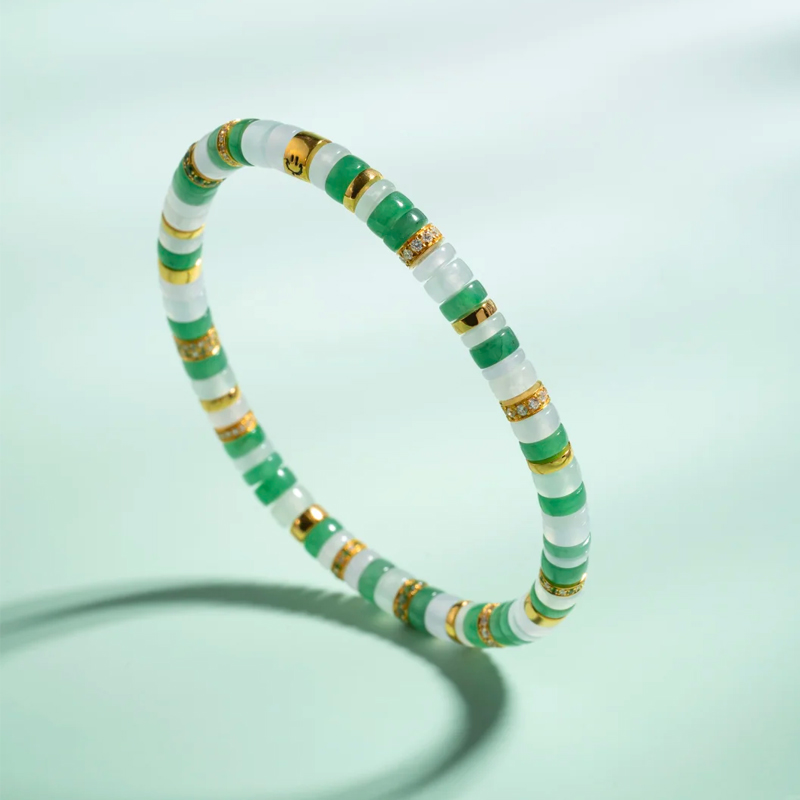
Why is green jadeite “the greener, the more expensive”?
On one hand, as mentioned earlier, the degree of greenness in jadeite varies due to the different proportions of iron and chromium elements. When the quality and water content (transparency) are comparable, achieving the perfect balance of iron and chromium elements, especially forming the coveted imperial green, is extremely rare and difficult. The challenge of achieving a pure, vibrant green hue makes such jadeite highly sought after. As the saying goes, “rarity makes value,” so the lower the probability of finding jadeite with just the right shade of green, the fewer finished products there are, hence “the greener, the more expensive.”
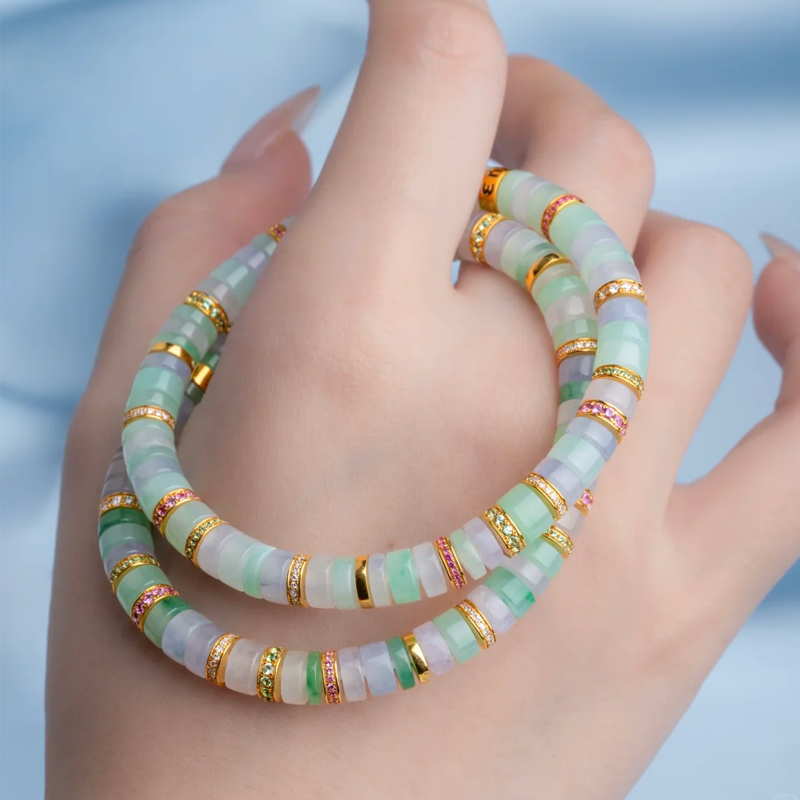
On the other hand, green jadeite is popular due to its cultural significance rooted in traditional beliefs. In the traditional five elements theory, green, cyan, and emerald colors represent wood, which symbolizes benevolence, kindness, and good deeds. Green jadeite pieces shaped like lucky beans, leaves, and bamboo sections align with nature and carry auspicious meanings. Therefore, green jadeite has become the preferred choice for collection and gift-giving.
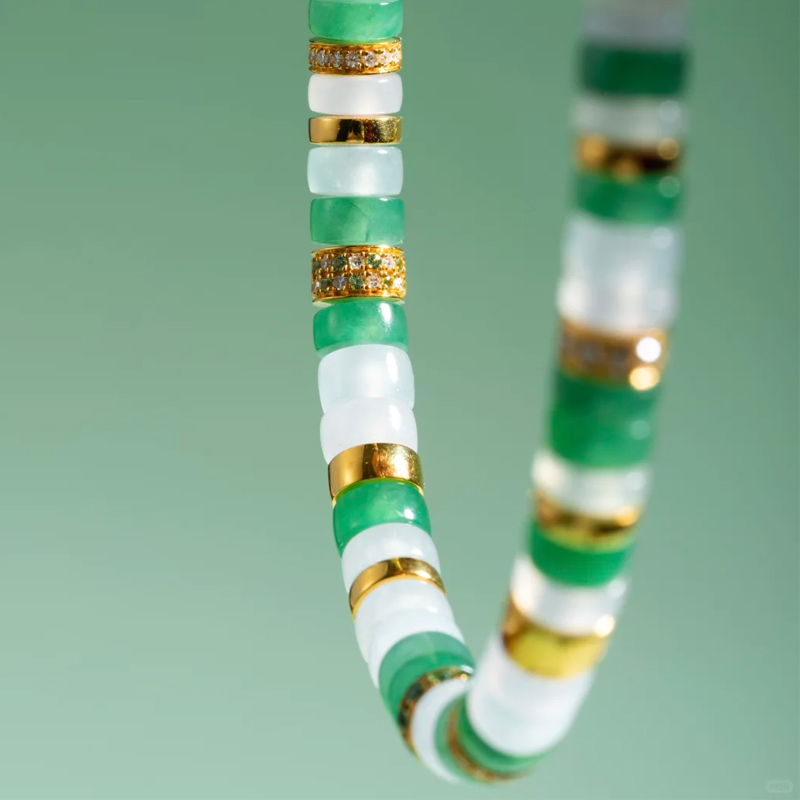
How to Distinguish Between Natural Jadeite and Artificially Dyed Jadeite?
There is a significant difference in value between naturally colored and artificially dyed jadeite, making it crucial to learn how to differentiate between the two. Those with a certain understanding of jadeite varieties may find it easier, as there are certain patterns in the colors associated with specific jadeite types. Generally, identification follows a step-by-step process from simple to complex, using the naked eye, magnifying glass, and specialized instruments.
Naked Eye Observation
Abnormal color tones: In dyed green jadeite, the green may appear bluish; in dyed purple jadeite, the tone may lean towards pink, and the color may be overly uniform (natural purple jadeite typically has uneven coloration); in dyed red jadeite, the red may appear orangish.
Mismatch between color tone and jadeite type: Natural jadeite colors are closely related to its type, with each type having a characteristic color. When the type and color do not match, artificial dyeing may be suspected (e.g., white-bottom green jadeite, although white in color, has poor water content and may appear dull green due to contamination, often used for B-grade jadeite). Most dyed jadeite is of the relatively porous bean variety, which takes dye well and increases its value.
Magnifying Glass Observation
Observe the relationship between color distribution, crystal grains, and cracks, focusing on the structure. Since the color in dyed jadeite is artificially added later, and purple dye is a mechanical mixture, the color tends to concentrate in the interstitial spaces between grains, appearing more prominent in cracks and absent where there are no cracks. This is true for green, purple, and red colors alike, with the color deepening from the grain boundaries to the center, especially noticeable in purple jadeite. This is more evident in coarse-grained structures and requires a microscope for clear observation in fine-grained structures. In fibrous-structured jadeite, the dye may appear as dots or powder, indicating that the color and crystals are mutually insoluble, referred to by experts as “non-dissolving color.” In contrast, natural colors are integrated with the crystals, known as “dissolving color.” Additionally, the color in dyed jadeite may appear superficial, distributed in patches or threads between crystals, easily observable by experienced experts, especially under a magnifying glass. When identifying natural bean-variety purple jadeite, another clue is that natural pink or bluish-purple jadeite is distributed within the crystal grains, surrounded by other colors (white or green), known as “white wrapping purple.” Conversely, if purple is distributed outside the crystals with white or green inside, known as “purple wrapping white,” artificial dyeing may be suspected.
Microscope Observation
Observation under a 20x to 40x microscope reveals the presence of dye in dyed jadeite. The dye in cracks around grains typically appears as powder or irregular shapes, distinct from the crystal shapes and separable from the jadeite grains.
Color Filter Observation
Various color filters are used in gem identification, with the Chelsea filter (Dow filter) being commonly used. Made from a special filter film, it is effective in distinguishing between natural and synthetic emeralds, as well as natural and dyed jadeite. Natural jadeite does not change color under the filter, while green jadeite dyed with coloring agents appears red, serving as a distinguishing marker. However, it should be noted that when special dyes are used for artificial coloring, the color may remain unchanged under the filter. Additionally, the filter is ineffective in identifying artificially dyed purple or red jadeite. Mr. Hodgkinson from the UK developed a filter to distinguish dyed purple jade, but it is not perfect, effective for some but not all dyed purple jade.
Visible Light Spectroscope
A visible light spectroscope observes the absorption of specific wavelengths of light passing through or reflected from the gemstone to identify it. Different transparent gemstones have unique chemical compositions and internal structures, resulting in varying colors and selective absorption of visible light, which can be used to identify the gem type and cause of coloration.
Commonly used visible light spectroscopes are compact and easy to use, available in handheld or stand-mounted versions, allowing direct reading of the absorption spectrum wavelength from the eyepiece. The type of light source is crucial, with focused white light providing the best results, typically using a fiber-optic light. For identification, transmitted or reflected light may be used depending on the sample type. Generally, reflected light provides better results. When observing dyed green jadeite with a spectroscope, a distinct absorption band in the red region indicates the presence of dye, while natural jadeite rarely shows absorption in the red region, where absorption is primarily due to chromium ions. Artificially dyed jadeite, containing a high concentration of chromium-based dye, exhibits a broad and prominent red absorption band (640-650nm), whereas natural green jadeite, although also colored by chromium ions, shows a different absorption spectrum due to varying forms or lattice positions of chromium ions, with only faint absorption lines in the red region due to low chromium content. The more concentrated the chromium in dyed jadeite, the broader and more prominent the red absorption band.
Ultraviolet Light Observation for Optical Activity
Dyed green and red jadeite show no reaction under ultraviolet light, but dyed purple jadeite provides some clues. Regardless of whether it is dyed bluish-purple, pinkish-purple, or eggplant-purple, it emits a pinkish to orange-red fluorescence under long-wave ultraviolet light. According to the author’s tests, powdered purple dye exhibits strong pink fluorescence, evident even with small amounts in the jadeite’s pores, causing the dyed purple jade to fluoresce pinkish to purplish-red, while natural purple jadeite shows no fluorescence, serving as a distinguishing marker.
Do Cracks in Jadeite Affect Its Value? How to Judge the Degree of Flaws?
Jade has been a special commodity since ancient times, believed to ward off evil spirits and ensure safety. It is rare, precious, not only enhancing the wearer’s dignity but also exuding a captivating millennium-old jade culture. Burmese jadeite, known as the “king of jade,” boasts a glassy luster, vivid colors, and good transparency, with a hardness of 6.5-7 degrees, being a type of green nephrite. Generally, a piece of jadeite is rarely uniformly green throughout; apart from the “green” part, other colors are referred to as the “ground,” which can be white, yellow, black, blue-green, purple, or lake-water green. The more green in Burmese jadeite, the better. High-quality jadeite should possess “good green, good water, good ground, and good perfection,” often referred to as “type, water, color, craftsmanship, and perfection.” Merchants also price jadeite based on these five aspects.
Of course, natural Burmese jadeite is not absolutely flawless; it may have varying degrees of so-called flaws. What are the flaws in jadeite, and how significantly do they affect its value? Based on visual observation, jadeite finished products may exhibit the following phenomena: cracks, fractures, foreign inclusions, stone lines, stone flowers (cotton), discoloration, dirt spots, and jade texture, among others. Specific introductions are as follows:
Cracks: These occur when rough stones are dropped during transportation, slices are struck during processing, or finished products are accidentally dropped on the ground, resulting in fractures. Cracks are generally acquired (secondary) and often appear as external horizontal lines, visible to the naked eye, with no fillings in the middle, and can be felt with a fingernail. Some are severe, while others are minor (caused by human actions).
Fractures: These occur during the long and complex geological formation process of jadeite due to external stress, resulting in fractures. Fractures are generally congenital (primary) and often appear as internal vertical lines, visible to the naked eye, with colored (impurity) fillings in the middle, and usually cannot be felt with a fingernail. Some are severe, while others are minor (formed congenitally, also known as natural cracks).
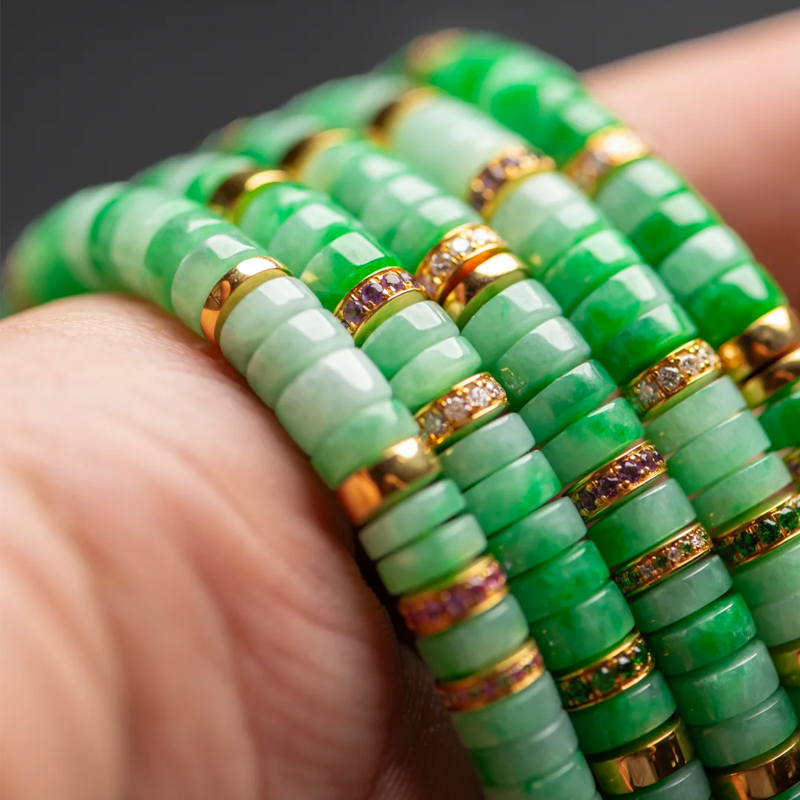
Foreign inclusions: These feel like tree roots or fibrous residues within the ground and are impurities incorporated during the long and complex geological formation process of jadeite. Foreign inclusions are congenital (primary), visible to the naked eye, not cracks, and can be severe or minor.
Stone lines: These occur due to local dislocation caused by external pressure during the long and complex geological formation process of jadeite. Their notable feature is the uneven structure of adjacent parts at the dislocation site within the jadeite ground, resembling cracks. Stone lines are congenital (primary), visible to the naked eye, not cracks, and generally have no colored (impurity) fillings in the middle. They can be obvious or concealed, with common ice lines being a type of stone line.
Stone flowers: These are common in jadeite and appear as clumps with slightly lower transparency than the ground. Dry, blocky ones are called “stone brains,” scattered ones are called “reed flowers,” cotton-like ones are called “cotton,” and fine, floating ones are called “snowflakes.”
Discoloration: Jadeite generally has some color, which can be large patches or small spots. Small areas or spotted green, red, or yellow can enhance the beauty and uniqueness of the entire jadeite jewelry, known as “clever colors.” Small areas or spotted black, brown, or gray can make the entire jadeite jewelry look less attractive and lower-grade, known as “discoloration.” Spotted black, brown, or gray are also called dirt spots.
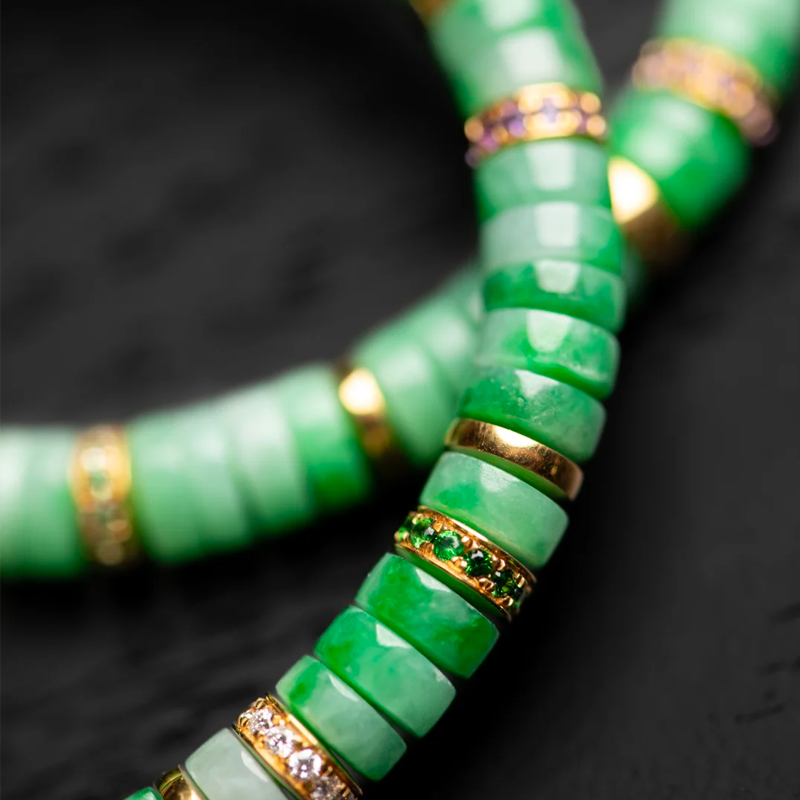
Jade texture: Jadeite has a polycrystalline interwoven structure, and under light, flaky reflections can be seen on the crystal faces, known in the industry as “fly wings” or (sand stars). This is an important characteristic of jadeite. Jadeite with a coarse structure (such as bean type) has more obvious jade texture, while jadeite with a fine structure (such as glass type) has less obvious jade texture. Different people have different understandings of flaws; some consider only cracks as flaws, while others consider stone flowers and discoloration as flaws, and some even consider jade texture (sand stars) as flaws.
In the jadeite industry, cracks and fractures are generally recognized as flaws.
A more balanced viewpoint is that cracks and fractures definitely count as flaws; jade texture (sand stars) definitely does not count as a flaw; foreign inclusions, stone lines, stone flowers, discoloration, and dirt spots count as flaws if their severity is sufficient to affect the aesthetics of the original piece. If their severity is minor and does not significantly affect the aesthetics of the original piece, they do not count as flaws. It should be noted that the presence of flaws will affect the value of jadeite to some extent, with the order of influence generally being: cracks, fractures, foreign inclusions, stone lines, stone flowers, discoloration, and dirt spots. For example, a bracelet with severe and obvious cracks is almost considered waste, while a bracelet with minor stone flowers and discoloration has a limited impact on its value.
Additionally, the degree of influence is also related to the severity of the flaw itself. For example, among bracelets of the same type and color, one with very unsightly discoloration and another with minor fractures, the one with fractures may have a higher value than the one with discoloration. Therefore, when purchasing Burmese jadeite, it is essential to be clear and recognize that natural jadeite cannot be absolutely perfect due to its special formation environment.