
Jadeite, a treasure of Eastern jade culture, carries millennia of history and humanistic sentiment. Its warm texture and rich hues are not only regarded as symbols of status and taste but also embody people’s aspirations for a better life. As a classic style among jadeite jewelry, jadeite bracelets have become a popular choice for modern daily wear and collection due to their elegant designs and versatile appeal. Yet, faced with the overwhelming array of jade bracelets in the market, how does one select an authentic, satisfying piece? And how should it be cared for to ensure this “jade connection” endures beautifully over time? Below, I will comprehensively unravel the mysteries of jade bracelets through a purchasing guide and care secrets, helping you effortlessly avoid pitfalls and become a jade connoisseur.
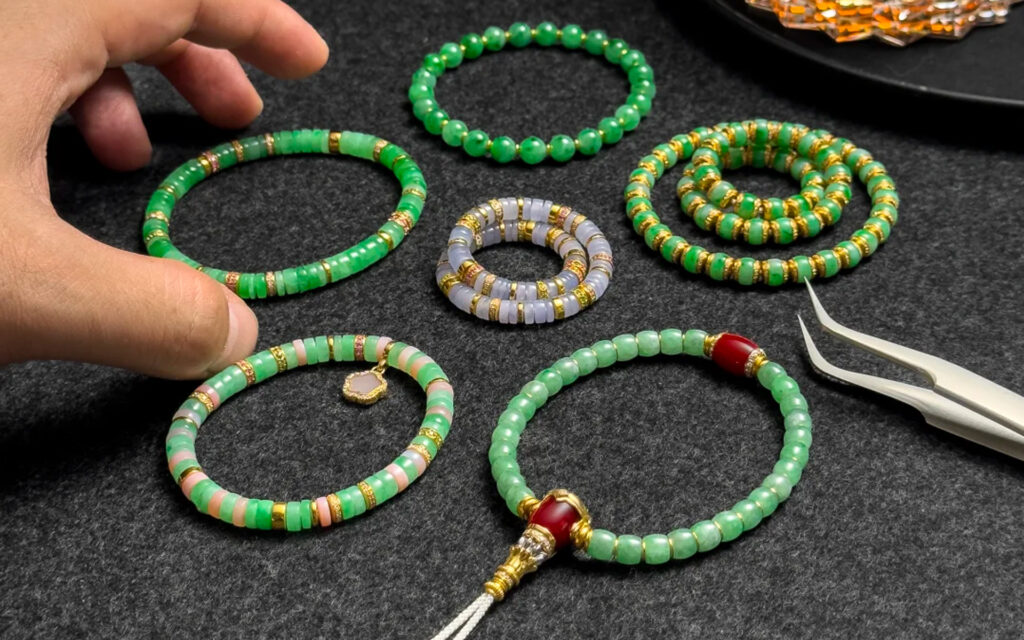
I. Jadeite Bracelet Buying Guide: Practical Insights to Build Confidence
1. Quality, Water, Color, Craftsmanship: Jadeite’s Four Core Criteria
A jadeite bracelet’s value hinges on four key factors: “quality,” “water,” “color,” and “craftsmanship.” Mastering these evaluation standards is your first step toward making informed purchases.
(1) Quality: The “Bone Structure” of Jadeite
“Quality” refers to the structural density and crystal particle size of jadeite, serving as the core factor determining its transparency and luster. Common quality grades, from highest to lowest, are:
Glass-like Quality: Exceptionally high transparency, as clear as glass, with a fine texture and no impurities. This represents the top-tier variety of jadeite.
Ice-like: Second only to glass-like in transparency, featuring minimal cotton-like inclusions. It offers crystal-clear clarity akin to ice and exceptional value.
Glutinous Rice-like: Lower transparency, ranging from semi-translucent to slightly translucent. Its texture resembles glutinous rice soup, making it ideal for daily wear.
Bean-like: Coarse crystal structure with poor transparency. Common in entry-level jadeite, it offers affordable pricing.
Selection Tips: Older jadeite varieties exhibit tighter structures, producing a crisp, resonant sound when tapped. A dull sound may indicate immature jadeite or internal cracks.
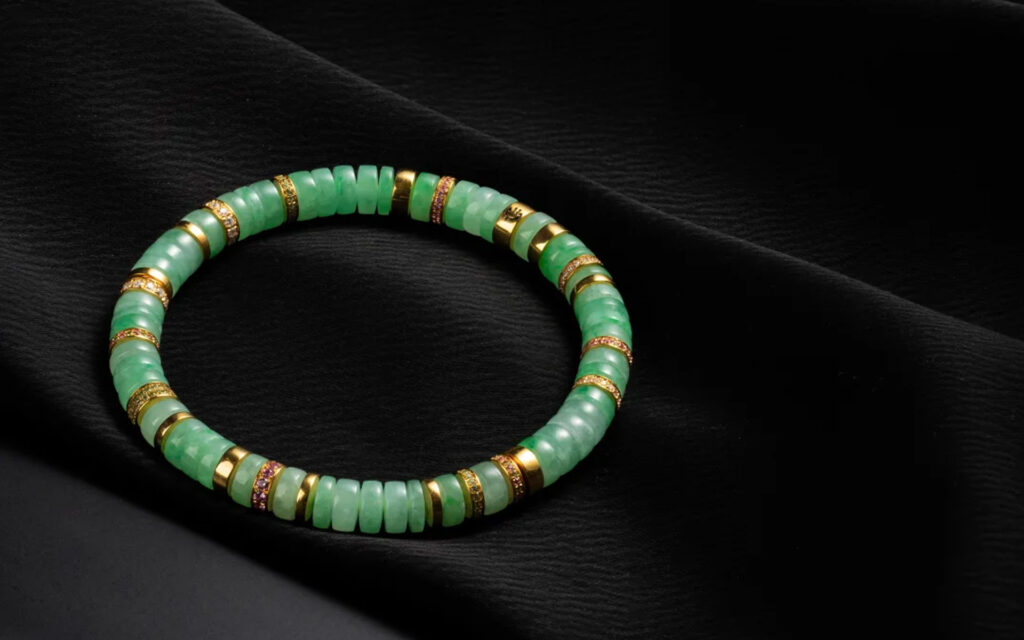
(2) Water: The “Soul” of Jadeite
“Water” refers to transparency, commonly known as “water head.” Jadeite with good water head exhibits strong light penetration, appearing translucent and vibrant overall; poor water head makes jadeite look dry and dull.
One-point water: Light penetration depth of about 3mm, suitable for daily wear.
Three-point water: Light penetration depth exceeding 9mm, indicating high water head jadeite with significant collectible value.
Selection Tip: Examine jadeite bracelets under strong light. Deeper light penetration indicates superior water. Significant internal inclusions or cracks markedly reduce water quality.
(3) Color: The “Appearance” of Jadeite
Jadeite boasts diverse hues, with green being the most prized, while purple, red, and yellow each possess unique charm. Common color categories and evaluation criteria:
Imperial Green: Deep, pure green with high saturation, representing the pinnacle of jadeite.
Sunlit Green: Vibrant, bright green reminiscent of spring buds, radiating vitality.
Violet: Elegant and romantic purple, categorized into pale violet, pinkish violet, and eggplant violet. The best specimens maintain their color under light.
Red Jadeite & Yellow Jadeite: Red resembles maple leaves, yellow evokes honey. Verify natural origin—avoid artificially dyed hues.
Selection Tips: Natural jadeite exhibits gradual color transitions, like tree roots spreading from deep to light shades. Dyed jadeite shows flat, unnatural patches with no depth or layering.
(4) Craftsmanship: The Finishing Touch
“Craftsmanship” refers to carving techniques, encompassing bead roundness, hole polishing, and overall design details.
Round Beads: Uniform size, smooth surface without flaws, holes drilled vertically without skew.
Carved Beads: For designs like Pi Xiu or Ruyi, lines should flow smoothly with balanced proportions, and details must be free of chipped edges.
Design Aesthetics: The overall harmony of the bracelet, such as color transitions and variations in bead size, reflects the artisan’s craftsmanship.
Selection Tips: Touch the surface of the beads with your hand. If it feels uneven or the holes are rough, the craftsmanship is poor. A high-quality jadeite bracelet should feel smooth and warm to the touch, with no obvious flaws.
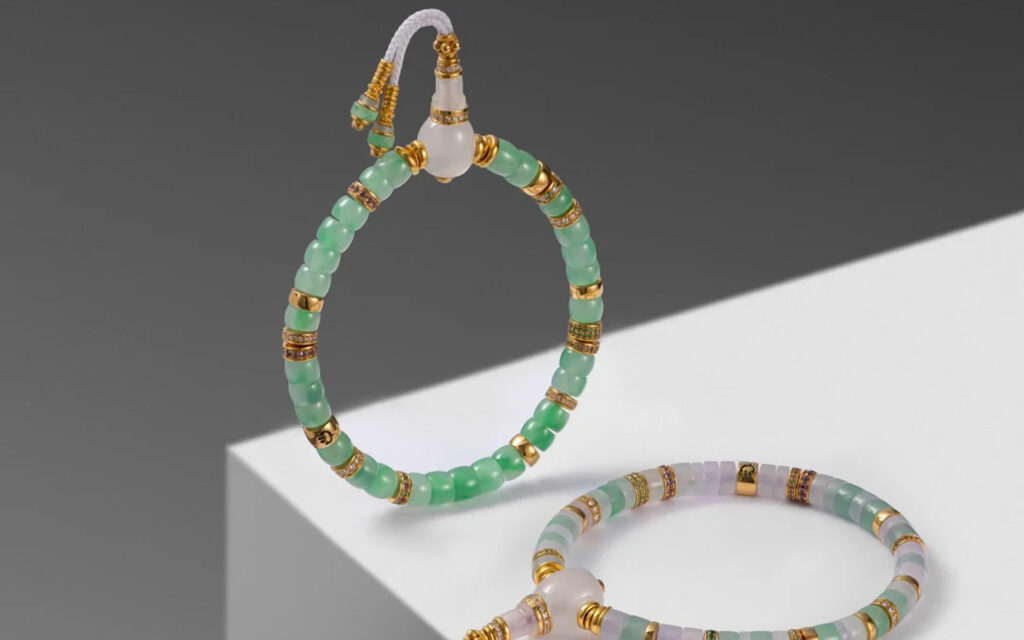
2. Pitfall Avoidance Tips: Quickly Spot Counterfeit Techniques
The jadeite market is rife with counterfeits, with dyeing, acid washing, and resin injection techniques constantly evolving. Master these three methods—“listen to the sound, observe the light, feel the temperature”—to quickly uncover traps.
(1) Sound Test for Authenticity
Natural jadeite has a dense structure, producing a clear, resonant sound when tapped. Acid-washed and resin-injected B-grade jadeite, with its internal structure compromised, yields a dull, short-lived sound.
Method: Suspend the bracelet with a thin string and gently tap it with a hard object to listen for a clear, resonant sound.
(2) Observe Light to Identify Structure
Under strong light, natural jade reveals interwoven fibrous or granular structures. Dyed jade shows a net-like distribution of color roots, while acid-washed jade displays “acid-etched net patterns.”
Method: Shine a phone flashlight directly against the bracelet’s surface to observe whether the internal structure appears natural.
(3) Feel the Temperature and Texture
Natural jadeite has poor thermal conductivity and quickly matches body temperature when worn; glass or plastic imitations conduct heat rapidly, feeling cold to the touch.
Method: Press the bracelet against your cheek or wrist to assess whether the temperature change feels natural.
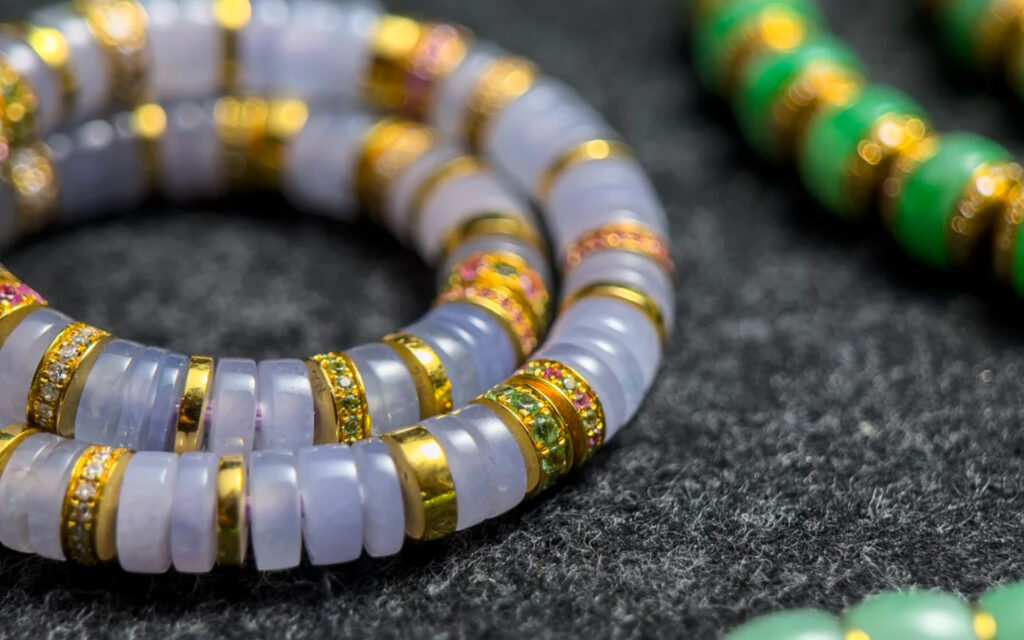
3. Styling Tips: Fashion Rules for Layering Bracelets
Jade bracelets’ versatile nature makes them a popular choice for layering. Here are pairing suggestions based on skin tone, occasion, and clothing style:
(1) Skin Tone Matching
Cool fair skin: Suits high-saturation colors like imperial green or violet to enhance elegance.
Warm Yellow Skin: Opt for warm tones like bright green or red jade to brighten complexion.
Tanned Skin: Experiment with deep hues like black jade or oily green to express individuality.
(2) Occasion Pairings
Daily Commute: Simple glutinous jade bracelets paired with casual wear for understated elegance.
Business Dinners: Ice-like or glass-like jade bracelets with formal attire to project status.
Festive Celebrations: Multicolor mixed bracelets, like green and purple combinations, add festive cheer.
(3) Layering Solutions
Mix with Gold Jewelry: Layer jade bracelets with gold bangles for a clash of tradition and modernity, creating a fashion-forward look.
Mix with Wooden Bracelets: Pair jade with small-leaf rosewood or agarwood bracelets to cultivate a Zen-like atmosphere.
Multi-bracelet layering: Stack jadeite bracelets of varying sizes within the same color palette for rich layering and distinctive personality.
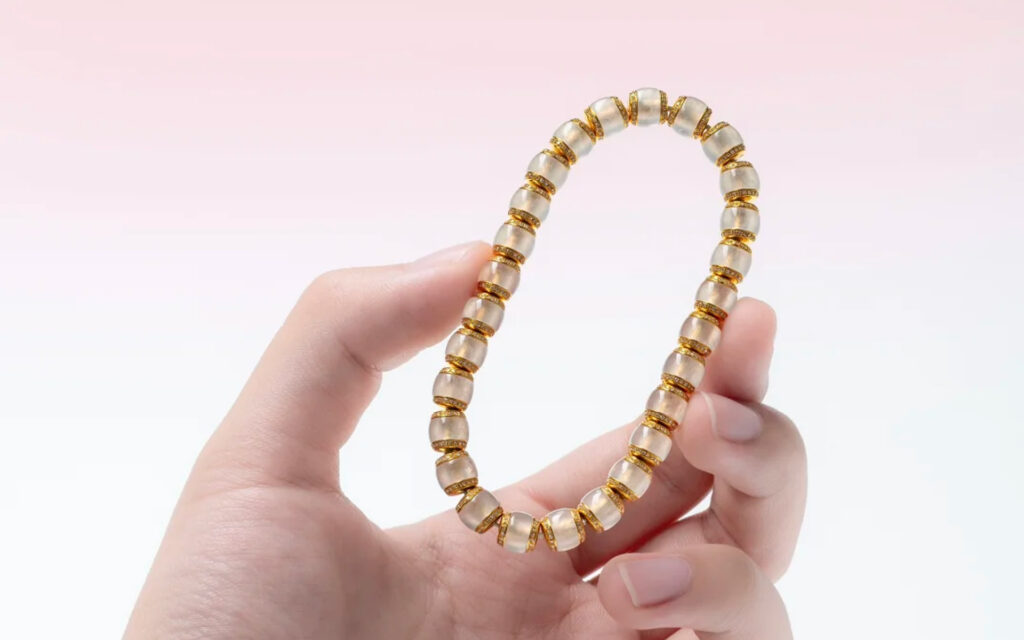
II. Jadeite Bracelet Care Secrets: Thoughtful Tips for Extending Its Lifespan
Though jadeite is hard (Mohs hardness 6.5-7), it remains delicate. Proper care ensures your bracelet retains its luster over time and increases in value.
1. Daily Care: Details Make All the Difference
(1) Avoid Impact
Jadeite’s high hardness masks its brittleness—severe impacts may cause cracks or fractures. When wearing, prevent contact with diamonds, metals, or other hard objects. Store separately to avoid scratches.
(2) Keep Away from Heat
High temperatures cause internal moisture to evaporate, leading to dehydration, dryness, and color fading. Avoid prolonged exposure to sunlight or heat sources. Remove your bracelet when bathing or visiting hot springs.
(3) Regular Cleaning
Jadeite readily absorbs dust and oils. Regular cleaning maintains its luster. Cleaning methods:
Soft Cloth Wipe: Gently wipe the surface with a clean, soft cloth to remove dust.
Rinse with Water: For heavier stains, rinse with clean water. Avoid chemical cleaners.
Ultrasonic Cleaning: For intricately carved pieces, send to a professional facility for cleaning with an ultrasonic cleaner.
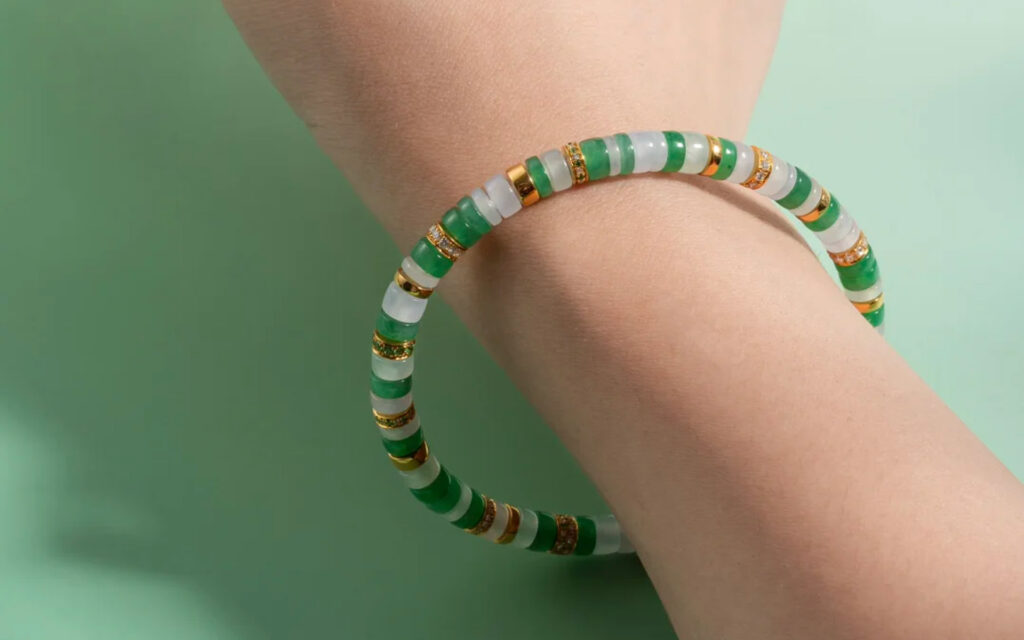
2. Wearing Restrictions: Remove in These Situations
(1) During Exercise
Exercise causes heavy perspiration. The salts and acidic substances in sweat may corrode the jadeite surface, dulling its luster. Additionally, the risk of impact during physical activity is higher, so it’s advisable to remove your bracelet.
(2) Bathing
Chemicals in shampoo, body wash, and other bath products may seep into jadeite, affecting its texture. Hot water accelerates moisture loss, causing the stone to dry out.
(3) Cooking
Kitchen fumes and high temperatures are extremely detrimental to jadeite. Remove your bracelet while cooking to prevent grease buildup and heat damage.
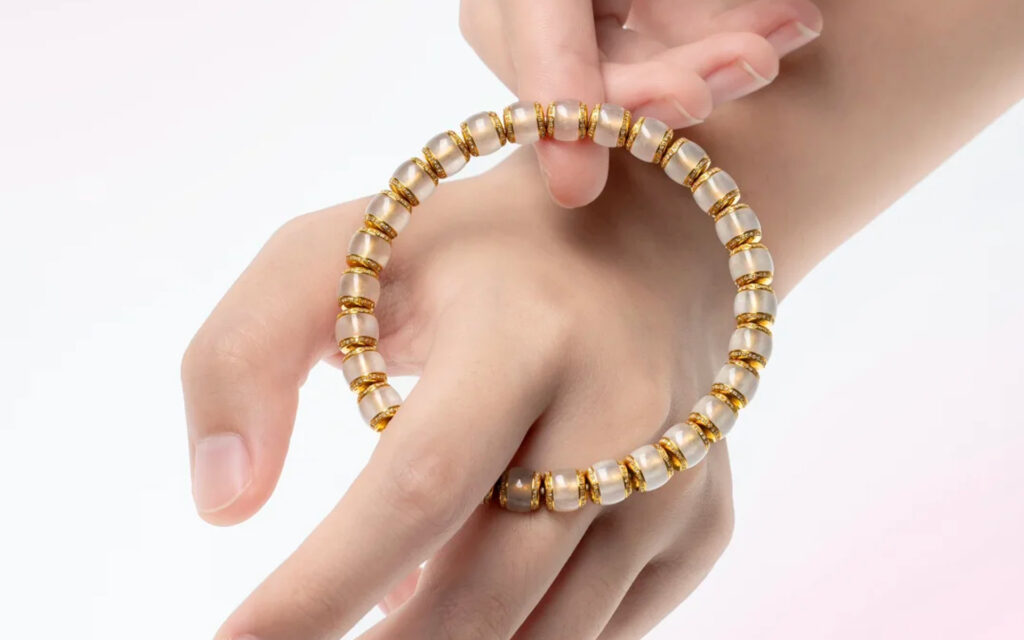
3. Storage Recommendations: Precautions for Long-Term Preservation
(1) Seal in Airtight Containers
When not worn for extended periods, place the bracelet in an airtight bag to isolate it from air and prevent dehydration. Place a small cup of water inside the bag to maintain humidity.
(2) Avoid Compression
Jadeite beads may deform or crack under pressure. Store them flat, avoiding stacking or mixing with hard objects.
(3) Regular Inspection
Periodically check the bracelet’s cord for looseness and the beads for cracks. Replace worn cords promptly to prevent breakage and loss.
Jadeite bracelets are not merely adornments; they are vessels of culture and repositories of emotion. From the meticulous discernment during selection to the careful nurturing in maintenance, each step embodies a pursuit of beauty and reverence for tradition. May this guide and its secrets assist you in choosing a jadeite bracelet that captures your heart, allowing this “jade connection” to grow ever more precious with the passage of time. May each jadeite bead become a vibrant highlight in your life, accompanying you as you write your own extraordinary chapters.