
It is often asked: My jadeite appraisal certificate says it’s Grade A jadeite. Isn’t Grade A in luxury goods (bags, clothes, watches, etc.) just a high imitation? First of all, congratulations to this netizen for purchasing natural jadeite. But do you know that besides Grade A, there are also Grade B and Grade C jadeite? Today, let’s take a look at the differences among these types of jadeite to help you avoid confusion when purchasing.
I. Grade A Jadeite
1. What is Grade A Jadeite?
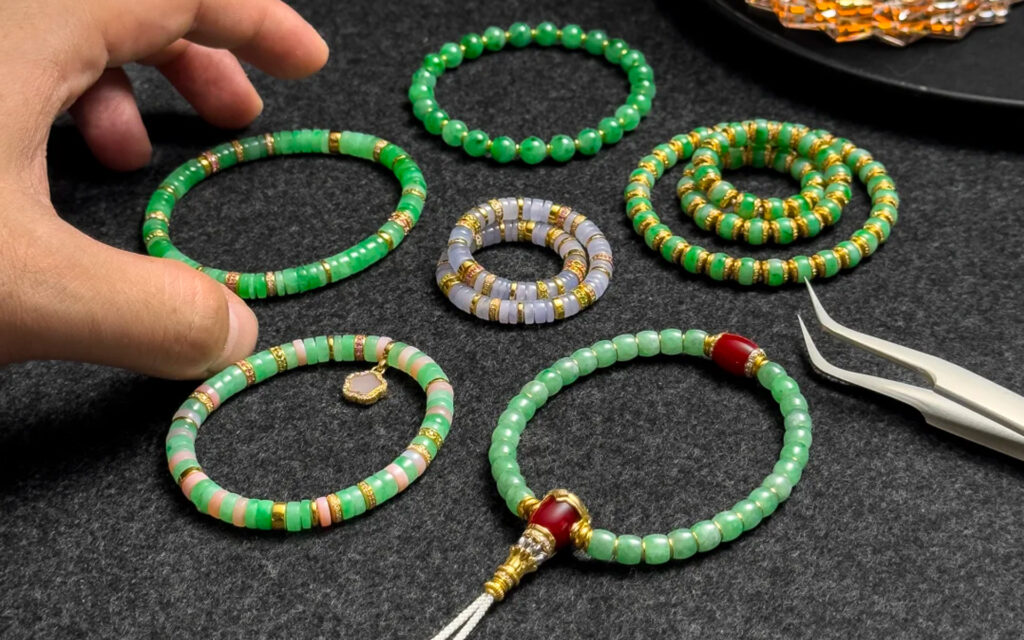
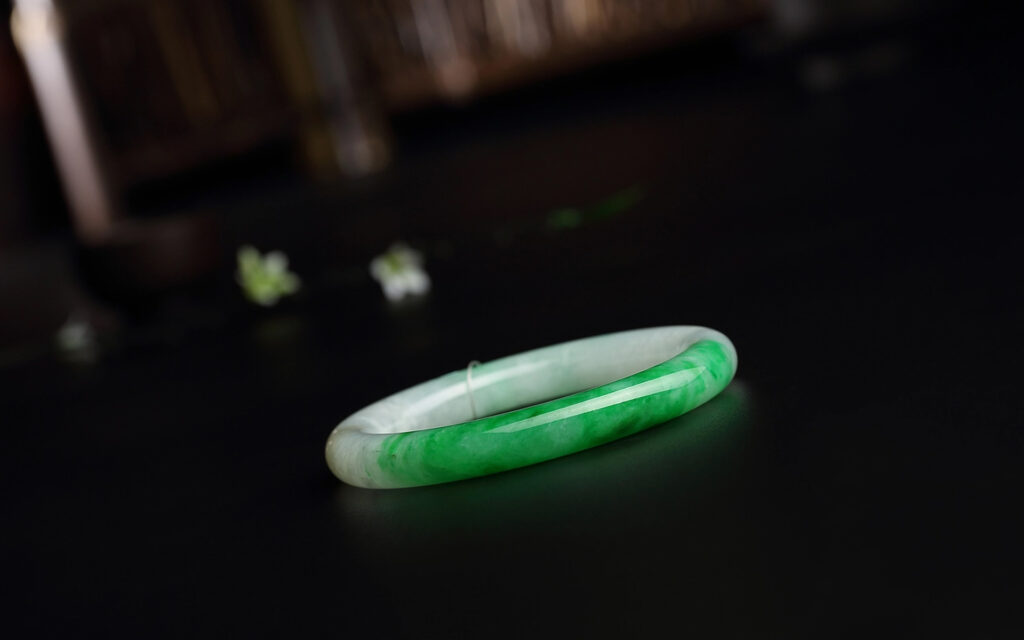
Grade A jadeite refers to untreated jadeite with natural texture, structure, and color. In layman’s terms, Grade A jadeite is purely natural and has not undergone any processing.
Observing the Color Root of Jadeite
The so-called “color root” refers to the distinct streaks or spots of green in jadeite that gradually transition into lighter shades. These noticeable green streaks or spots constitute the color root of the jadeite.
The color of a Grade A jadeite pendant is natural, and its outline is very distinct.
In contrast, the color root of a treated jadeite pendant is unclear, with chaotic spots inside, making it unattractive.
Listening to the Sound of Jadeite
To identify jadeite, you can listen to the sound it emits. For example, with a jadeite bangle, first tie it with a thin string and suspend it in the air. Then, gently tap it with an object like a glass rod.
Natural jadeite produces a crisp sound, while fake jadeite emits a dull sound that lacks clarity.
When using this method, pay attention to the force applied.
Weighing Jadeite in Your Hand
Grade A jadeite has a high density and specific gravity, so it feels heavy when held in your hand.
In contrast, fake jadeite generally has a lower density than Grade A jadeite.
II. Grade B Jadeite
1. What is Grade B Jadeite?
Not every piece of natural jadeite is stunningly beautiful. Some low-grade natural jadeite has coarse particles, appears dry, and has a grayish, dirty background color due to the presence of other minerals during its growth. However, it may have some green, attracting the attention of unscrupulous merchants.
To sell such natural jadeite with a poor background at a high price, some merchants soak it in strong acid to remove black spots and impurities inside.
However, this strong corrosive treatment loosens the original structure of the jadeite, a process known as “bleaching,” which falls under “treatment.”
The acid-soaked jadeite leaves behind small pits and textures on its surface. Merchants then fill these textures with materials like resin, which not only removes the original impurities but also increases the transparency of the jadeite, making it appear very watery. This process is called “resin infusion,” which is a form of “filling treatment.”
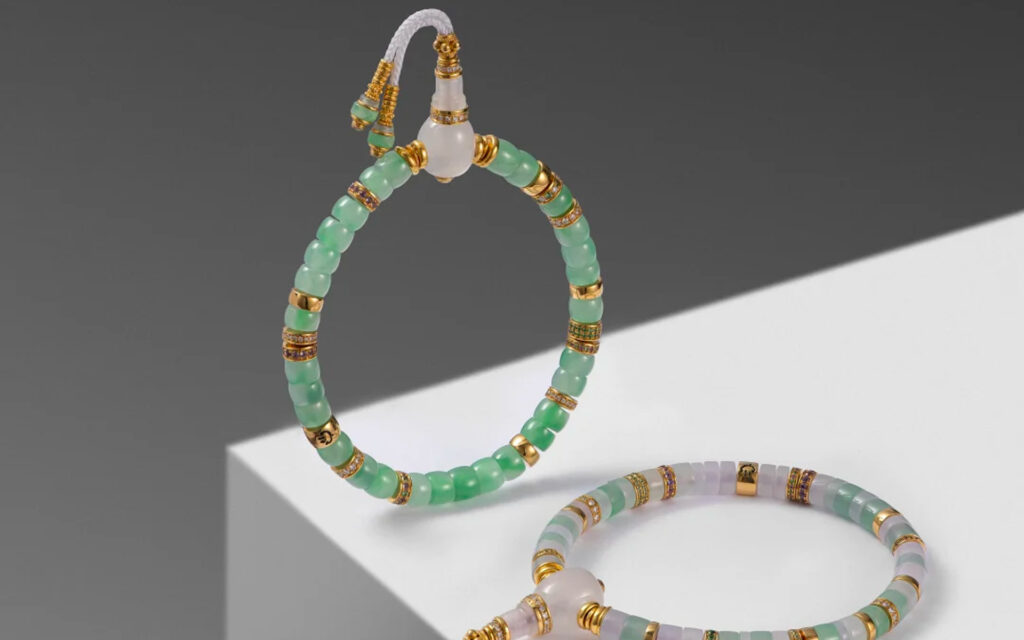
The jadeite product that becomes beautiful and transparent after acid washing and resin infusion is called Grade B jadeite.
2. Characteristics of Grade B Jadeite
Jadeite used to make Grade B products usually has a loose structure and a poor background. After being soaked in strong acid, it becomes severely “osteoporotic.” Although it looks shiny after resin infusion, it cannot withstand the test of time.
The filling material in Grade B jadeite gradually falls off over time or under high temperatures, restoring the jadeite to its original dull appearance. Moreover, the structure of the jadeite becomes more fragile after being subjected to strong acid, making it prone to breakage.
When observing Grade B jadeite under a magnifying glass or with the naked eye in reflected light, its surface exhibits a “resinous luster” or “waxy luster” (meaning it does not reflect light as strongly as Grade A).
Its polished surface shows a network of fine cracks resembling dry, cracked soil, known as “acid-etched netting” or “turtle shell cracks.”
Note: Some Grade B jadeite has such poor quality that the filled cracks are very large, resembling pits, which can easily be confused with the “orange peel effect.”
Nowadays, some merchants create “high-quality” Grade B jadeite by acid washing and resin infusing only the flawed parts of decent-quality jadeite.
This type of jadeite is more deceptive because the untreated parts retain the “orange peel effect” of Grade A jadeite and have a relatively tight texture, making it easy for consumers to mistake it for high-grade jadeite. Therefore, when purchasing, carefully observe every part of the jadeite for subtle “acid-etched netting.”
III. Grade C Jadeite
1. What is Grade C Jadeite?
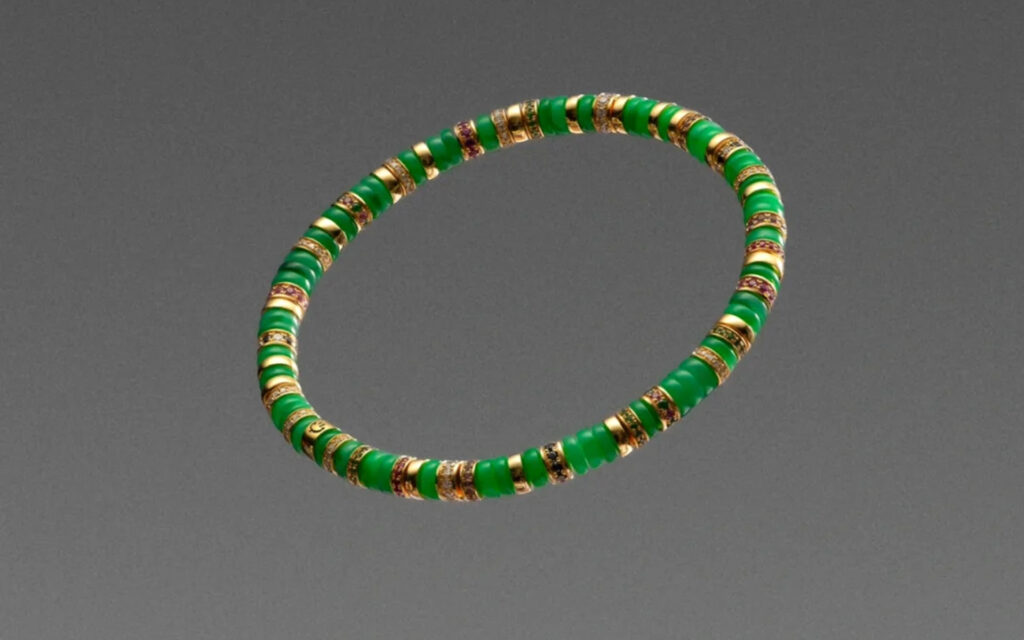
Grade C jadeite is dyed jadeite. It is created by heating colorless or insufficiently vivid jadeite and then soaking it in a colored solution to allow the dye to penetrate through cracks, resulting in vividly colored jadeite in green, red, purple, etc.
2. Characteristics of Grade C Jadeite
To dye jadeite, there must be space for the dye to reside. Therefore, although dyed jadeite appears vivid and eye-catching, it usually has coarse particles and many cracks.
When exposed to long-term light, high temperatures, or oxidation by air, the original vivid colors of Grade C jadeite gradually fade, revealing the jadeite’s true appearance.
The dye in Grade C jadeite enters through particles or cracks, so the colors often distribute in a net-like pattern (similar to loofah sponge) or accumulate in larger cracks. This is the most direct evidence for identifying dyed jadeite, which experienced individuals can easily observe.
IV. How Consumers Can Avoid Being Deceived
Friends without professional training or jade identification experience may not be able to accurately distinguish natural jadeite from artificially treated jadeite based on the above characteristics, leading to a high risk of misjudgment.
Therefore, when purchasing jadeite, it is best to choose a trustworthy brand.
Some jadeite appraisal certificates directly indicate that the jadeite is Grade A, making it easy to understand.
But what if the certificate does not indicate Grade A?
If the test conclusion on the certificate shows “Jadeite XX” (such as jadeite bangle, jadeite pendant, jadeite ring, jadeite吊坠 [pendant], etc.), and the remarks section is blank, it means it is natural jadeite.
If the test conclusion shows “Jadeite (treated),” it proves that the sample is jadeite but has undergone non-traditional, not widely accepted artificial treatment methods. The remarks section will specify the method to inform consumers of the treatment applied to the jadeite.
Additionally, some people may be tempted to buy a low-quality, treated jadeite accessory because of its attractive color and low price, thinking they can wear it for fun for a few days. Although the price is not high, I do not recommend purchasing such jadeite. After all, dyes are chemical reagents, and who can guarantee they are harmless to the body? If it causes skin allergies, it would not be worth the loss.