
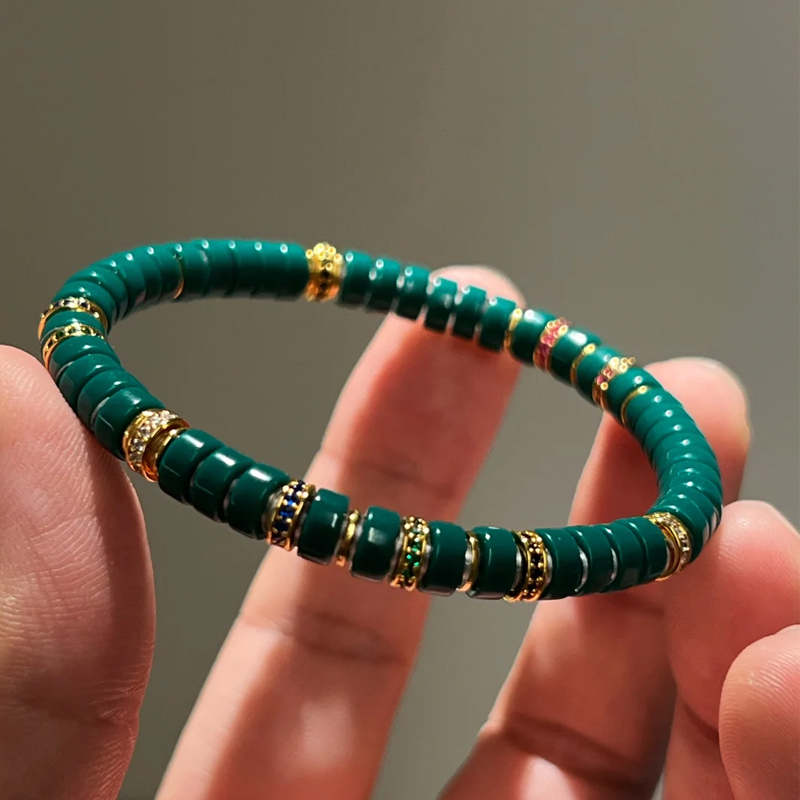
Turquoise bracelets are hand accessories made by stringing together natural turquoise beads. Turquoise, a gemstone with a long history, features a fresh color palette, predominantly in shades of sky blue and emerald green, with textures that range from delicate to uniquely patterned. The beads on the bracelets come in various shapes, such as round beads and barrel beads. Not only are they aesthetically pleasing, enhancing the wearer’s temperament and style, but they also carry rich cultural connotations. In many ethnic groups and cultures, turquoise bracelets are regarded as talismans to ward off evil and ensure safety, making them highly beloved by people.
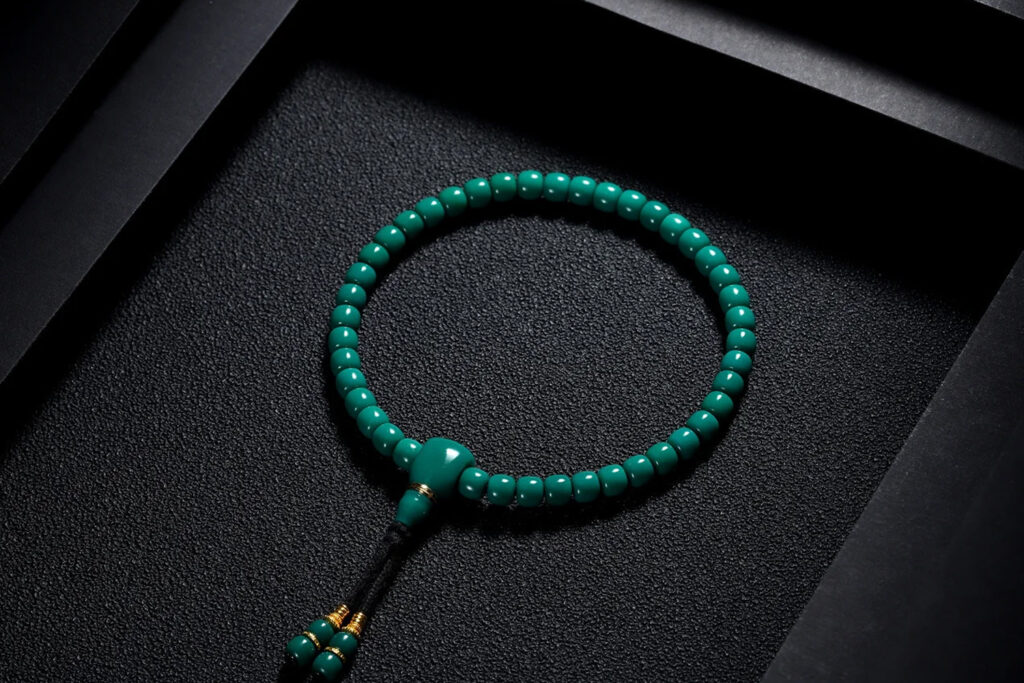
Is it hard to distinguish real turquoise bracelets from fake ones? Here are 5 key features to help you identify them quickly!
Observe the color
As turquoise is naturally formed, its color distribution is generally not particularly uniform, with variations in shades, and it usually features iron lines, which are known as impurity lines. Turquoise that is completely flawless is rare and will be very expensive! Genuine natural turquoise does not fade, whereas dyed turquoise will show signs of fading when rubbed vigorously with paper.
Water immersion method
As we all know, turquoise contains abundant copper and iron elements. Water absorption will darken the color of natural turquoise, while turquoise that has been optimized with glue injection will show no reaction at all. However, it should be noted that some high-porcelain, densely structured natural turquoise will change color very slowly when immersed in water, so this method has its limitations.
Waterline method
The internal structure of turquoise is relatively loose, so it has water absorbency. Immerse half of a genuine natural turquoise in water and leave the other half above the water surface. The part underwater will absorb water and change color, creating a dark waterline between the underwater and above-water portions. This method is very suitable for identifying glass imitations of turquoise. Since glass has a dense structure, it does not absorb water and thus will not have a waterline.
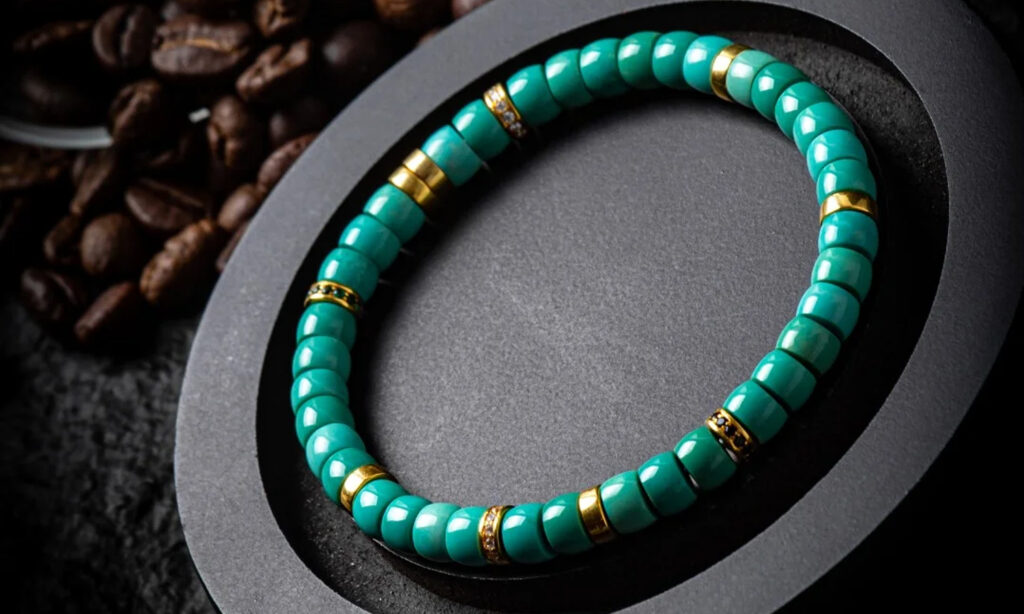
Examine the iron lines
The patterns of natural turquoise are clear and irregular, with sunken iron lines that follow a natural, irregular path, varying in thickness, appearing natural and understated, and feeling somewhat rough to the touch. Artificial turquoise can also replicate the effect of iron lines, but they appear as if they were painted on, lacking naturalness and appearing rigid in their path. To simulate authenticity, artificially synthesized turquoise may also feature iron lines in recessed areas, but these iron lines are usually blocky and their terminations are very unnatural.
Tactile sensation
Turquoise has strong water absorbency, so it will feel slightly sticky to the touch, but not overly so, providing a comfortable sensation. If the turquoise feels smooth and like touching glue, offering no comfort at all, it is likely to have been injected with glue.
Burning test
Genuine turquoise will not burn. This method can identify turquoise that has been injected or infiltrated with glue. When burned, glue-injected or infiltrated turquoise will emit a distinct glue smell, which is pungent, and smoke will appear. Some wax-sealed turquoise may also exude wax, but care must be taken to control the heat, as genuine turquoise is also somewhat susceptible to burning. Burning can change the color of turquoise and easily cause it to crack due to high-temperature water loss, resulting in permanent damage. Therefore, this method is not recommended and is only for experimental purposes!
Destructive method
Generally, counterfeit turquoise only has a fake surface layer, appearing no different from natural turquoise on the outside. However, if the turquoise is smashed open, it will be found that the interior is completely different from the surface layer, with variations in color and texture. After soaking in water, differences in density and colloidal state will be observed. In contrast, natural turquoise has the same internal and external structure, and after being smashed open, there will be no difference whether soaked in water or pricked with a needle.
Identification method
The most reliable way is to have it tested by an authoritative identification institution. Large instruments commonly used for testing turquoise include infrared spectrometers, ultraviolet spectrometers, and XRF fluorescence spectrometers. The identification method is the most scientific and reliable way to distinguish turquoise, but it is important to ensure that the identification certificate is genuine. Therefore, if you are not afraid of the trouble, you can go to an identification institution for testing. Generally, provincial-level identification institutions are relatively reliable.
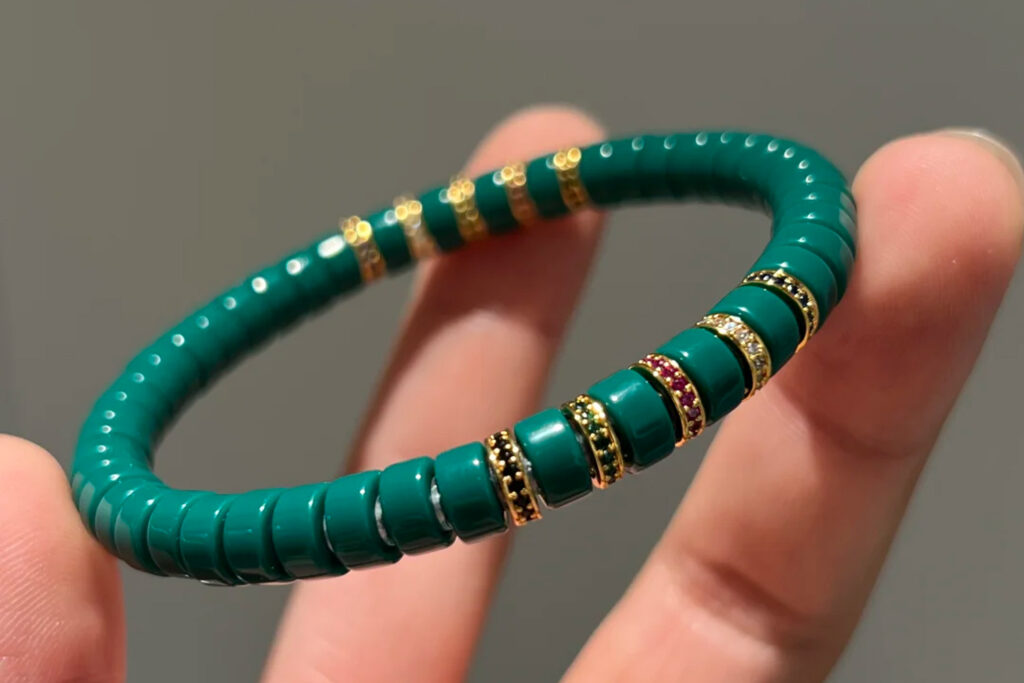
Must-Read for Beginners: How to Choose a Cost-Effective Turquoise Bracelet?
Since turquoise became highly popular in the market, turquoise bracelets have consistently been a favored style among enthusiasts. However, selecting a turquoise bracelet is no easy task. Many people, due to their unfamiliarity with the industry, often end up choosing turquoise bracelets that are not suitable for them. In fact, if you consider the following three aspects when selecting a turquoise bracelet, I can guarantee that you will be able to find the perfect one for yourself in no time.
First, choose based on the style of the bracelet’s beads.
Currently, turquoise bracelets on the market are generally designed with bead shapes such as round beads, old-style beads, apple beads, abacus beads, etc. Some more creative designs may incorporate pumpkin beads, irregularly shaped beads, or even King Kong Bodhi beads. However, bracelets with different bead shapes differ in terms of visual aesthetics and the feel when worn. Therefore, regardless of the bead shape, as long as it meets your personalized needs, you can make a choice based on your own preferences.
Second, select based on the color and porcelain-like quality of the beads.
When discussing turquoise, color and porcelain-like quality are inevitably mentioned, as these are the two most important criteria for selecting turquoise. Therefore, when choosing a turquoise bracelet, you should prioritize beads with a high blue or high green color, meaning the higher the porcelain-like quality, the better. Additionally, it is important to pay attention to the uniformity of color across the entire bracelet, ensuring that each bead is evenly colored and translucent.
Third, consider personal wrist size.
Everyone has a different body type and wrist circumference, so when selecting a bracelet, it is crucial to choose beads that fit your own wrist size. The simplest method is to wrap a small strip of paper around your wrist to measure its length, then leave some extra space to ensure the bracelet is not too tight or too loose. After all, it is essential to wear it comfortably.
The above aspects are all important considerations when selecting a turquoise bracelet. Of course, in addition to these aspects, we should also pay attention to details such as price, authenticity of the material, and whether it is from an original mine. Due to space constraints, I will not elaborate further here.
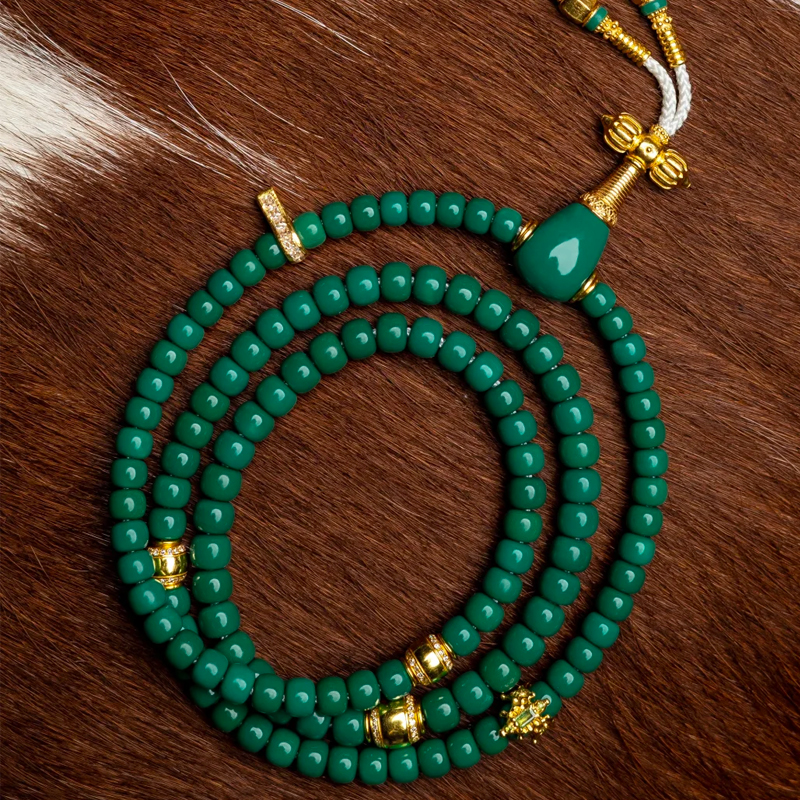
How to Store Turquoise Bracelets Properly When Not Wearing Them for a Long Time? Here’s the Right Way!
Turquoise is one of China’s “four famous jades” and an ancient gemstone with a splendid history spanning thousands of years. There is a beautiful legend: among the seven-colored stones used by Nüwa to mend the sky, turquoise was one of them.
In this era where wearing a bracelet is almost a must and not having one can make one feel out of place, owning a bracelet is no longer a rarity. Today, let’s discuss how to maintain turquoise bracelets to help you keep them looking beautiful.
Avoid “Dryness”
Turquoise thrives in a humid environment. Excessively dry conditions can cause it to lose a significant amount of its internal crystal water, resulting in a dull color and, in severe cases, cracking. If you are a collector in northern China, pay extra attention to this issue. Compared to the rainy and humid southern regions, the north is relatively dry, especially during winter when indoor heating is prevalent. Without proper care, turquoise can easily crack! Prolonged exposure to air-conditioned rooms also poses the same risk. Maintaining a certain level of humidity indoors is advisable; placing a cup of water in the room where turquoise is stored is a good option.
Fear of “Dirt”
Dirt can significantly detract from the elegance of a bracelet. Never handle a bracelet with dirty hands or place it in a dirty environment. When smoking, drinking, or using the restroom, try to keep the bracelet tucked away in a pocket or bag. When eating hotpot or barbecue, keep the bracelet away from smoke and fumes. Additionally, be cautious about letting others touch your bracelet casually. When not playing with it, store it in a pouch for cultural artifacts. While occasional dirt can be wiped off, neglecting care and allowing the turquoise to become stained repeatedly will lead to irreversible damage, leaving you with regrets.
Avoid Excessive “Water”
Among the maintenance methods for turquoise, one tip is to occasionally give it a “bath.” However, it should not be soaked in water continuously. Soaking it once every half month in pure water for 24 hours is sufficient. I’ve heard stories of people wearing their beloved turquoise bracelets while soaking in hot springs, only to have them shatter. I can almost hear the collectors’ cries of despair.
Beware of “Bumps”
Bumps are a form of physical damage, and turquoise bracelets require extra caution. Never store them alongside sharp objects. Turquoise is a type of jade; have you ever seen jade that is resistant to bumps? I certainly haven’t. Be careful when wearing turquoise at home. If you need to do housework or carry heavy items, take a moment to place the turquoise bracelet in a secure box.
Fear of “Neglect”
Turquoise bracelets thrive on human interaction. People nurture bracelets, and bracelets, in turn, nurture people. Many people enjoy watching turquoise develop a patina and change color over time. If a bracelet is neglected and left unused for extended periods, this effect will not be achieved. Human hands secrete sweat and sebum, which are essential for the color change of turquoise. Therefore, play with your bracelet frequently, allowing it to have close contact with your hands.