
How should one select jadeite in the market? Have you grasped the commonly mentioned terms like glass-like, ice-like, glutinous rice-like, and bean-like? Below, we’ll briefly explain the grading of jadeite’s quality and wateriness.
Jadeite, also known as emerald jade or green jade, is a type of jade. Unlike the soft jade variety known as Hetian jade, jadeite is primarily composed of hard jade, a complex microcrystalline aggregate of multiple minerals. It boasts a rich spectrum of colors—green, red, purple, black, yellow, white, blue, and mixed hues—with vivid and deep colors commanding the highest value.
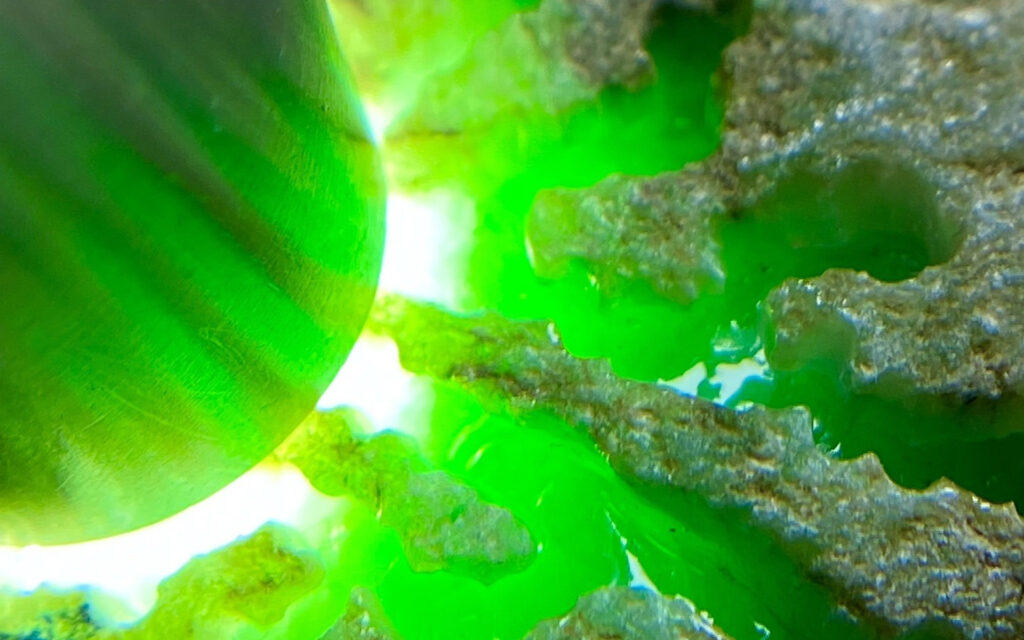
Late Qing dynasty connoisseur and collector Tang Rongzuo wrote in his Treatise on Jade: “Its brilliance rivals spring waves, its delicacy like dripping verdure. Reflected in water, it shines with crystalline clarity; displayed on a table, it dazzles with iridescent wonder—this is jadeite’s supreme artistry.” The pinnacle of jadeite artistry lies in ten qualities: “vivid,” “delicate,” “crystal-clear,” “radiantly luminous,” and “mysteriously iridescent”—aesthetic standards distinct from those of Hetian jade.
Jadeite originates from few locations worldwide. Myanmar holds the highest production volume and finest quality, hence jadeite is also known as “Burmese jade.” Other producers include China, Kazakhstan, Japan, the United States, Mexico, Guatemala, and Colombia, though most yield carving-grade material rather than gem-quality jadeite. Small quantities are also mined in Cele County, Hotan Prefecture, Xinjiang, China.
Following the Qing Dynasty, jadeite imported as tribute from Burma gained immense popularity within the imperial court. The Palace Museum in Beijing houses over 800 jadeite artifacts from the Qing Palace collection, predominantly dating from the mid-to-late Qing period. These include decorative pieces, tableware, and clothing accessories, making it the world’s largest repository of ancient jadeite collections.
Glass-like jadeite represents the finest quality, considered a true treasure. Grades below this include ice-like, glutinous rice-like, and bean-like jadeite, ranging from semi-transparent to slightly translucent with significantly varying luster.
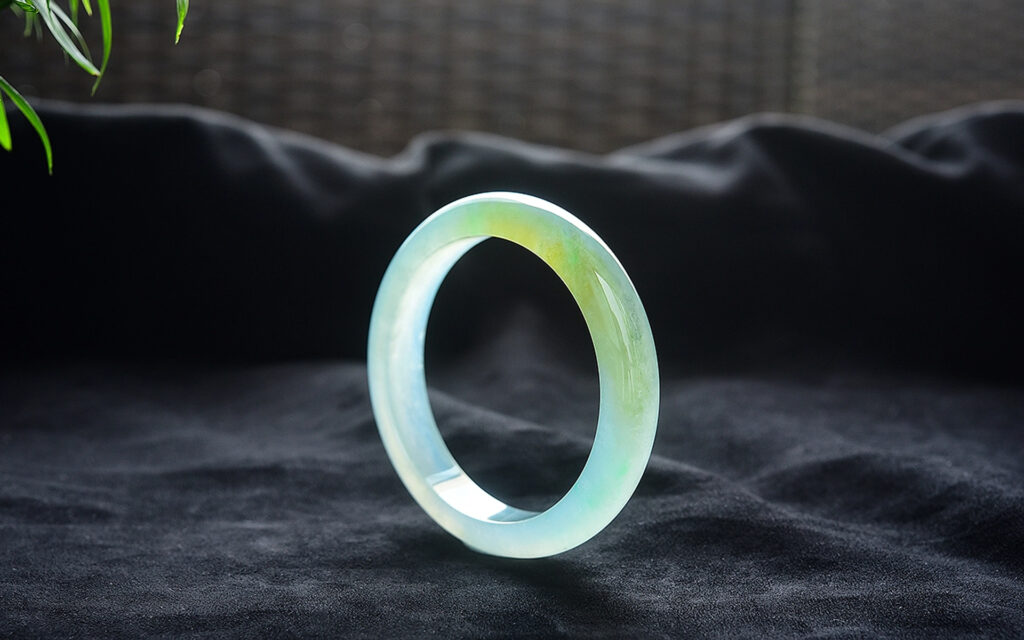
I. Glass-like Jadeite
As the name suggests, glass-like jadeite possesses a clarity and transparency akin to glass. Its texture is pure, fine-grained, and resilient, free from impurities or cloudiness. To the naked eye, it exhibits a luminous glow—referred to within the trade as “emitting radiance”—and produces a crisp, resonant sound when struck.
The defining characteristic of glass-type jadeite is its exceptional transparency, approaching complete translucency. It contains minimal impurities, resulting in a crystalline clarity. Within the trade, it is regarded as possessing the “oldest jadeite type” and the “highest water content.”
Typically, glass-type jadeite originates from old mines, commonly called “old-mine glass-type.” Old-mine jadeite raw materials are exceptionally rare, accounting for less than 1% of total mine output. At jewelry auctions, the record-breaking “imperial green” pieces are predominantly old-mine glass-type.
Jadeite reaching the glass-like variety is exceedingly rare, with those featuring floating green veins being particularly valuable. If abundant green veins are present, or if the jadeite achieves full green coverage with pure, true green hues, it becomes exceptionally precious—truly the pinnacle of jadeite.
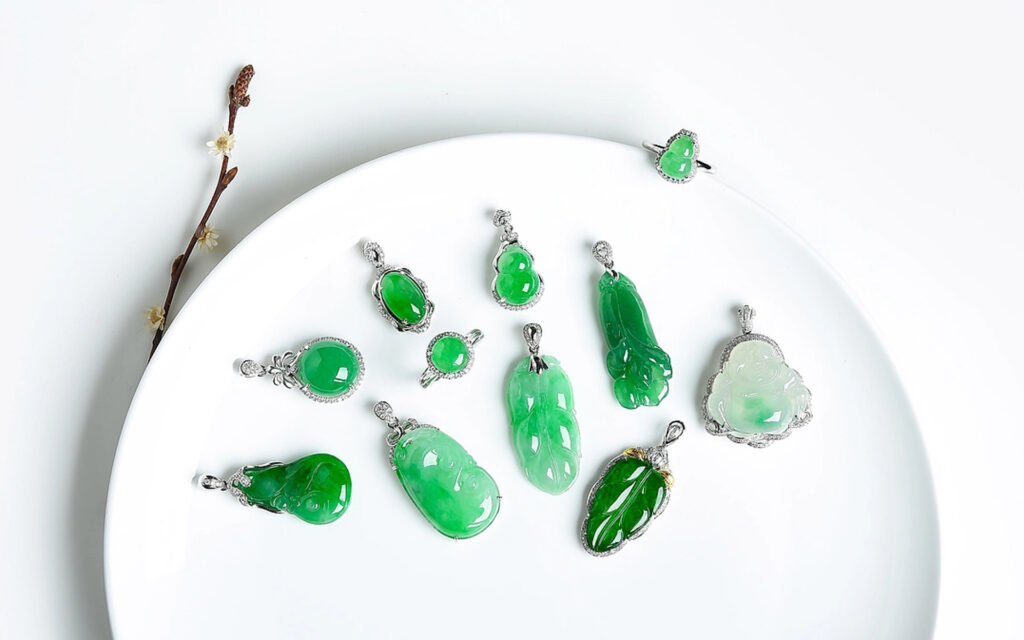
II. Ice-Type Jadeite
Ice-type jadeite ranks second only to glass-type in texture. Its appearance carries an icy crystalline quality, classified as semi-translucent. It possesses three parts warmth and seven parts coolness, evoking a sense of crystalline purity while radiating a subtle, veiled beauty.
Ice-type jadeite boasts excellent transparency and luster, though it contains slightly more impurities than glass-type jadeite, revealing sparse internal cracks, inclusions, or cotton-like patterns. It generally exhibits good density, producing a crisp, resonant sound when tapped, rich in texture and penetrating quality. Ice-type jadeite falls within the mid-to-high-end category and is commonly used for bracelets, pendants, simple forms, brooches, pendants, bangles, and round beads.
The highest-quality, most transparent ice-type jadeite is often referred to within the industry as “high ice-type”—the finest within the ice-type category, though not quite reaching the level of glass-type jadeite.
Though less prized than glass jadeite, ice jadeite remains exceptionally rare. If blue or green floral patterns appear as thread-like or grass-like formations within its texture, the jadeite’s collectible value increases significantly. While ice jadeite commands substantial prices, ice jadeite with floral patterns approaches the cost of glass jadeite.
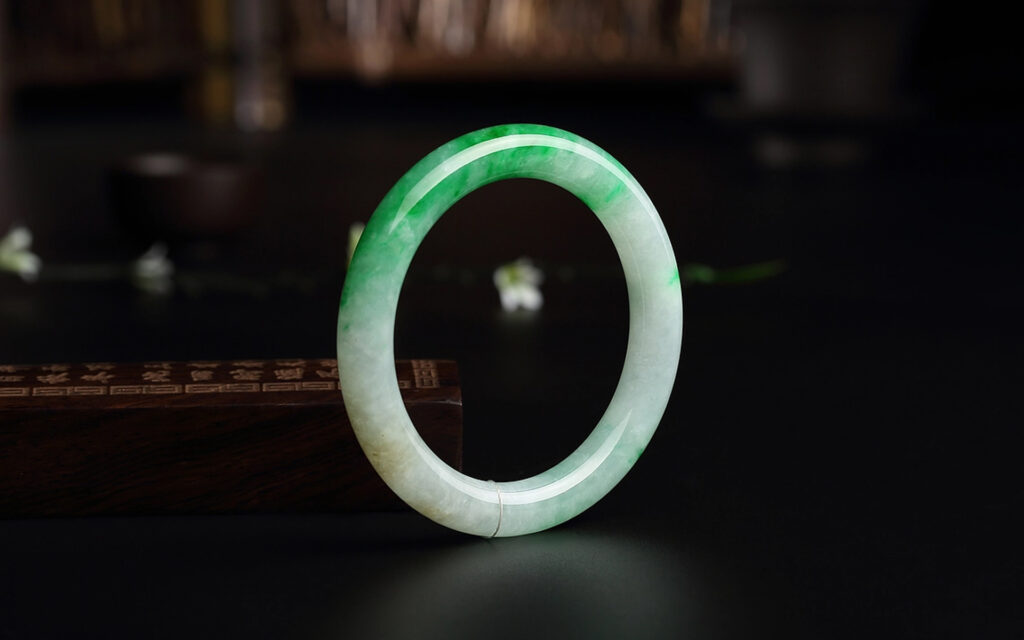
III. Glutinous Rice Jadeite
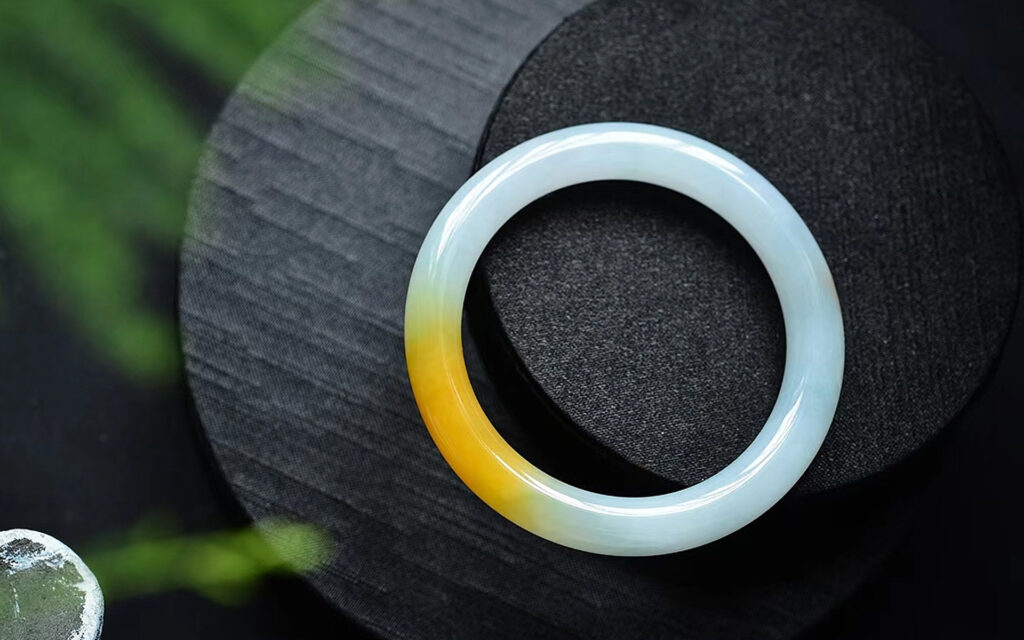
Glutinous rice jadeite occupies half the market share within the jadeite family, representing a common variety currently available and falling into the mid-range category. Its texture surpasses that of bean-grain jadeite while offering greater price advantages than ice-grain or glass-grain jadeite, making it highly sought after. Beginners especially often choose glutinous rice jadeite for their first piece.
The texture of glutinous rice jade lies between transparent and opaque, resembling glutinous rice soup. It possesses a warm, soft, and sticky feel, yet its fineness surpasses that of bean-grain jade, with no visible crystal structure on the surface.
In today’s market, dealers categorize glutinous rice jade into four tiers based on texture, from lowest to highest grade: Glutinous Rice, Fine Glutinous Rice, Glutinous-Ice, and Glutinous-Ice-Like.
Glutinous Rice Jade resembles steamed glutinous rice in texture, featuring low transparency, slightly lower density, average water content, and typically appearing milky white. For those seeking a lustrous, jewel-like appearance, glutinous rice jadeite is not the ideal choice. However, its affordability and texture resembling that of Hetian jade contribute to its substantial market volume.
Fine Glutinous Rice Jadeite: This variety exhibits higher density than glutinous rice jadeite, with no visible granular texture to the naked eye. It possesses a good glassy luster and a fine, uniform base, positioning it as a mid-range glutinous rice jadeite.
Glutinous-ice jadeite occupies the middle ground between fine glutinous and glutinous-ice jadeite. Its crystal particles are fine and tightly structured. Within its cotton-like opacity, patches of clarity emerge where cotton clusters partially dissolve, creating a semi-translucent effect. It possesses a pronounced hazy quality, with crystal structure virtually invisible to the naked eye. This classifies it as upper-mid-range glutinous jadeite.
Glutinous Ice Jadeite
This variety occupies the middle ground between glutinous and ice jadeite. Its texture is fine and compact, though dotted with numerous minute inclusions. It exhibits considerable translucency, abundant water content, and premium characteristics like gel-like luster, placing it among the higher-grade glutinous jadeite categories.
IV. Bean Jadeite
Bean-grain jadeite features coarse crystals, predominantly short prismatic in shape, resembling beans arranged within the stone. These crystal boundaries are clearly visible to the naked eye. Due to its coarse grain structure, the surface of such pieces tends to be rough, with poor luster and transparency. It is commonly referred to within the industry as “dry water” and is classified as low-grade jadeite.
Despite this, bean-type jadeite maintains solid market appeal. On one hand, it possesses the green hue favored by most—though not intensely vibrant, it remains vivid and attractive. While not uniformly distributed, its coloration appears scattered like stars. Overall, bean-type jadeite exhibits a warm, mellow luster that aligns well with traditional Chinese aesthetic preferences. On the other hand, bean-grade jadeite is affordable and commonly used for bracelets, pendants, carvings, and nearly all types of finished jadeite products.