
As a classic accessory of Eastern culture, jade bracelets not only embody the profound heritage of millennia-old jade culture but also symbolize modern pursuits of quality living due to their unique health benefits and aesthetic value. Below, I will unveil the mysteries of jade bracelets from three key perspectives: the benefits of wearing them, selecting the number of beads, and authenticating their genuineness.
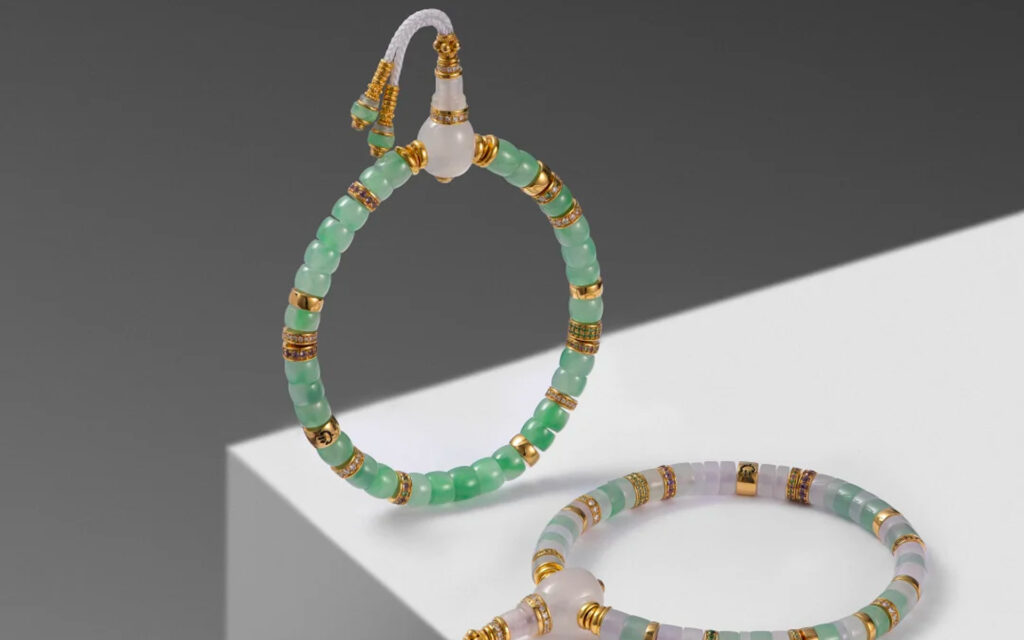
Benefits of Wearing Jadeite Bracelets
Among all jewelry, jade holds the highest status. Since ancient times, it has symbolized nobility and elegance, carrying profound cultural significance. In recent years, its popularity has surged, with more people choosing to purchase jadeite jewelry. While many associate jade with feminine grace, it’s increasingly popular among men who wear jade bracelets.
Truthfully, these bracelets suit both genders exceptionally well, primarily due to their numerous advantages. Firstly, they offer significant health benefits. Men often choose jade bracelets as a testament to their faith. Those with deep convictions possess a sense of inner fulfillment and tranquility, enabling them to perceive life’s true essence through their hearts.
The bracelet calms a man’s heart, helping him rediscover his true self amidst a materialistic society. Moreover, it enhances wealth and safeguards well-being. Imbued with nature’s spiritual energy, the bracelet’s power can significantly boost a man’s financial fortune while warding off misfortune and ensuring safety. Furthermore, possessing such a powerful psychological talisman can cultivate greater confidence and optimism in one’s daily life, naturally attracting positive fortune.
Additionally, these bracelets offer health-promoting benefits, though distinct from medical treatment. Health promotion refers to their ability to bring physical advantages, not to cure illnesses. Its effects are somewhat similar to those of a bracelet. That is, the elements contained within it gradually permeate the body through contact, supplementing the elements the body needs to maintain a healthy state.
Moreover, such a bracelet can enhance one’s appearance. We all know that girls’ jewelry like pendants, earrings, and so on require corresponding outfits to match them in order to best showcase their charm. A bracelet is different—it imposes no conditions, suits anyone, and complements any outfit. No matter what you wear or where you go wearing it, it never looks out of place.
Another advantage is its wide range of colors. Those who dislike styling their outfits can simply choose their favorite color for a stunning decorative effect. It saves time while enhancing your charm. Given these advantages, selecting the right bracelet requires some know-how. First, examine whether the color is evenly distributed. Next, assess whether the texture is sufficiently smooth and refined. Finally, check if the beads are uniformly sized. Most importantly, when comparing bracelets of similar quality, opt for the one with larger beads.
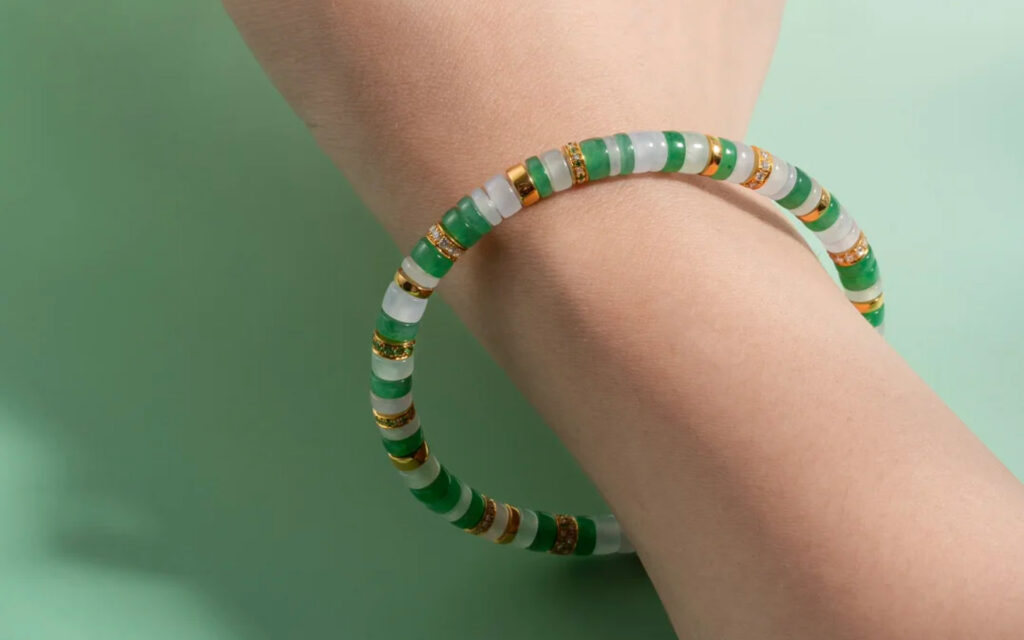
How many beads should a jadeite bracelet ideally have?
Currently, jadeite bracelets can have up to 108 beads, which holds special significance. In Buddhism, the number 108 represents the 108 worldly afflictions. This type of bracelet is worn only by a select few, primarily practitioners or during major ceremonies. Wearing it is straightforward: simply wrap it around your wrist several times. However, in traditional Chinese Taoist culture, the number 108 also embodies the cosmic energy of the heavens and earth, representing the total number of celestial and terrestrial spirits. Thus, this jade bracelet carries the meaning of safeguarding peace and well-being.
A 52-bead jadeite bracelet corresponds to the 52 tribulations encountered by the Bodhisattva in Buddhism. Legend holds that as long as the wearer maintains virtuous intentions, the Bodhisattva will bestow blessings, transforming the bracelet into a protective amulet.
The 36-bead jadeite bracelet represents the 36 benevolent deities in Buddhism who are closest to humanity, also known as the Thirty-Six Divine Kings. Of course, the most widely recognized name for these benevolent deities is the Eightfold Assembly of Heavenly Dragons. This type of jadeite bracelet shares the same symbolic meaning as the 108-bead version and is more convenient for daily wear.
The 27-bead jadeite bracelet symbolizes Buddhism’s Twenty-Seven Sages. Imbued with sage-like wisdom, it is particularly suited for college entrance exams, career advancement, and intellectual pursuits. Historically, the renowned Emperor Yongzheng held this style of jadeite bracelet in highest esteem.
The 21-bead jadeite bracelet represents the 21 tribulations and stages encountered by the Bodhisattva from cultivation to Nirvana. Thus, it signifies approaching a transitional phase in life, bringing peace, prosperity, and warding off misfortune.
The most common jade bracelets on the market feature 18 beads. They represent the Buddhist 18 Arhats or 18 types of wisdom. Not only do they carry auspicious connotations, but they also hold significant importance in people’s hearts. They are also very convenient to carry. Therefore, the 18-bead bracelet is particularly suitable for the elderly to wear, symbolizing health as robust as that of the 18 Arhats. Additionally, they can be gifted to those recovering from prolonged illness or serious health challenges.
Given Buddhism’s doctrine of the Twelve Links of Dependent Origination, jade bracelets with twelve beads hold deep significance. They symbolize seizing opportunities, advancing one’s career, and increasing wealth. They suit individuals who are mature, confident, and goal-oriented. Thus, it becomes clear that the number of beads in a jade bracelet carries profound meaning. We can select them according to our specific needs.
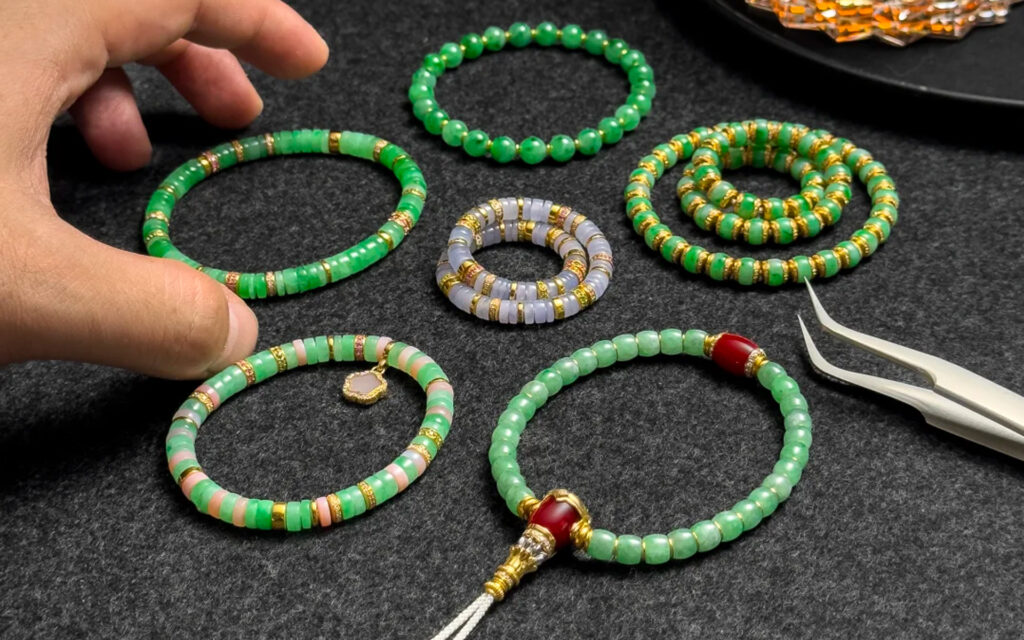
How to Identify Authentic Jadeite Bracelets?
The market is flooded with jadeite products. If you’re new to jadeite and lack sufficient experience, you’re likely to end up with counterfeit pieces. Don’t worry—while jadeite authentication sounds straightforward, it’s often challenging in practice. Though methods for identifying jadeite can be learned through various channels, even these struggle to keep pace with increasingly sophisticated counterfeiting techniques. Without years of hands-on experience honing your discernment, achieving precise identification remains difficult. Today, we’ll share some simple tricks to visually identify genuine jadeite beads!
1. Jadeite is exceptionally hard, possessing a level of hardness unmatched by many other natural gemstones. When struck against other stones, it rarely sustains damage. Based on this property, you can test a jadeite piece by scratching it with a hard object. If it leaves a mark, it’s likely fake; if no scratch appears, it’s genuine. Since this method risks damaging the jadeite, always obtain the seller’s permission first to avoid unnecessary trouble.
2. Clap two pieces of jade together. A clear, resonant sound indicates genuine jade, while a dull, lifeless sound suggests a fake. For a single piece, suspend it by a string and gently tap it with agate to assess authenticity.
3. Jadeite is a natural gemstone, so flaws or dark spots are inevitable. Even high-end jadeite will have imperfections to some degree. Therefore, jadeite with cracks, spots, or dark spots is normal. Conversely, jadeite that appears flawlessly perfect yet is priced low is highly likely to be artificially treated B-grade or C-grade material. Therefore, use tools like magnifying glasses or flashlights for careful inspection before purchasing.
4. Synthetic jade uses various base materials, such as low-value Malaysian jade, Xiuyan jade, or even glass. These tend to be lightweight, whereas natural jade feels substantial. Weighing stones of similar size in your hand reveals lighter pieces as likely counterfeits. Genuine jadeite feels substantial in the hand, conveying its weight distinctly.
5. Jadeite sold through legitimate channels comes with an appraisal certificate. This document includes corresponding photographs, weight, density, and other characteristic details—information that can also be verified online. If a seller cannot provide an appraisal certificate during purchase, the jadeite is likely counterfeit. Always request this document from sellers.
These are some handy tips for distinguishing genuine jadeite beads from fakes. Have you gained some new knowledge today? Now you can approach jadeite purchases with confidence, no longer worrying about being deceived!
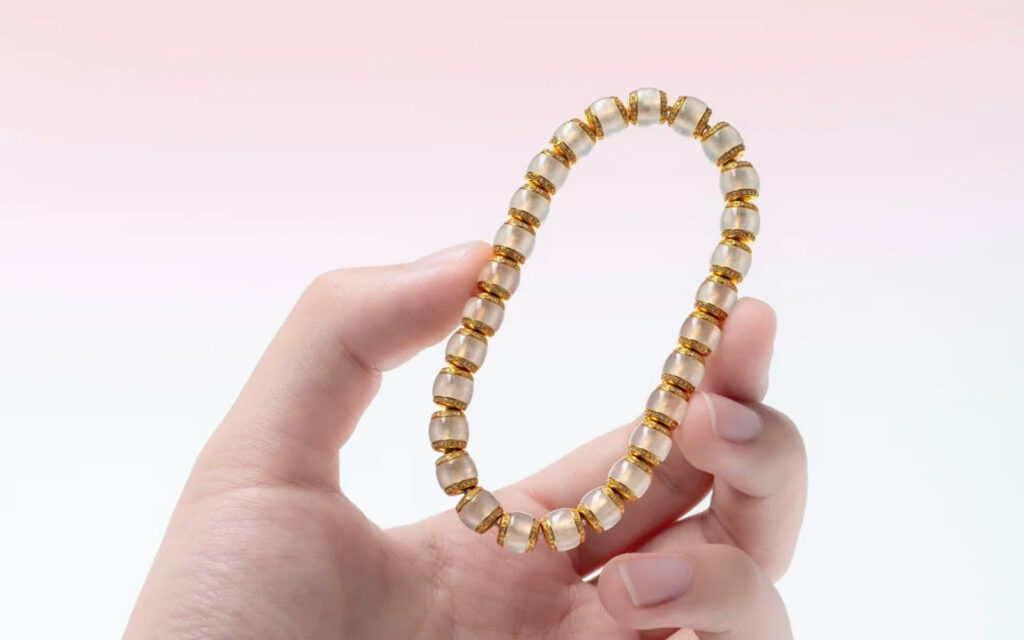
Selecting jadeite bracelets is both a cultural aesthetic experience and a scientific discernment process. Consumers are advised to prioritize products certified by authoritative institutions such as the Jewelry Testing Center of China University of Geosciences. Within budget constraints, strive for a balanced harmony among the four key attributes: quality, translucency, color, and craftsmanship. When wearing, avoid exposure to high temperatures and direct sunlight. Regularly polish with a soft cloth to maintain luster, ensuring this millennia-old Eastern treasure continues to radiate its timeless vitality.