
Many people do not understand the concepts of “jadeite” and “jade,” mistakenly interpreting “jade” as “jadeite” or as a specific type of jade. They may ask, puzzled: Which is better, jadeite or jade? What are the differences between them? Let’s explore these questions below.
I. What is “Jade”?
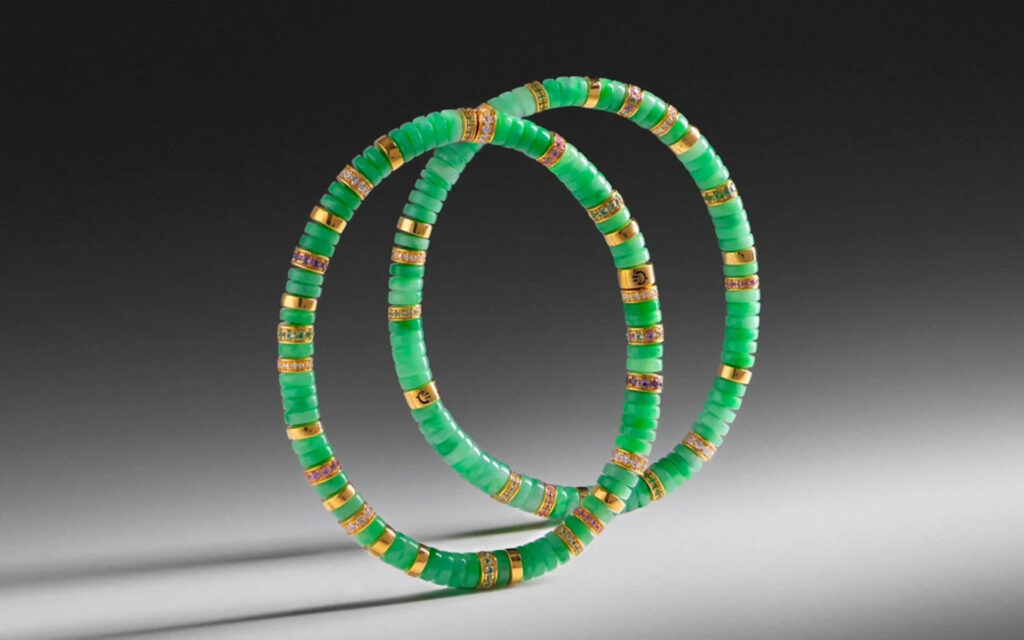
What is “jade”? According to the ancient text Shuowen Jiezi, “jade is a beautiful stone,” meaning any stone that is warm, moist, and lustrous can be called jade.
From the perspective of gemology and traditional Eastern culture, “jade” is a broad term encompassing Hetian jade, jadeite, Xiuyan jade, Dushan jade, agate, turquoise, and more. In common usage or within the jade industry, “jade” can also be narrowly divided into nephrite (soft jade) and jadeite (hard jade).
Nephrite refers to jade that does not include jadeite, primarily consisting of Hetian jade, Kunlun jade, and others. Jadeite refers to jadeite or jadeite rock. Within specific sectors of the jade industry, merchants may also refer to a particular type of jade simply as “jade.” For example, in the jadeite industry, jadeite is often called “jade,” and similarly, in the Hetian jade industry, Hetian jade may be referred to as “jade.”
II. What is “Jadeite”?
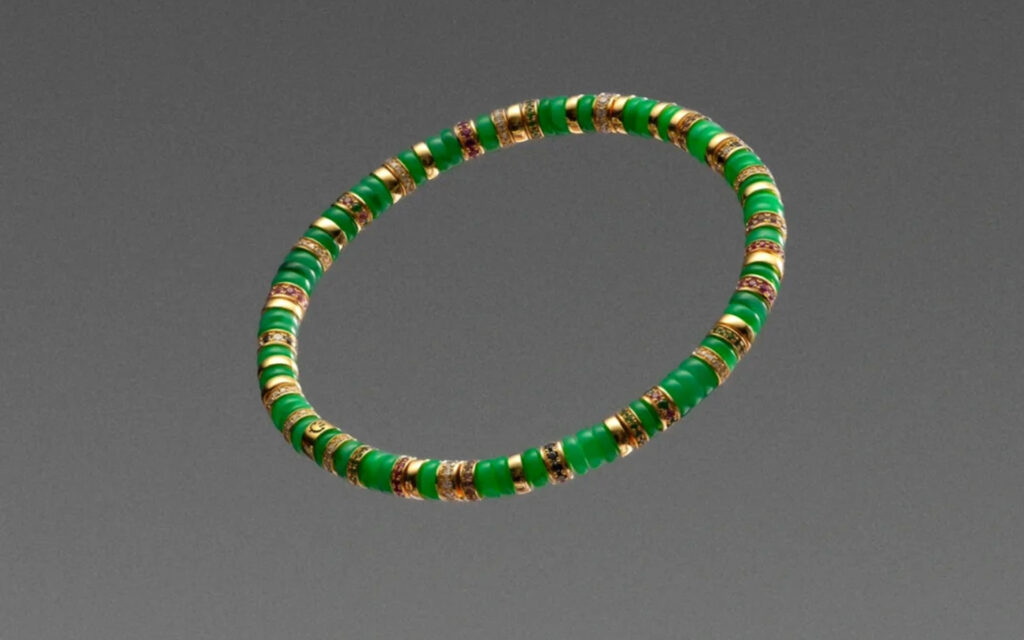
Jadeite is a specific variety among many types of jade, primarily composed of the mineral jadeite. In addition to jadeite, it contains other minerals such as pyroxene, feldspar, amphibole, and iron-bearing minerals, though these secondary minerals are present in relatively small and uneven proportions.
From both petrological and commercial perspectives, there are some differences in understanding what constitutes jadeite. Petrologically, jadeite is considered a rock because it is composed of multiple minerals, making it a type of jadeite rock. When the content of omphacite is high, it can also be classified as omphacite rock.
Commercially, jadeite refers to gem-quality jadeite rock and omphacite rock that possess artistic and commercial value. The name “jadeite” is derived from the jadeite bird, with “fei” referring to red or yellow and “cui” referring to green. High-quality jadeite with excellent color and transparency is known as “high-grade jadeite.”
III. Conceptual Differences Between Jadeite and Jade
In gemology, “jade” is a broad category that includes jadeite, nephrite, water foam jade, Xiuyan jade, Dushan jade, Huanglong jade, Malaysian jade, agate, and more. “Jadeite,” on the other hand, specifically refers to one type of jade within this category.
The relationship between jadeite and jade is similar to that between “tea” and “Tieguanyin.” “Tea” is a broad category that includes Tieguanyin, Longjing, jasmine tea, chrysanthemum tea, and others, while “Tieguanyin” refers specifically to one type of tea.
Thus, it can be said that jadeite is indeed a type of jade, a member of the “jade” family, but not all jade is jadeite. It is important to note that within the jadeite industry, merchants often refer to “jadeite” simply as “jade,” such as when buying or selling jade, conducting jade business, or referring to Burmese jade or jade bracelets. This is a common practice understood among jadeite professionals.
Jadeite is known as the “king of jade” and is internationally recognized as a gem-quality jade. It possesses unique characteristics and advantages unmatched by other jade varieties. Specifically, jadeite has six notable features: rich color, stable physical properties, strong luster, high refractive index, high specific gravity, and high hardness. Additionally, gem-quality jadeite is only found in specific mineral veins in Myanmar, and the exclusivity of its origin contributes to its noble quality—”rarity makes value.”
IV. Price Differences Between Jadeite and Jade
Jadeite and other types of jade differ not only in quality and properties but also in price.
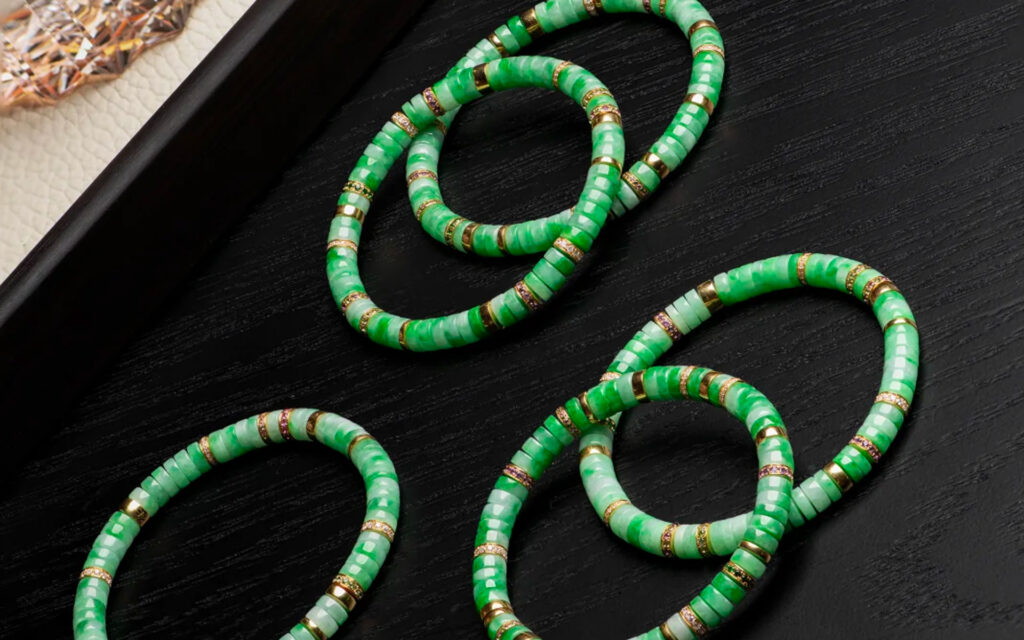
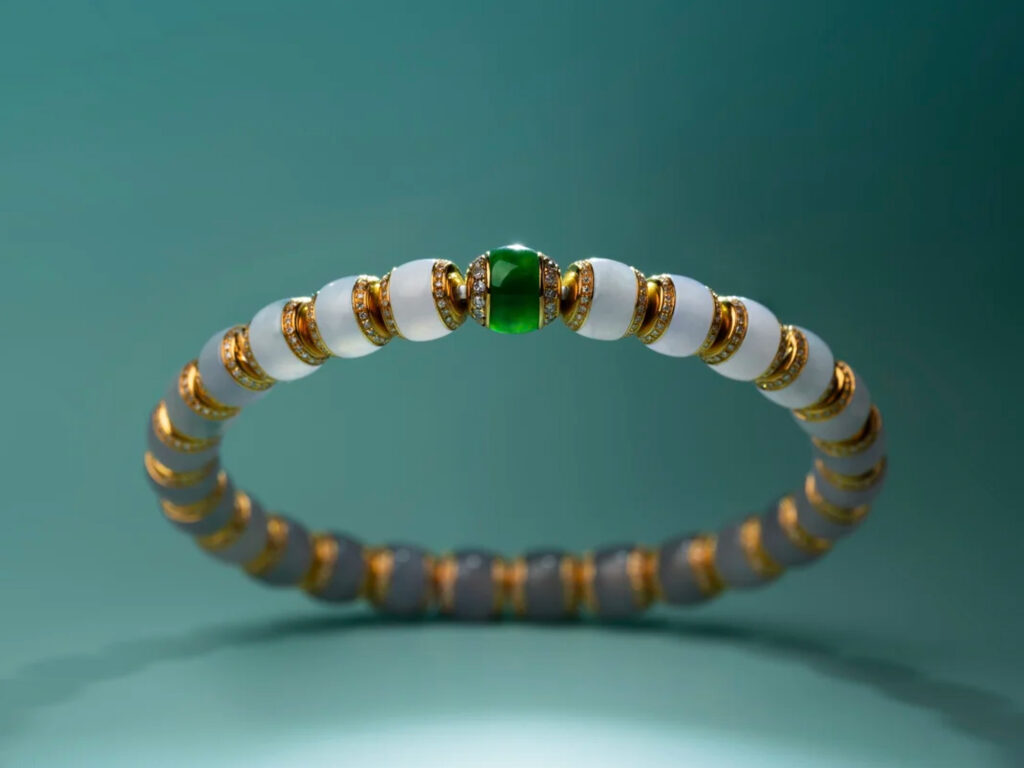
Overall, jadeite commands the highest prices among all types of jade. A single glass-kind full-green jadeite bracelet can sometimes reach nearly ten million yuan or even exceed that amount, with auction prices for jadeite necklaces reaching hundreds of millions.
Hetian jade ranks second in terms of overall price. Apart from average-quality Hetian jade, high-quality Hetian jade can rival mid-to-high-grade jadeite in price. Due to the smaller size of Hetian jade raw materials, which are suitable for making bracelets, a genuine Hetian jade bracelet of “mutton fat” quality can also approach one million yuan in price.
Among all types of jade, jadeite and Hetian jade are considered the two most expensive varieties. Even mid-range or low-range jadeite or Hetian jade accessories can be more expensive than the highest-quality pieces from other jade types.
In contrast, other types of jade besides jadeite and Hetian jade generally have lower prices, varying based on their quality and consumer preference. Some are slightly higher, some slightly lower, and some are very inexpensive.
For example, high-quality Kunlun jade or Russian jade pendants, both classified as nephrite, range in price from a thousand to several thousand yuan, close to mid-range Hetian jade but lower than mid-range jadeite. Water foam jade and Huanglong jade are even less expensive, with a high-quality water foam jade bracelet costing a few thousand yuan and pendants a few hundred yuan, similar to Huanglong jade prices.
Xiuyan jade, Dongling jade, agate, and others are considered low-grade jade, with prices as low as one to two hundred yuan or even tens of yuan for a bracelet made from these materials. So-called “Malaysian jade” on the market is actually dyed quartzite, a fake product created through artificial processing, with a price comparable to Afghan white jade (primarily quartzite) or ordinary marble used in construction materials—all considered low-grade jade. In fact, many in the jade industry do not recognize these so-called jade varieties.
Of course, not all jadeite is expensive; some low-quality jadeite can be very inexpensive, with prices as low as a few dozen yuan, even lower than average-grade agate. Among all types of jade, it is possible for a low-grade variety of one type to be more expensive than a high-grade variety of another. Therefore, accurate price comparisons require evaluating specific pieces.
From the above, it is clear that although jadeite, Hetian jade, Kunlun jade, and other types of jade all share the common name “jade,” their quality and prices vary greatly. To understand the price of a particular type of jade, one must first understand its material and characteristics, enabling accurate identification and comparison of prices.
V. Which Is Better, Jadeite or Jade?
Unless “jade” is interpreted as a specific type of jade, the term “jade” generally refers to all types of jade. If “jade” is understood as all types of jade, then comparing jadeite with “jade” is not meaningful, as it represents a misunderstanding of the concept of “jade.”
If “jade” refers to a specific type of jade other than jadeite, then a comparison can be made between jadeite and that particular type of jade.
In such comparisons, one can only determine which is better overall between jadeite and a specific type of jade, rather than making detailed comparisons. For example, overall, jadeite may be considered better than Hetian jade, and Hetian jade better than Xiuyan jade. However, the best-quality Hetian jade may be superior to average-quality jadeite, and the worst-quality jadeite may not be as good as high-quality agate. Therefore, comparing jadeite with jade depends on specific contexts and is not a general or vague comparison.
When determining whether jadeite or jade is better, quality and personal preference are generally used as criteria.
The quality of jade is inherently linked to its physical and chemical properties, and in the market, quality is reflected in its value or price. From a market perspective, the specific type or piece of jade with higher value or price is generally considered better.
Additionally, personal preference is an important factor in determining whether jade or jadeite is better. For example, jadeite is considered a “cold” jade, while Hetian jade is considered “warm.” Some people may prefer the cold, masculine strength of jadeite, while others may prefer the gentle, delicate nature of Hetian jade. Similarly, some may prefer red Southern Hong jade, while others may prefer turquoise.
The green color of jadeite best embodies the Chinese nation’s characteristics of peace, progress, and self-improvement. The green hue of jadeite is also the dominant color of nature, representing youth, vitality, and upward movement, symbolizing life and highlighting the Chinese nation’s diligence and courage.
Furthermore, the green of jadeite is mysterious, profound, and immeasurable, exuding a sense of restraint, dignity, purity, and gentleness. It evokes a feeling of prosperity, peace, and tranquility, representing a yearning, a (hope or aspiration), contentment, and an unstoppable natural force.