
In traditional Chinese culture, both jade and jadeite are highly representative gemstones. Their unique textures, colors, and symbolic meanings have earned them deep affection. However, while both are high-end jewels, certain distinctions exist between them. So, how exactly should one differentiate jadeite from jade? Today, we will conduct a detailed comparison and identification based on the following aspects.
I. Conceptual Differences Between Jadeite and Jade
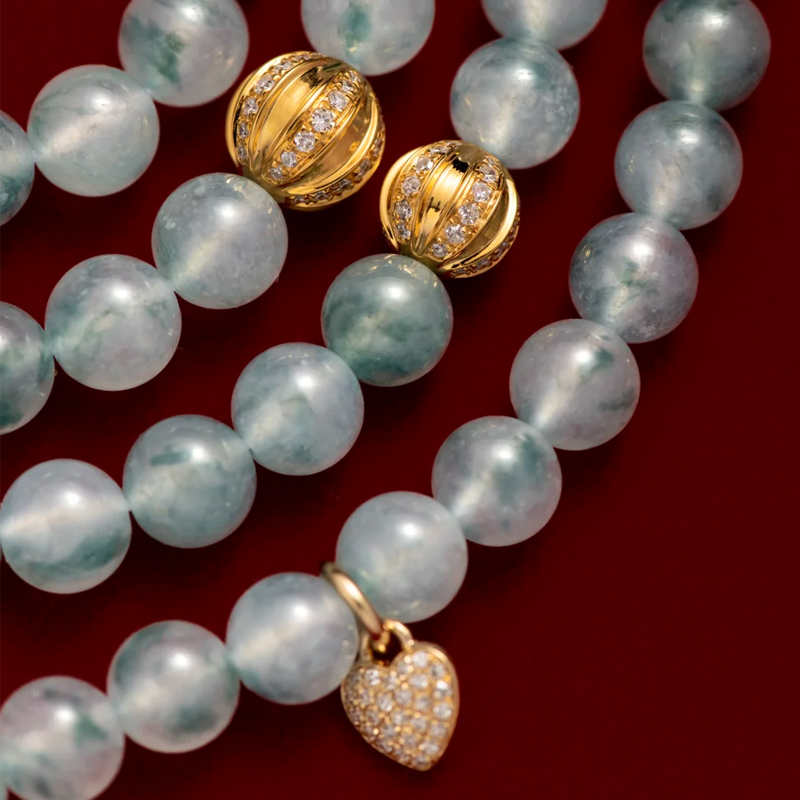
Jadeite, also known as Burmese jade or Burmese jadeite, is a type of jade. It is a fibrous aggregate composed primarily of pyroxene minerals, with jadeite being the dominant component. Jade, however, is a broader category encompassing numerous gemstones such as jadeite, Hetian jade, Dushan jade, agate, and others. Conceptually, jadeite is a type of jade, but not all jade is jadeite.
II. Physical Properties of Jadeite vs. Jade
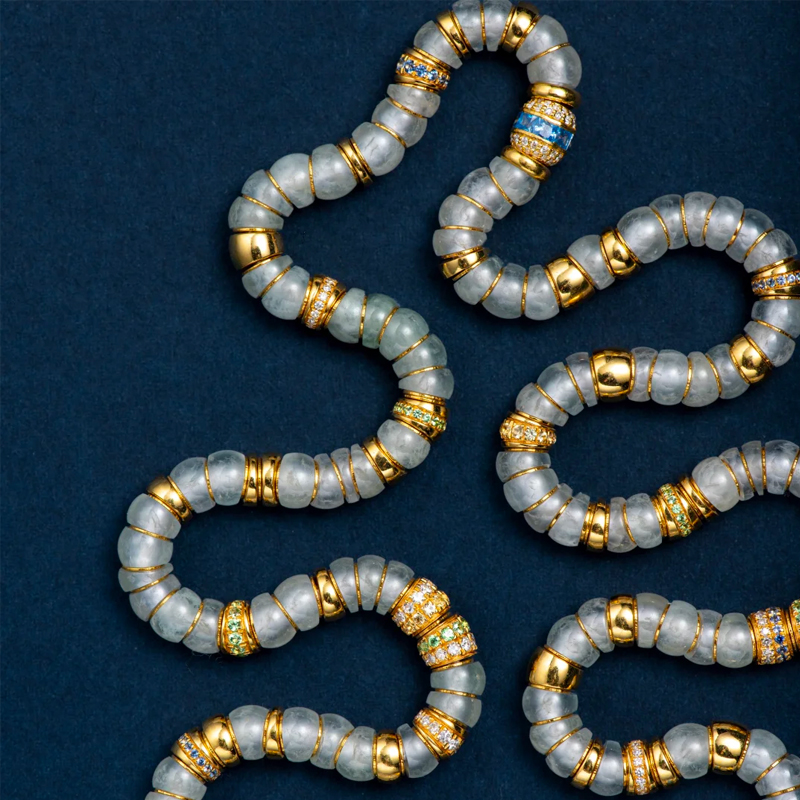
1. Hardness: Jadeite exhibits higher hardness, typically ranging from 6.5 to 7, while nephrite jade has lower hardness, generally between 6 and 6.5. Consequently, jadeite is harder during carving and polishing processes, whereas nephrite jade is relatively softer and easier to work with.
2. Density: Jadeite has a higher density than nephrite, typically around 3.33, while nephrite generally measures around 2.95. Consequently, jadeite is heavier than nephrite for the same volume.
3. Color: Jadeite exhibits a richer color spectrum, including green, white, yellow, and other hues. Nephrite, however, primarily features white and bluish-green tones, with brown or yellow occasionally appearing.
4. Luster: Jadeite possesses a more brilliant luster, typically displaying a vitreous or oily sheen. Nephrite, in contrast, exhibits a softer luster, presenting an oily or waxy appearance.
III. Historical and Cultural Differences Between Jadeite and Nephrite
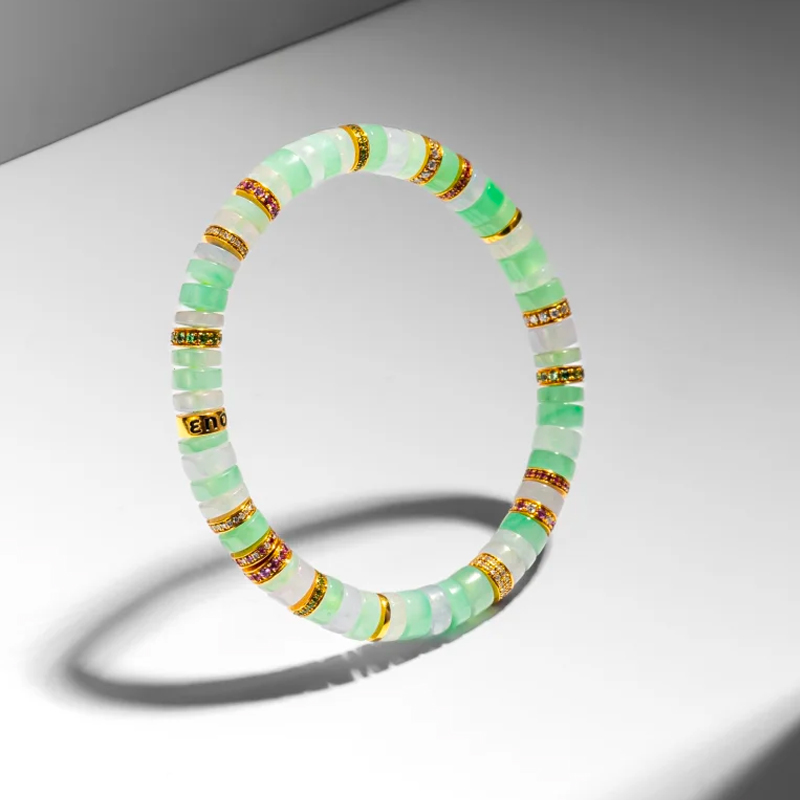
In traditional Chinese culture, jade is regarded as an auspicious object capable of warding off evil, bringing good fortune, and attracting wealth. In ancient times, people believed wearing jade could protect against misfortune, bring blessings, and ensure health and longevity. As a type of jade, jadeite also carries these symbolic meanings. However, due to its vibrant colors and resilient texture, jadeite has become more favored by people. Throughout history, jadeite gradually became a symbol of power and status, widely used in crafting jewelry for royalty and nobility. Soft jade, on the other hand, was more commonly employed in creating vessels, ornaments, and other large-scale artworks.
IV. Methods for Distinguishing Jadeite and Jade
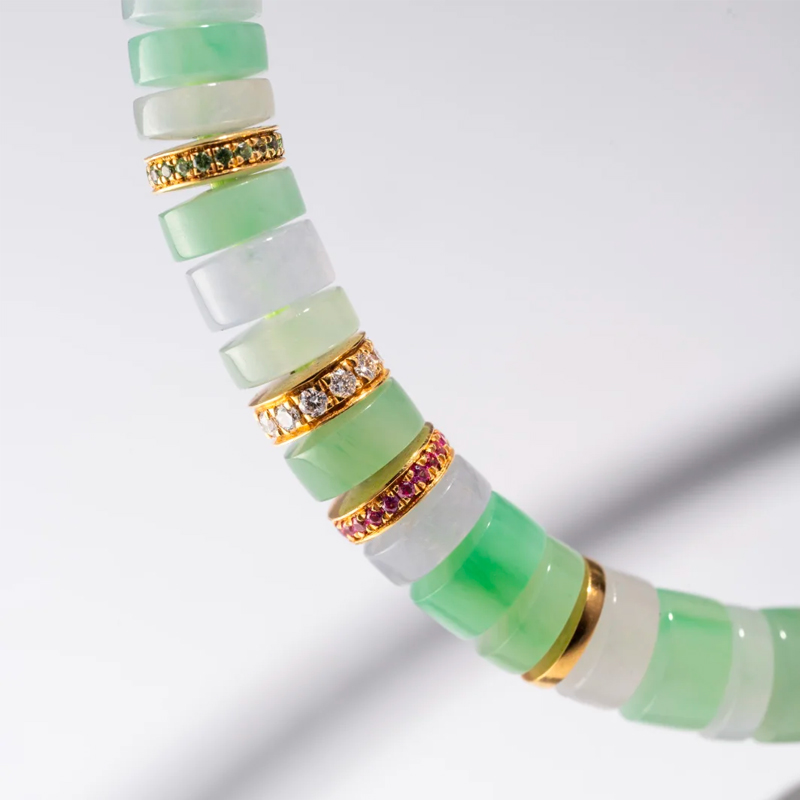
1. Color: Jadeite typically exhibits vivid, unevenly distributed colors with distinct color roots; nephrite displays softer, more uniformly distributed hues without noticeable color roots.
2. Texture: Jadeite feels distinctly cool to the touch due to its hardness; nephrite has a softer texture, offering a warm, smooth, and delicate feel.
3. Observe Luster: Jadeite exhibits a brilliant luster, appearing glassy or oily; nephrite has a softer luster, appearing oily or waxy.
4. Listen to Sound: Jadeite produces a crisp, pleasant ring; nephrite sounds duller.
5. Test hardness: Scratch the surface with a small knife. If it leaves a mark, it’s jadeite, as jadeite is harder than nephrite.
6. Observe the “fly wing” effect: Under a magnifying glass, jadeite exhibits a distinctive “fly wing” shimmer on its surface.
7. Examine structure: Jadeite features a fibrous interwoven structure, while nephrite exhibits either fibrous interwoven or lamellar structures.
8. Origin: Jadeite from Myanmar is of superior quality and commands higher prices, while domestic nephrite is relatively more affordable.
9. Transparency: Jadeite typically exhibits high transparency with a crystalline, translucent appearance, whereas nephrite is less transparent, often appearing translucent or opaque.
10. Inspect flaws: Jadeite exhibits fewer imperfections and greater purity, while nephrite tends to have more visible flaws.
11. Evaluate craftsmanship: Superior craftsmanship enhances a gemstone’s elegance and vitality, whereas poor workmanship diminishes its aesthetic appeal. Therefore, pay close attention to the quality of craftsmanship when selecting jade.