
Jadeite is hailed as the “King of Jade” due to its unique composition and characteristics. As a highly valuable gemstone, it is often subject to the practice of passing off inferior products as superior ones or being counterfeited with other similar materials. To safeguard your own rights and interests, it is essential to understand how to distinguish between genuine and fake jadeite. Here are four simple and practical identification methods to help you discern the authenticity of jadeite.
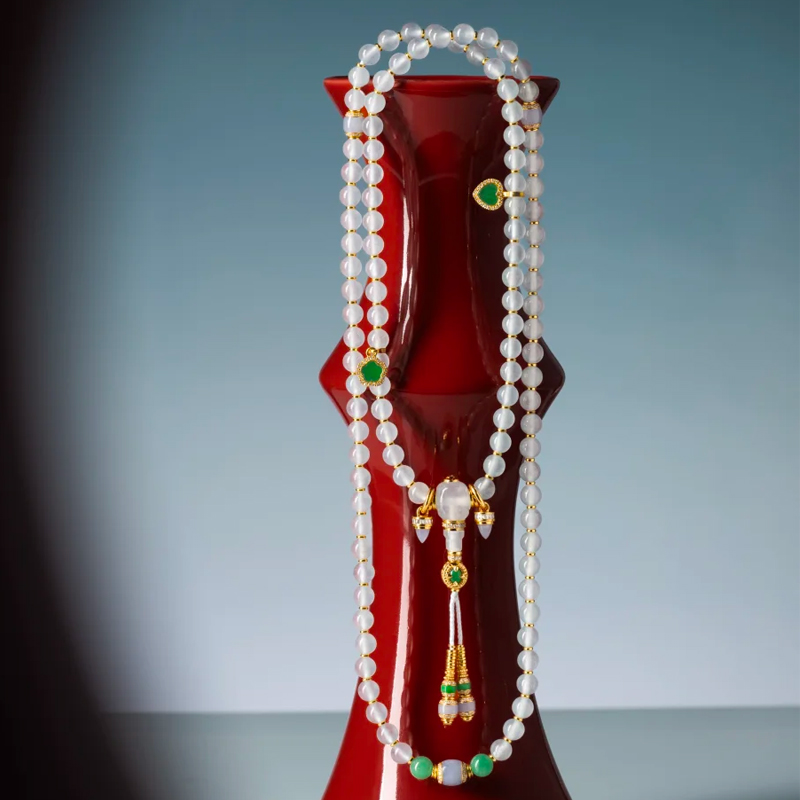
1.Examine the Color
Jadeite comes in a variety of colors, including green, yellow, purple, red, and more. However, many other types of jade also exhibit similar colors, so color alone cannot be the sole criterion for judgment. Nevertheless, jadeite has a unique characteristic in terms of its color distribution and transition, which are very natural. If the color distribution appears unnatural or there are no transitions between colors, then the jade is likely not genuine jadeite.
2.Observe the Texture
Jadeite has a fine texture and high transparency, exhibiting a unique glassy luster. When observed under a magnifying glass, the surface of jadeite typically features tiny particles and textures, with a very uniform texture. If cracks, bubbles, or other impurities are found on the surface, it is likely a counterfeit or inferior product.
3.Weigh It
Genuine jadeite has a relatively high density, giving it a certain heft when held. By weighing the jade, you can roughly gauge its quality and authenticity. Generally speaking, genuine jadeite is heavier, while fake jade is lighter.
4.Water Droplet Test
Drop a droplet of water onto the surface of the jadeite. If the droplet remains as a long-lasting dewdrop on the jade, then it is likely genuine jadeite. This is because jadeite has strong water absorption properties and can effectively adsorb moisture. If the droplet quickly penetrates or disperses, then the jade is likely a fake.