
Jade bracelets have become highly sought-after accessories in the jewelry market due to their mellow texture, rich cultural connotations, and unique aesthetic value. However, when faced with a dazzling array of jade bracelets, how can one select a cost-effective piece? What considerations are there when choosing the number of beads? Why do prices vary so significantly? And how should they be maintained on a daily basis? This article will provide answers to these questions by combining market cases with professional expertise.
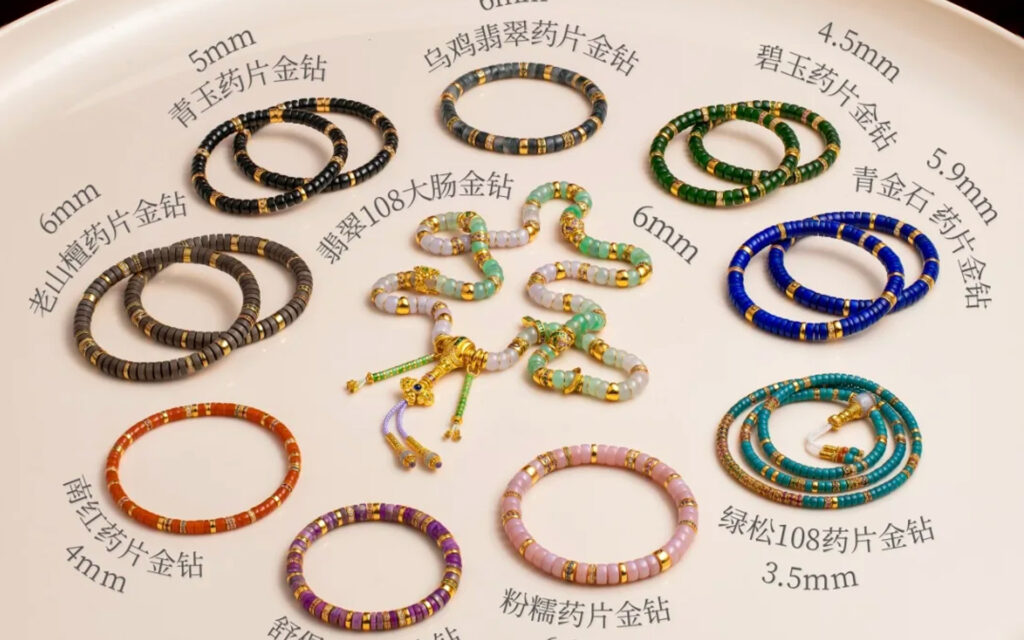
How to Select a Cost-Effective Jade Bracelet?
Among jade products, common styles include rings, bangles, bracelets, pendants, and decorative pieces. Among them, knowledge about jade bracelets is not widely known, leading people to often feel perplexed about how to make a cost-effective choice when selecting one. Moreover, some even believe that choosing an outstanding jade bracelet can give them an edge in showcasing personal charm. So, how can one select a cost-effective jade bracelet? Today, I will explain how to make the right choice.
Color of Jade Bracelet
When selecting a jade bracelet, start by examining its color. Check if the color is pure, vibrant, and uniform, and use a spotlight flashlight to inspect for any hidden color variations. Jade with a vibrant, pure, and uniform color is of higher quality.
The beads of a jade bracelet should ideally have a consistent and orderly color distribution. Otherwise, it will lack aesthetic appeal and negatively impact its appearance and value. If each bead displays multiple color tones, the value of the bracelet can significantly increase, surprising many. A good jade bracelet features pure and bright colors, with better saturation translating to higher value. Among them, green jade bracelets are the most abundant and popular in the market.
Since the colors of natural jade often appear in block, spot, or filamentous distributions, a bracelet with a color that permeates the entire piece commands a higher market value and is considered a high-end jade variety. Among jade colors, emerald green holds the highest value, followed by red and purple. Within the green spectrum, a vibrant, slightly yellowish “seedling green” is of superior quality, followed by gemstone green, river water green, and oily green, with uniform distribution being preferable.
Beads of Jade Bracelet
Generally, the diameter of beads in a jade bracelet varies, catering to different types of wearers. For instance, a bracelet with 12mm beads is suitable for slender men or women with wider wrists, as it provides a subtle yet elegant enhancement to the wearer’s气质 (temperament/charisma). However, most men find 14mm beads more suitable, and these are also more abundant in the market.
Water Head of Jade Bracelet
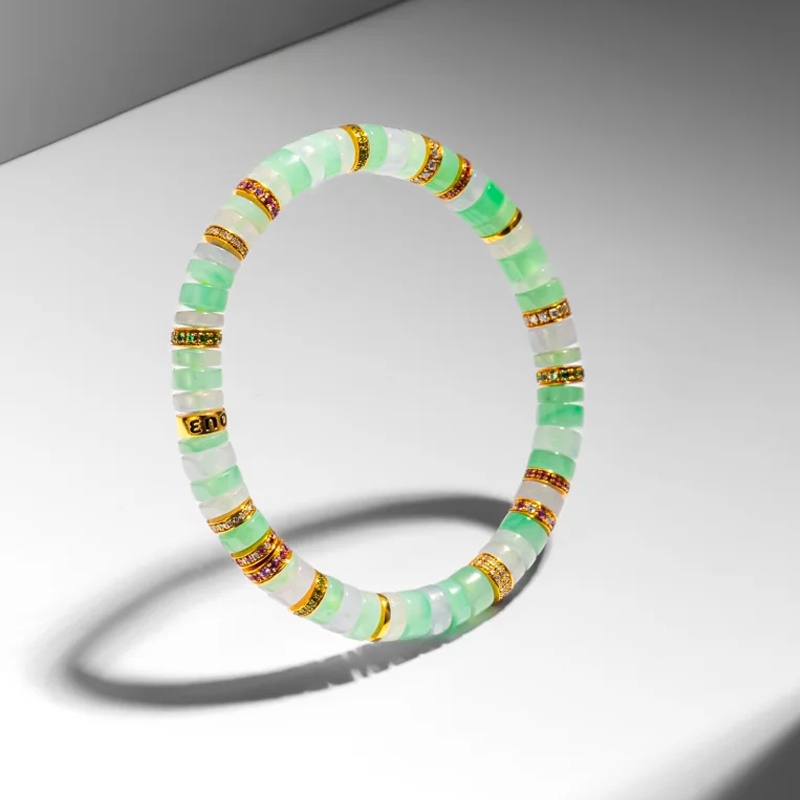
In the jade industry, the term “jade’s kind water” combines the concepts of “jade’s texture” and “jade’s water head.” Texture refers to the fineness of jade’s flesh, while water head indicates its transparency. Since jade’s kind water is synonymous with the quality of its flesh and is a crucial factor determining its price, it is essential to examine the kind water when selecting a jade bracelet.
The water head has a significant impact on the appearance of a jade bracelet, closely related to its transparency. People often describe it using terms like “a few points of water.” The longer the water head, the better the bracelet appears. Therefore, a piece of jewelry cannot be considered high-quality if it lacks water head, even if it has vibrant colors. One can also observe the transparency of a jade bracelet under strong light; higher transparency indicates better jade quality. Additionally, examine the craftsmanship of the bracelet; some may have cracks, with smooth surfaces, good polishing, and proper shapes being preferable. Ensure the beads are uniform in size; a bracelet with beads of varying sizes will have reduced value.
Texture of Jade Bracelet
In fact, texture and water head are often discussed together. Only when both are present can the overall appearance of a jade bracelet be significantly enhanced, giving it unique charm. The better the kind water, the more valuable the bracelet. All beads should be uniform and consistent. Furthermore, craftsmanship is crucial; check if the beads are perfectly round, as irregularly shaped beads reduce value. Look for scratches; numerous scratches significantly diminish its worth. Ensure the beads are uniform in size; a bracelet with beads of varying sizes affects its value.
Style of Jade Bracelet
Currently, jade bracelets on the market come in roughly two styles. One features various motifs, with jade beads carved into different shapes to form the bracelet. This style involves complex carving and clever design. The other style is entirely plain-carved, with a simple and elegant shape.
In fact, the beads of a jade bracelet have high requirements regarding the size of the jade material. After all, the larger the size, the more beads of a certain diameter or quantity are needed.
What Are the Significances Behind the Number of Beads in a Jade Bracelet?
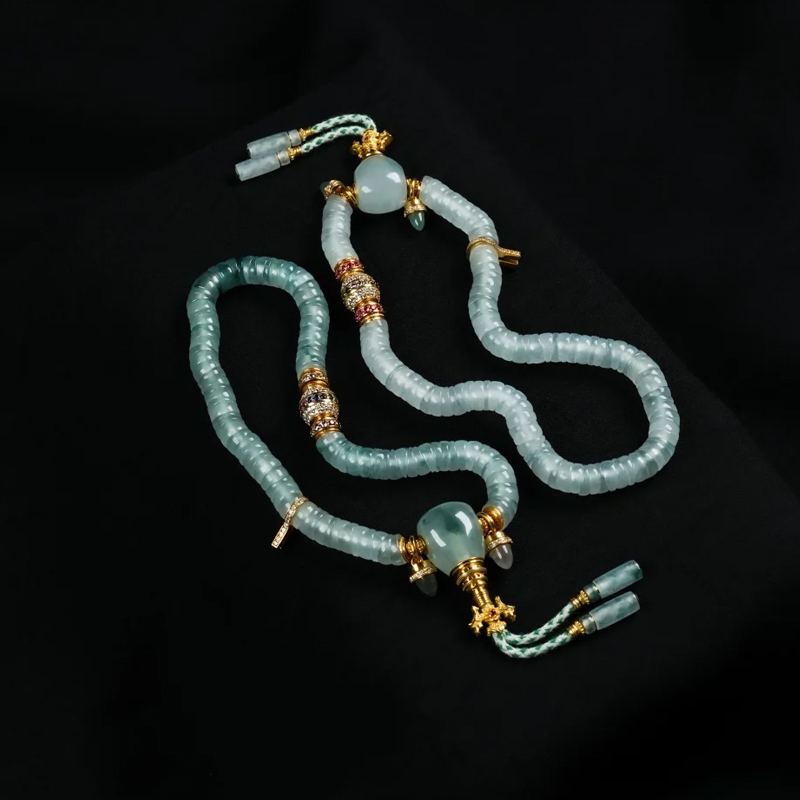
Jade bracelets are one of the most beloved accessories. They are intricately linked to Buddhism, with their prototypes originating from there. Consequently, many people are curious about the details concerning the number of beads.
Currently, jade bracelets can have up to 108 beads, which holds special significance. In Buddhism, the number 108 represents the 108 types of afflictions in the world. This type of bracelet is worn by only a few individuals, mostly practitioners or during major ceremonies. The way to wear it is quite simple—just wrap it around the wrist several times. However, in traditional Chinese Taoist culture, the number 108 also embodies the power of the celestial and terrestrial stars, representing the total number of Heavenly Stems and Earthly Branches. Therefore, such jade bracelets are believed to bring peace and protection.
A jade bracelet with 52 beads corresponds to the 52 calamities encountered by Bodhisattvas in Buddhism. According to legend, as long as the wearer harbors good intentions, the Bodhisattva will bless them, and the bracelet will transform into a protective amulet.
A jade bracelet with 36 beads represents the 36 benevolent deities in Buddhism who are closely associated with people, also known as the 36 Divine Kings. Of course, the most well-known name for these 36 benevolent deities is the “Eight Divisions of Heavenly Dragons.” This type of jade bracelet shares the same meaning as the one with 108 beads and is more convenient to wear.
A jade bracelet with 27 beads symbolizes the 27 sages in Buddhism. It carries the connotation of wisdom and is highly suitable for individuals preparing for college entrance exams, striving for career advancement, or engaging in intellectual work. Historically, the famous Emperor Yongzheng was particularly fond of this type of jade bracelet.
A jade bracelet with 21 beads represents the 21 calamities and stages encountered by Bodhisattvas from cultivation to Nirvana. Therefore, it signifies the impending transition in life, peace, prosperity, and the dispelling of misfortune.
Jade bracelets with 18 beads are commonly seen in the market. They represent the 18 Arhats in Buddhism or 18 types of wisdom. Not only do they carry auspicious meanings, but they also hold a significant place in people’s hearts. They are convenient to carry as well. Therefore, bracelets with 18 beads are particularly suitable for the elderly, symbolizing that they possess health comparable to that of the 18 Arhats. Additionally, they can be offered to individuals who have been ill for a long time or have just recovered from a serious illness.
Due to the Buddhist concept of the Twelve Links of Dependent Origination, jade bracelets with 12 beads are closely related to it. They carry the meanings of seizing opportunities, prospering in business, and increasing wealth. They are suitable for individuals with mature personalities, confidence, and clear goals. From this, we can see that the number of beads in a jade bracelet is highly significant. We can choose one based on our own needs.
Why Is There a Huge Price Difference Among Some Jade Bracelets?
In ancient times, the materials used for bracelets were exquisite, with each string being a rare and exceptional piece. After all, those that have withstood the vicissitudes of hundreds or even thousands of years and have been passed down are mostly items from the royal family, often featuring precious gems like jade and tourmaline. How could they not be valuable?
Jade bracelets initially gained popularity among the upper echelons of society during the Qing Dynasty, largely due to the Qing royal family’s fondness for jade. However, unlike modern people who prefer jade bangles, the concubines and nobles of the Qing Dynasty had a greater preference for jade bracelets. When wearing jade bracelets, they adhered to a particular tradition that has persisted to this day—the bracelet should consist of eighteen beads.
So, how did this tradition originate?
It turns out that bracelets originally derived from Buddhist prayer beads. Buddhism emphasizes the Eighteen Arhats, with each of the eighteen beads on a string carved with the distinct images of these arhats. The imperial concubines in the Qing Palace were all devout Buddhists, with numerous Buddhist halls established within the palace grounds. They spent their solitary and leisurely court lives by chanting and meditating.
In ancient China, a mother’s status was elevated by her children, and this was especially true in the imperial palace. Therefore, the concubines referred to each jade bead in the bracelet as a “child,” symbolizing their hope for imperial favor and subsequent rise to prominence. Thus, the tradition of jade bracelets having eighteen beads began during that time and has persisted to this day, carrying the auspicious meaning of abundant offspring and blessings. In fact, apart from the number of beads, there are many other aspects to consider when purchasing and selecting a jade bracelet.
The Jade Bracelet Market: A Mix of Genuine and Fake
Nowadays, many people prefer jade bangles over jade bracelets, primarily because it is difficult to judge the quality of the beads.
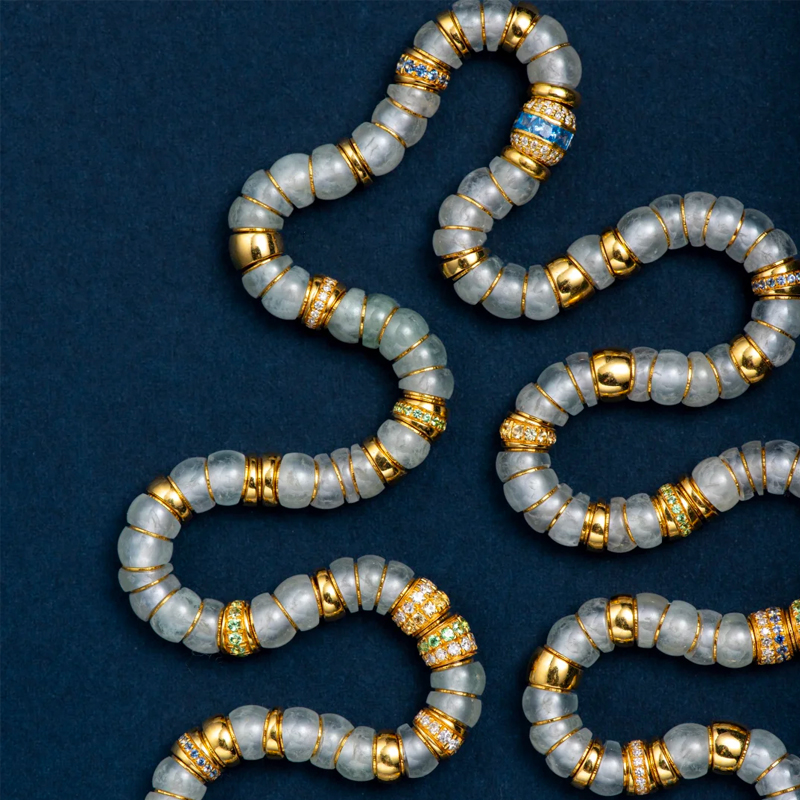
Truly high-quality jade beads require more time and material to produce, making them naturally more expensive. However, the market is flooded with beads priced at just a few hundred or even one to two hundred yuan, which are often passed off as genuine and sold at inflated prices.
In reality, most of these beads are made from leftover materials, resulting in very low raw material costs. Since jade bracelets are made from loose beads, finding a string with uniform and excellent color, transparency, and texture is extremely rare. Therefore, colored bracelets are more common in the market, allowing customers to mix and match according to their preferences.
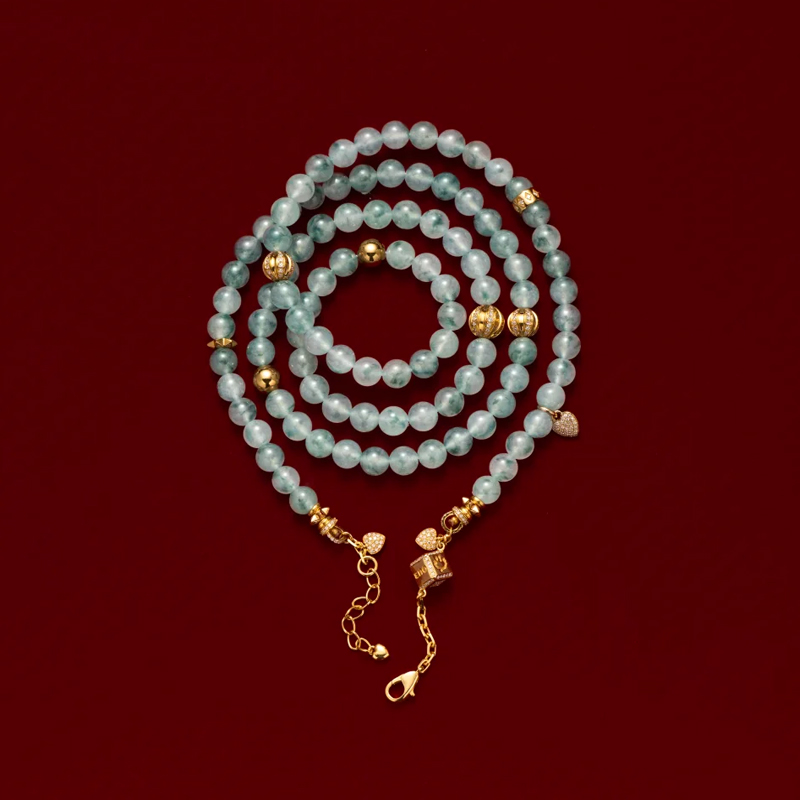
Maintenance Methods for Jade Bracelets
There are three maintenance methods for jade bracelets: 1. Regular cleaning: First, soak the jade bracelet in warm soapy water and scrub it clean after 30 minutes; 2. Avoid collisions: Prevent the jade bracelet from being worn or scratched due to collisions, which could affect its quality; 3. Frequent wiping: Regularly rub the surface of the jade bracelet with a cotton cloth or sheepskin to nourish the jade.
Regular Cleaning
Regular cleaning is essential for maintaining a jade bracelet. First, immerse the jade bracelet in warm soapy water. After 30 minutes, use a small brush to scrub it clean. Then, rinse it thoroughly with clean water and soak it in hot water at 80-85°C until the water has completely cooled. Repeat this soaking process three times. Finally, dry the jade bracelet with a cotton cloth.
Avoid Collisions
It is important to avoid collisions when maintaining a jade bracelet because its texture is quite fragile. If the bracelet is bumped by external objects during wear, it may suffer wear and scratches, which will, to some extent, affect its quality.
Frequent Wiping
Frequent wiping is also necessary for maintaining a jade bracelet. Regularly rubbing its surface with a cotton cloth or sheepskin can achieve a certain nourishing effect on the jade, making the surface of the bracelet smooth and shiny, thereby enhancing its quality.
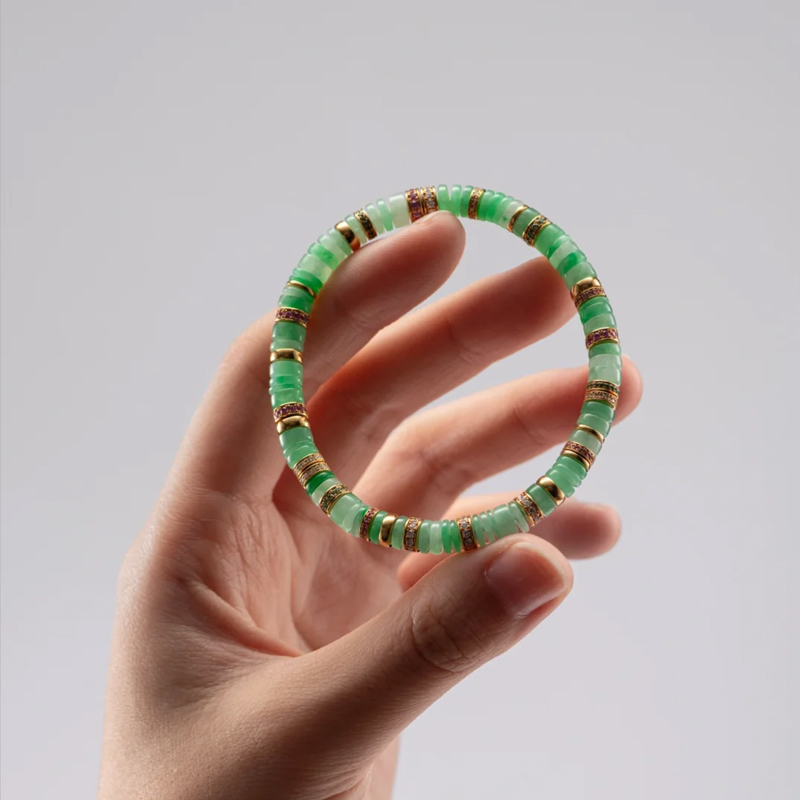
When selecting a jade bracelet, it is essential to consider a combination of factors including quality, design, brand, and budget. The choice of the number of beads should be made by taking into account cultural symbolism and the occasion for wearing it. Price variations stem from differences in quality, craftsmanship, and market dynamics, while scientific maintenance can extend its lifespan. Whether for personal wear or as a gift, mastering these insights will empower you to choose a jade bracelet that meets your preferences, allowing this oriental treasure to shine brightly alongside you for a long time.