
In the worlds of collectibles and jewelry, jadeite bracelets have long been classic pieces that combine cultural significance with collectible value. Unlike gold and silver, which are flashy, jadeite exudes a warm and understated elegance; unlike diamonds, with their cold brilliance, it embodies the “gentlemanly grace” unique to Eastern culture. For beginners, jadeite bracelets serve as both an entry-level choice—compared to jadeite pendants that can easily cost hundreds of thousands—and a “personal companion” for the long term. With a wide range of prices, it’s easier to find a style that suits you; through daily wear, the bracelet becomes increasingly translucent as it is nourished by the body’s natural oils, creating a unique experience of “nurturing jade through daily wear.”
However, the jadeite market is complex, and cases of being “ripped off” (buying fakes or overpaying) are all too common. To select a jadeite bracelet that truly satisfies, beginners must master the basic principles. This article summarizes five core selection techniques—from “avoiding pitfalls” to “advanced knowledge”—to help you quickly establish a framework for evaluation.
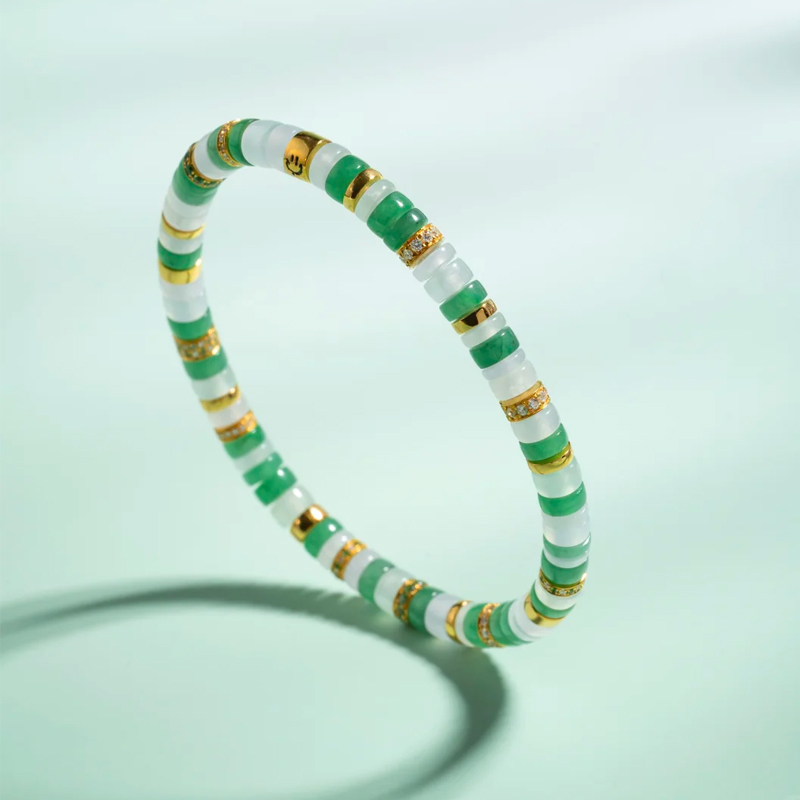
I. Examine “Zongshui”: The Soul of Jadeite, Determining Its Fundamental Value
As the saying goes, “Amateurs look at color; experts look at ‘Zong Shui.’” “Zong Shui” is the most critical indicator of jadeite’s value. Simply put, “Zong” refers to the fineness of the crystal grains and the compactness of the structure within the jadeite, while “Shui” refers to transparency (known in the trade as “Shui Tou”). The better the “Zong Shui,” the more translucent and vibrant the jadeite appears, and the higher its value.
Common “Zong Shui” grades (from highest to lowest):
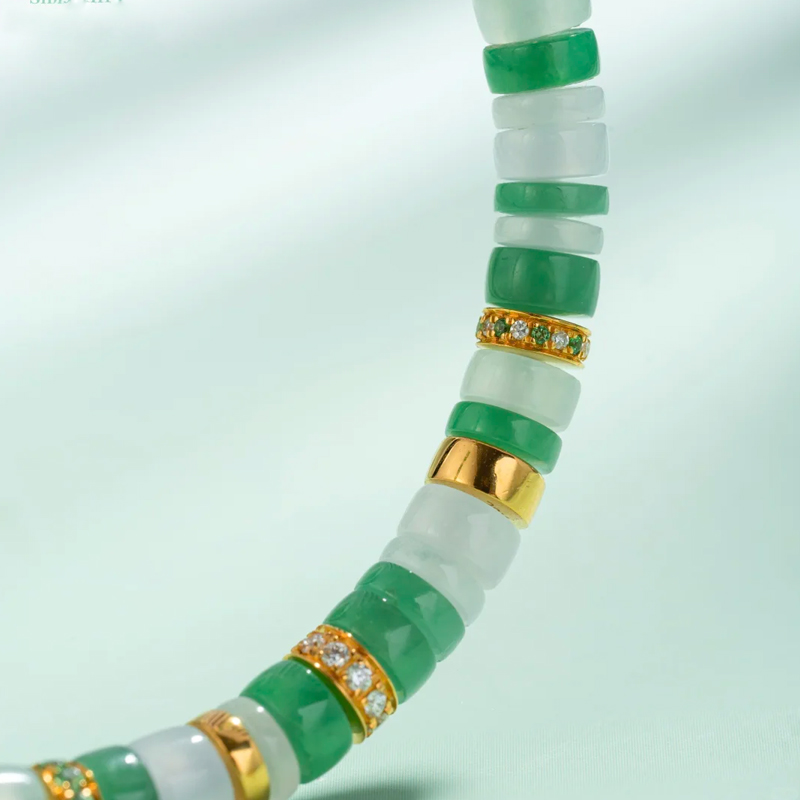
Glass-like Quality: As transparent as glass, with almost no impurities and a fluorescent glow (a soft, cool light on the surface). This is the top-tier variety of jadeite, with bracelet prices typically in the five-digit range or higher.
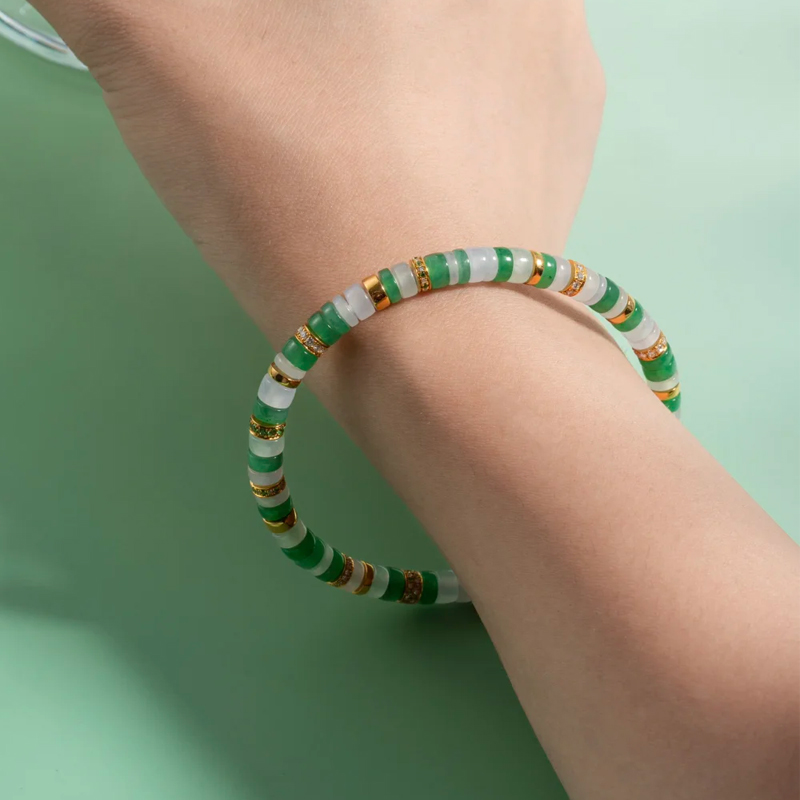
Ice-like Quality: Resembling ice, it ranges from translucent to transparent, with a small amount of “cotton” (natural white inclusions in jadeite) visible to the naked eye. This offers the best value for money and is suitable for everyday wear.
Glutinous Rice Variety: Resembles well-cooked glutinous rice porridge; slightly translucent to opaque; has a fine texture but a noticeable cloudiness; affordably priced (ranging from a few hundred to a few thousand yuan).
Bean Variety: Features coarse crystal grains and a “bean-like” structure visible to the naked eye; nearly opaque; belongs to the low-end category; beginners should exercise caution when selecting this variety (unless on an extremely tight budget).
Pitfalls for Beginners: Beware of “Shuimozi” (sodium feldspar jade) being passed off as Ice-type or Glass-type jade. Shuimozi has high transparency but low density (it feels lighter when held in the hand), lacks the “fly wing” reflection characteristic of jadeite, and does not possess the warm, lustrous feel of genuine jadeite.
Selection Tips: If your budget allows, prioritize Ice-grade or higher; if your budget is limited, “Glutinous Rice-Ice” (a grade between Glutinous Rice-grade and Ice-grade) is a good compromise—it offers a certain degree of translucency without being too expensive.
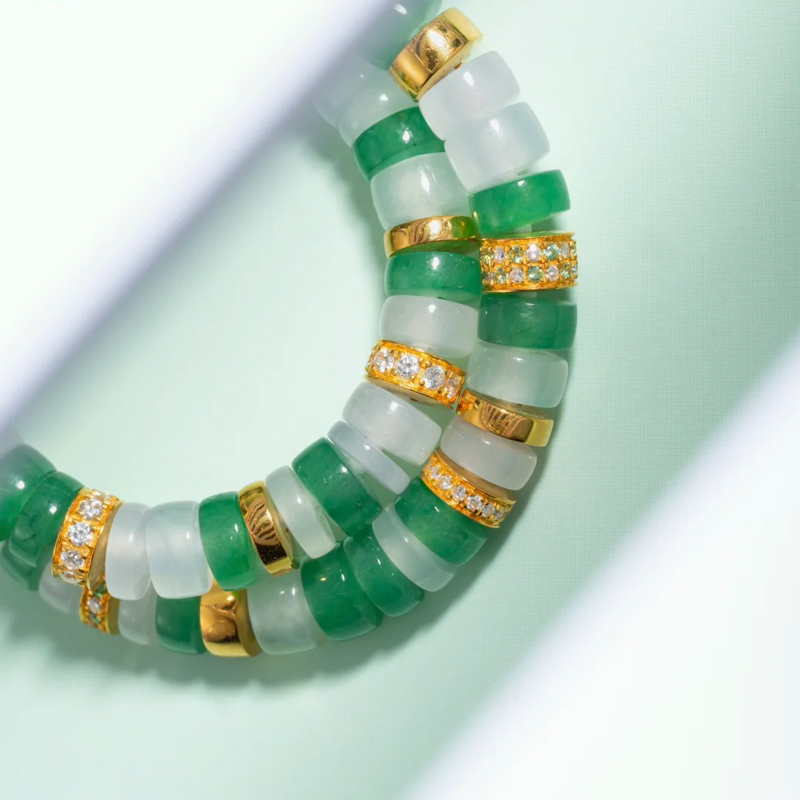
II. Assessing “Color”: Greener Isn’t Necessarily Better—What Suits You Is Key
Jadeite comes in a rich variety of colors—green, purple, red, yellow, white, and black (ink jade)—each with its own unique charm. However, beginners often fall into the trap of believing that “green is the only color that matters.” In reality, the quality of a color is determined by four criteria: “intensity, brightness, purity, and evenness”:
Intensity: High color saturation without appearing dull (excessive intensity can make the jade look dated);
Brightness: A bright, vibrant color without a grayish tint (grayish-green significantly reduces value);
Purity: A pure hue without impurities (for example, green tinged with blue or yellow lowers the grade);
Evenness: Even color distribution (solid-colored jade is more valuable than “floating flower” patterns, which in turn are more valuable than “scattered color” patterns).
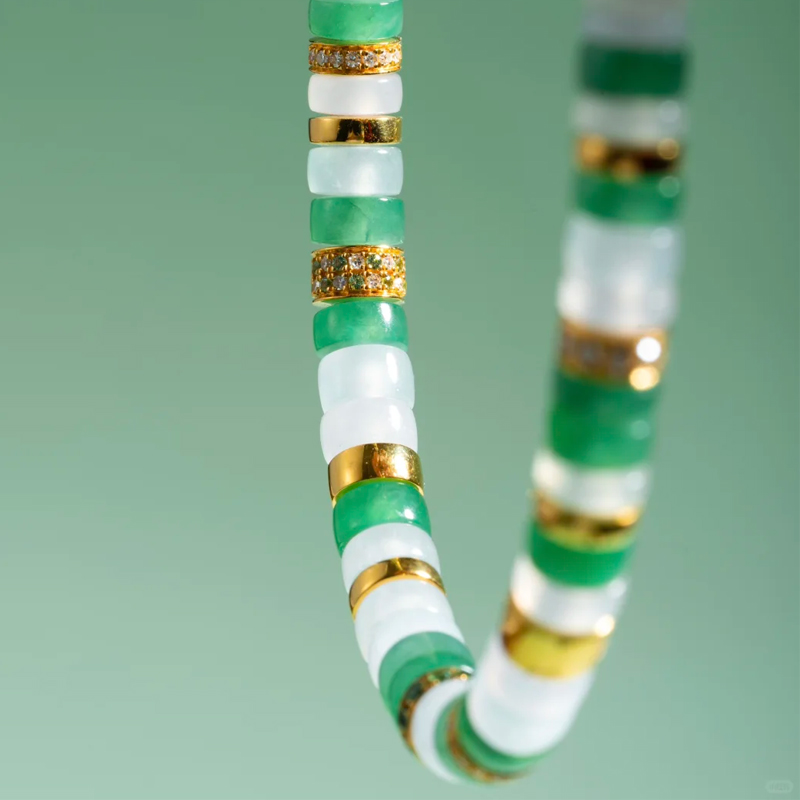
Analysis of Popular Colors:
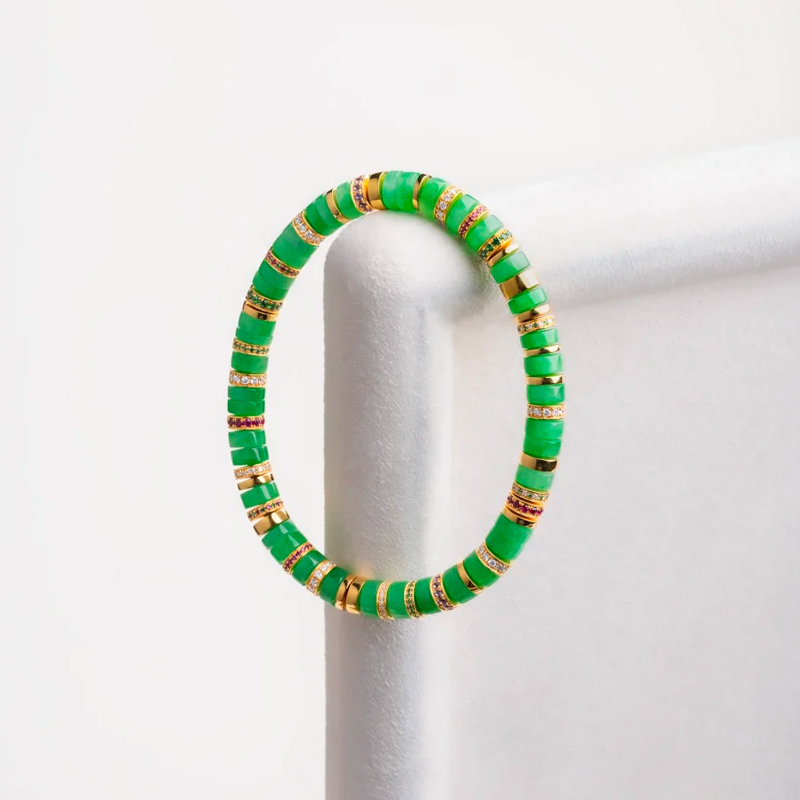
Green: The most classic “Imperial Green” (rich, bright, pure, and even) is collector-grade, but it’s rare for the average consumer to come across it; for everyday wear, “Apple Green” and “Bright Green” are recommended for their fresh and lively appearance; “Oily Green” (with a grayish tint) is better suited for a mature style.
Purple (Violet): As the trade saying goes, “Nine out of ten purple jadeites have poor quality” (most purple jadeites have poor texture and translucency). If you can find “Eggplant Purple” (deep purple) or “Powder Purple” (light purple) with good texture and translucency, it’s worth purchasing.
Red and Yellow Jadeite: These are mostly “secondary colors” on the surface of jadeite rough. Natural red and yellow jadeite has a natural hue (caused by limonite staining), while artificially dyed pieces have a flat, lifeless color that sits on the surface.
Colorless/White: Suitable for collectors who prefer a minimalist style; focus on the quality and transparency (colorless bracelets of Ice-grade or higher appear more luxurious).
Tips for Beginners to Avoid Pitfalls: Be wary of “C-grade” (dyed jadeite). Natural colors have a root (the color spreads from the inside out), while dyed colors distribute along fissures; dye accumulation is visible under a magnifying glass. Under a UV light, dyed jadeite may exhibit a fluorescent reaction.
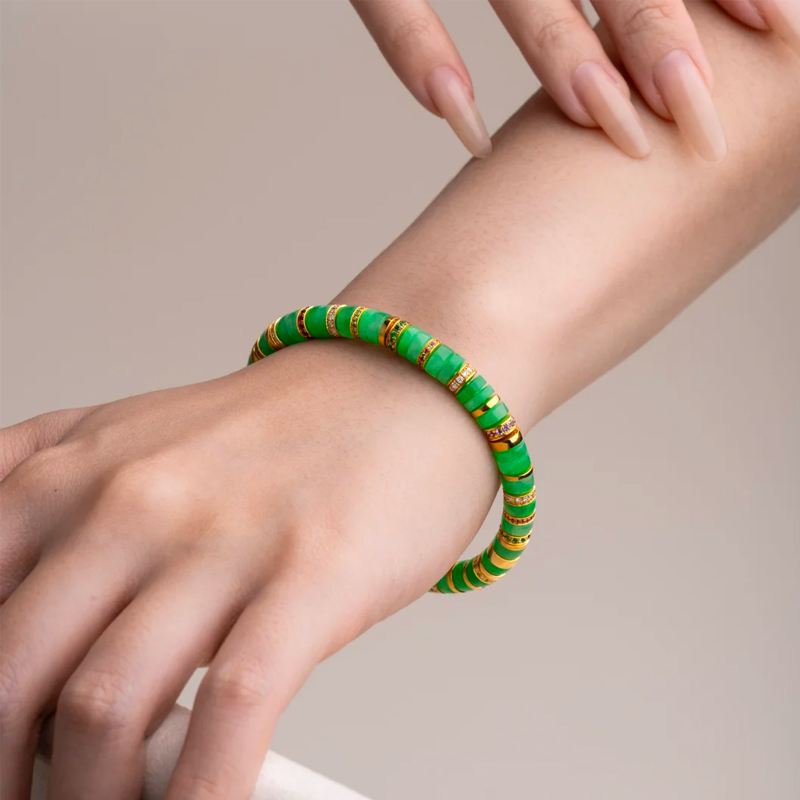
Selection Tips: Don’t blindly chase green; choose colors based on your skin tone—yellow skin tones suit bright green and red-yellow jadeite (which brighten the complexion); fair skin tones suit violet and colorless jadeite (which create a cool, crisp look); for everyday wear, opt for versatile colors (such as light green or colorless); for collecting, focus on rare colors (such as “Spring with Color”: purple + green).
III. Checking for “Flaws”: Natural ≠ Perfect—Learn to Accept “Minor Imperfections”
Jadeite is a natural mineral; 99% of it has flaws, and pieces that are completely flawless are mostly imitations (such as glass). However, the type and severity of flaws directly affect value, so beginners should learn to distinguish between “fatal flaws” and “acceptable flaws.”
Common Imperfections and Their Impact:
Cracks: When scraped with a fingernail, there is a distinct sensation of resistance (as opposed to “veins”). These damage the jadeite’s structure and significantly reduce its value (bead bracelets with cracks are prone to breaking and are not recommended for purchase).
Veins: Internally healed fissures. Scraping with a fingernail offers no resistance, and fine lines are visible under a light. They have minimal impact on value (especially micro-veins, which are acceptable).
Cotton: White, fluffy inclusions that act as “breathing holes” for the jadeite. A small amount of cotton (such as “snowflake cotton”) can actually enhance the aesthetic appeal (for example, snowflake cotton bracelets from the Muna mining area are very popular); however, excessive cotton makes the jadeite appear cloudy (such as a “rice-water background”).
Blemishes: Black or brown spots (e.g., “ringworm”). If they appear on the edges or in hidden areas, the impact is minimal; however, if they are on the front of the beads, proceed with caution.
Pitfalls for Beginners: Sellers often say, “No jadeite is complete without patterns,” but “cracks” are absolutely unacceptable! When purchasing, be sure to rotate the bracelet under natural light and examine it from multiple angles to check for cracks (artificial lighting may mask them).
Selection Tips: Prioritize bracelets with “subtle patterns, no cracks, and minimal, evenly distributed cotton.” If your budget is limited, you may accept a small amount of cotton or patterns that do not affect the structure, but avoid cracks and obvious blemishes.
IV. Examining “Craftsmanship”: The Devil Is in the Details—Round Beads Pose the Greatest Technical Challenge
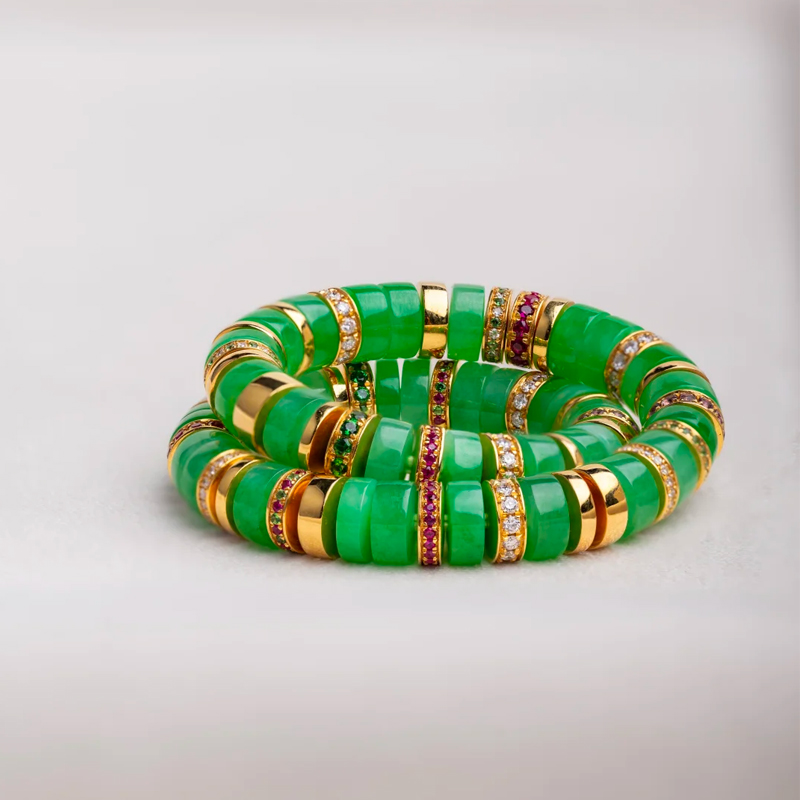
The craftsmanship of jadeite bracelets is primarily reflected in the shape, polish, and drilling of the beads. Among these, round-bead bracelets are the most classic style and also place the highest demands on both raw material and craftsmanship—because round beads require that jadeite’s imperfections be concealed within the stone, and they demand extremely high integrity of the raw material (70% of the raw material must be cut away to create a single round bead).
Criteria for Judging Craftsmanship:
Shape: Round beads must be “perfectly round” (with a tolerance of no more than 0.5 mm); oval or flattened shapes reduce value. Barrel-shaped and apple-shaped beads are considered second-best, but they save on material and are therefore less expensive.
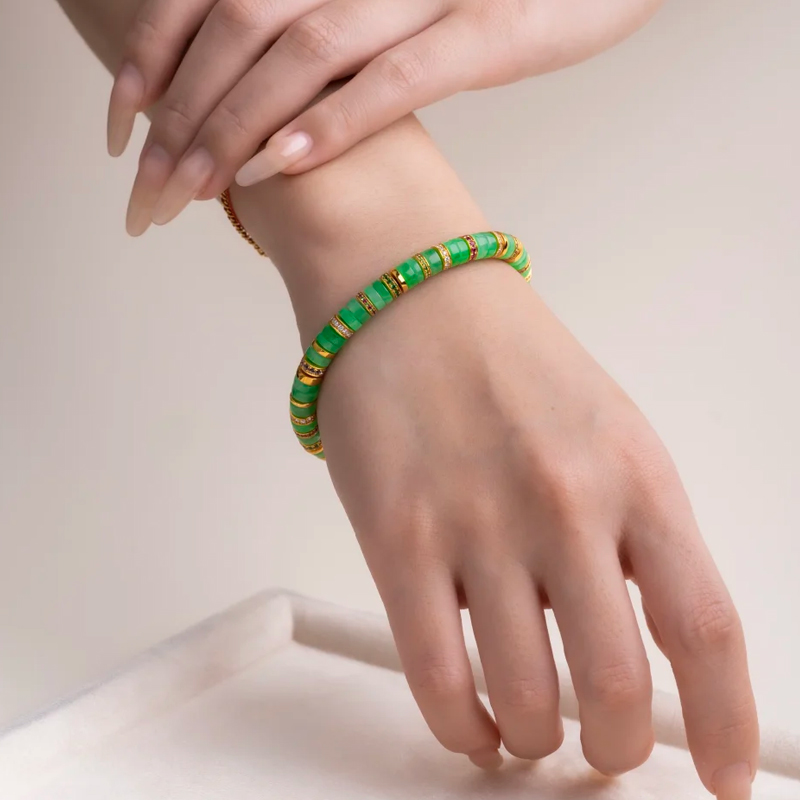
Polishing: The surface should be smooth and free of scratches, with a thorough polish (a glossy finish should reflect a clear shadow); for matte finishes (such as “frosted beads”), check for uniformity.
Hole: The hole opening must be free of burrs (otherwise, the cord is prone to breaking); the hole must be centered (a misaligned hole causes the beads to rotate unevenly); and the hole size must be consistent (to facilitate cord replacement).
Consistency: The color, quality, and size of the entire string of beads should be as uniform as possible (the smaller the variation, the better the craftsmanship), especially for multi-strand bracelets (such as 108-bead bracelets), where color transitions should be natural.
Tips for Beginners: Beware of substandard “resin-filled” beads—some beads with numerous cracks are filled with resin and then polished; while the surface appears smooth, a light source will reveal “acid-etched mesh patterns” (spider-web-like cracks).
Selection Tips: Beginners should prioritize perfectly round beads (classic and timeless); if on a budget, consider apple-shaped or barrel-shaped beads. Once you have the bracelet in hand, shine your phone’s flashlight close to the beads to check for any signs of filling inside, and rotate the beads to ensure the holes are centered.
V. Verifying “Certificates”: The Last Line of Defense—Don’t Let Fake Certificates Fool You
The jadeite market is a mixed bag, and even experts can sometimes “miss the mark,” so an authoritative appraisal certificate is the most important safeguard for beginners. But be careful: certificates can also be fake! You must learn how to verify the authenticity of a certificate.
Key information on legitimate certificates:
Institutional Accreditation: The certificate must bear at least one of the following marks—CMA (China Metrology Accreditation), CAL (China National Accreditation Service for Laboratories), or CNAS (China National Accreditation Service)—and none can be missing.
Testing Details: It must clearly state “Natural Jadeite” (Grade A). If the jadeite is Grade B (acid-treated and resin-filled), Grade C (dyed), or Grade B+C (acid-treated and dyed), this will be explicitly noted.
Verify Details: The weight, dimensions, and photos on the certificate must match the actual item (some unscrupulous sellers use genuine certificates with counterfeit goods).
Verification Methods: Verify through the official website, phone number, or QR code listed on the certificate (Note: Some fake certificates use counterfeit websites; check that the domain name matches the official one).
Tips for Beginners to Avoid Scams: Do not trust “on-site appraisals” at tourist attractions or street stalls (these may be fake certificates created by the merchants themselves); when shopping online, request that the seller offer a “re-inspection” service (after receiving the item, you can have it re-inspected at a local jewelry testing center for a fee of approximately 20–50 yuan).
Selection Tips: Only purchase jadeite bracelets accompanied by legitimate certificates, and be sure to verify the authenticity of the certificate yourself; if the seller cannot provide a certificate or refuses to allow re-inspection, block them immediately.
“Mental Approach” for Beginners
The charm of jadeite bracelets lies in the fact that they are “alive”—as you wear them over time, natural body oils seep into the micro-fissures of the jadeite, making it more translucent (“brought to life”). However, beginners should remember: don’t try to “get it all at once.” Start with a jade bracelet in the “glutinous rice” ice variety with no cracks and minimal cloudiness, priced at a few thousand yuan, and upgrade only after gaining experience. Above all, don’t fall for the myth of “scoring a bargain” (discounts at malls and “leaks” in live-streaming sessions are often just sales tactics).