
Known as the “King of Jades”, jadeite has captivated countless people for thousands of years. Many consumers face the same dilemma when shopping: two jadeite bracelets that look nearly identical in appearance, with barely noticeable differences in size and color, can vary in price several times or even dozens of times over. Meanwhile, professional terms such as glass variety, ice variety and waxy variety are confusing to most people. It is also difficult to distinguish genuine Grade A jadeite from treated Grade B and Grade C products, leading many buyers to fall victim to scams and pay high prices for inferior goods.
In fact, the pricing and quality evaluation of jadeite follow a well-established and rigorous set of industry standards, rather than relying merely on visual impressions. This article explains the true meaning of the core concept “variety” in plain language, reveals the fundamental reasons behind huge price differences for seemingly similar bracelets, and details practical methods to identify Grade A, B and C jadeite. It also answers a frequently asked question: Is glass-variety jadeite always more valuable than ice-variety jadeite? This guide helps ordinary people learn about jadeite, make rational purchases, avoid traps and preserve the value of their collections.
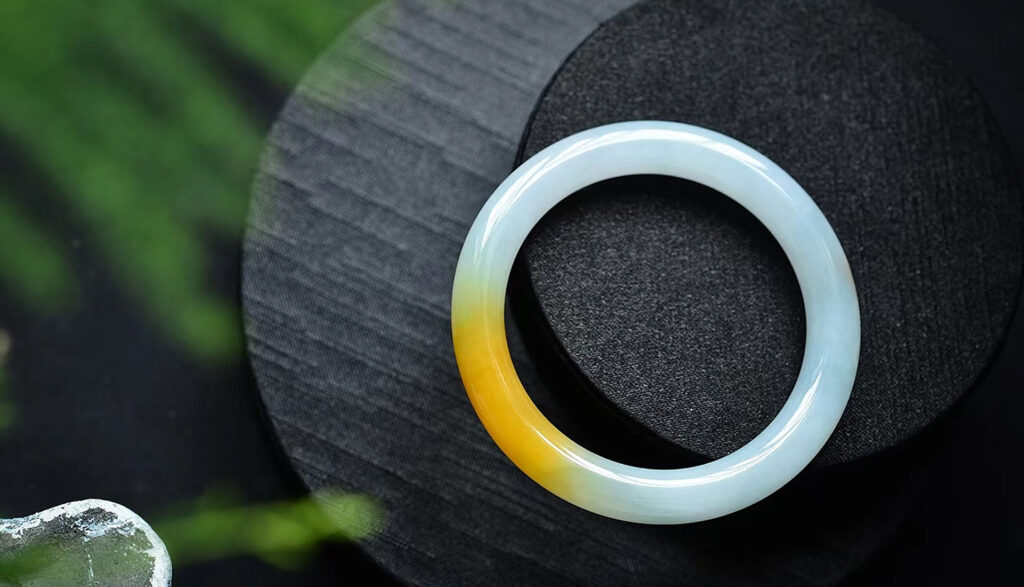
What Is the “Zong” of Jadeite?
Understanding “zong” is the first step in learning about jadeite. Those new to jadeite have surely heard the term ‘zong’ frequently. Glass-like zong, ice-like zong, glutinous rice-like zong, bean-like zong… “Zong” is one of the most fundamental criteria for evaluating jadeite, directly influencing its transparency and value.
Simply put, “Zong” refers to the jadeite’s transparency and the fineness of its crystal structure. The better the “Zong,” the more translucent and refined the jadeite, and the stronger its luminosity.
In a nutshell: Zong > Color > Craftsmanship. Jadeite with excellent “Zong” and ‘Shui’ is highly valuable even if it is colorless. Jadeite with poor “Zong,” no matter how green it is, lacks vitality.
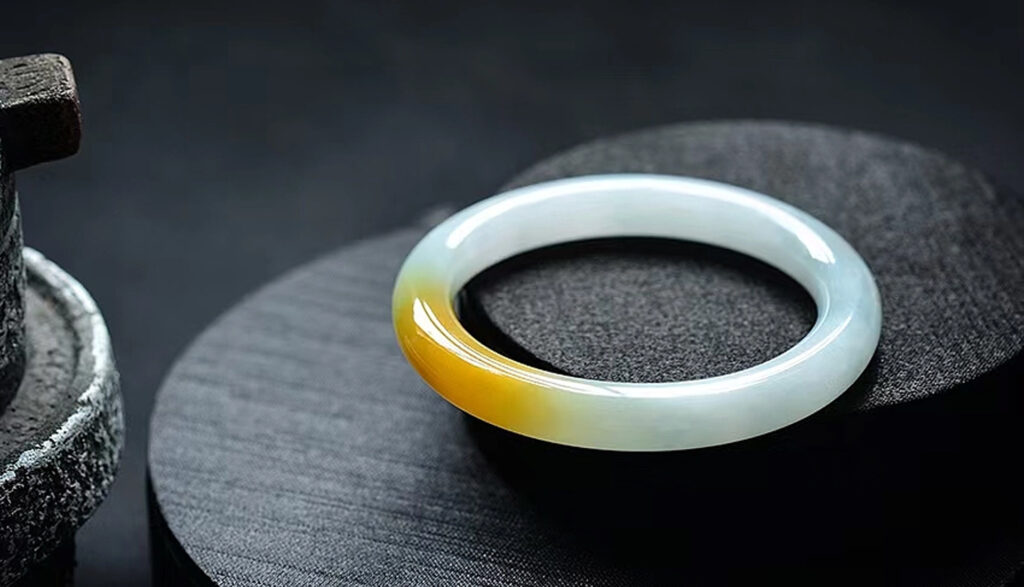
1. Glass-like Variety (Highest Grade)
As transparent as glass, with internal structure virtually invisible to the naked eye. Light penetrates extremely well, and it exhibits fluorescence (a faint glow on the surface).
Glass-like jadeite has exceptional transparency; you can read text through it when placed over a newspaper. It represents the top quality in jadeite.
Price Range: Starting in the low six figures (tens of thousands), with top-grade pieces exceeding one million;
Colorless Glass-Grade jadeite is the most classic (when the texture is well-defined, color serves merely as an accent). Colored Glass-Grade “Imperial Green” is the king of jadeite.
2. Ice-Grade (High-End)
It has the texture of ice—ranging from translucent to transparent, with a clear, bright, and moist appearance. A small amount of cotton-like structure is visible inside, but there is no obvious granular texture.
Ice-type is the most common high-end jadeite on the market. High-quality ice-type approaches glass-type (“high ice” or “ice-glass”), while lower-quality ice-type resembles glutinous rice-type.
Price range: High-quality ice-type ranges from tens of thousands to hundreds of thousands;
Ice-type with floating patterns is the most popular style. Blue-green floating patterns flow through the ice-like base like ink wash paintings, creating a stunningly beautiful aesthetic.
3. Glutinous Rice-type (Mid-range Mainstream)
It has the texture of glutinous rice porridge—slightly translucent, fine-grained, and lustrous. Its internal structure is as fine and uniform as rice grains, with no visible particles.
Glutinous Rice Jade is the most common type of jadeite on the market and falls within a price range accessible to most consumers. It is further subdivided into: Glutinous Rice Ice (leaning toward Ice Jade), Fine Glutinous Rice (Fine), and Coarse Glutinous Rice (Coarse).
Price range: Several hundred to 10,000–20,000 yuan (depending on color and size);
Noodles-grade jadeite offers the best value for money. High-quality Noodles-grade (Fine Noodles-grade) jadeite feels as smooth and lustrous as jade when worn, making it ideal for everyday use.
4. Bean-Grain (Entry-Level)
It has a texture resembling bean pulp—opaque, with mineral grains clearly visible to the naked eye. The structure is coarse and loose, and it lacks luster.
Although the Bean-Grain has poor quality and transparency, the color is often very intense (because the coarse grains allow the pigments in the crystal gaps to be seen). Many inexpensive jades with vivid green hues are of the Bean-Grain variety.
Price range: Tens to hundreds of yuan;
Why do jadeite bracelets look so similar yet vary so much in price?
In recent years, more and more Chinese people have developed a passion for jadeite. After all, jadeite combines the elegance of jade with the brilliance of gemstones. Moreover, in ancient times, jade was likened to virtue and served as a symbol of the noble gentleman—a concept that aligns perfectly with Eastern aesthetics.
With such a wide variety of jadeite jewelry available, what is the most popular piece? Without a doubt, it’s the jadeite bracelet! However, many hesitate to make a purchase due to the vast price differences. So today, I’ll share some tips on how to choose the bracelet that’s best suited for you!
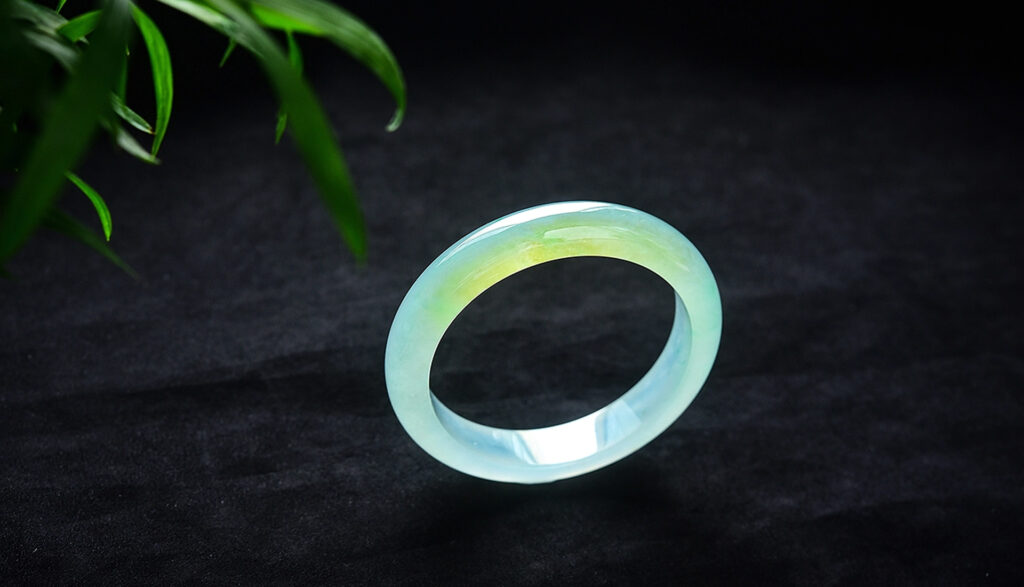
I. Categories for Purchasing Jadeite Bracelets
The most straightforward way to select a jadeite bracelet is by price. When buying jadeite jewelry, especially bracelets, it’s best to first determine a general budget range and set a price point that suits your needs to ensure you make a sensible purchase.
1. Affordable Options (Under 10,000 RMB)
Affordable bracelets typically range from a few thousand to around 10,000 RMB. They offer decent value for money and are ideal for young women with limited budgets to wear on a daily basis.
2. Affordable Luxury (10,000–30,000 RMB)
Affordable luxury jadeite bracelets are priced between 10,000 and 30,000 RMB. They feature good quality and clarity, with no obvious flaws that detract from their beauty. Ideal for beginners, they offer excellent value for money!
3. Luxury Bracelets (30,000–100,000)
If you have some savings, a decent income, or have reached a certain age, I would recommend luxury bracelets. With excellent texture, clarity, and color, they leave a lasting impression.
Bracelets in this category are more than just ordinary jewelry; they highlight your elegance, reflect your taste, and can serve as a symbol of your status.
4. Top-Tier Heirloom Bracelets (100,000+ RMB)
Bracelets priced over 100,000 RMB are truly worthy of being passed down as family heirlooms.
These heirloom-quality bracelets feature a pristine base with abundant translucency. The green portions are vivid and lush, evoking the gentle grace of a Jiangnan lady—a refreshingly elegant presence. Even if you pass this jade bracelet down to your daughter or daughter-in-law in the future, it will remain a source of pride.
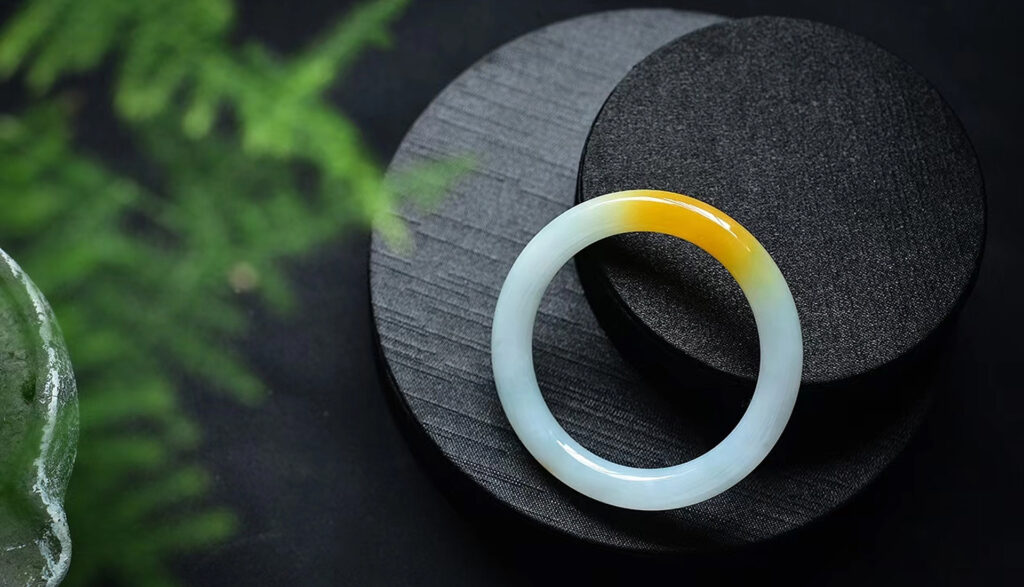
II. Reasons for Classification
Some of you might be wondering: these bracelets all look pretty similar, so why is there such a huge price difference? As the saying goes: “A slight difference in color can mean a tenfold difference in price!” Not to mention other factors that influence the price, such as the base material, quality, and design. Below, I’ll explain the five major factors that determine the pricing of jade bracelets.
1. Origin
Only experts with a keen eye can determine which mining area a piece of jadeite jewelry comes from; most people cannot. To simplify identification, terms like “old pit” or “new pit” are now commonly used. New pit jadeite has a loose structure and is slightly cheaper, while old pit jadeite, even if it lacks good translucency, still has a dense structure, hence its higher price.
2. Quality Experts typically classify jadeite into categories like “Hibiscus” or “Bean” quality, but this system already incorporates both translucency and color, which can easily confuse beginners. In reality, it’s enough to simply remember the hierarchy: Glass > Ice > Glutinous Ice > Glutinous > Bean.
3. Base
To use an analogy, if we compare jadeite to a piece of calligraphy or painting, the “base” of the jadeite is the paper used for the artwork, and the colors on the jade are the ink and pigments on the paper. If this “paper” is pure and lustrous enough, it is considered a good base—a factor in valuation that tests one’s aesthetic sensibility.
4. Color
Industry insiders use the phrase “thirty-six shades of water, seventy-two shades of bean, and one hundred and eight colors” to describe the vast variety of jadeite colors. Common hues include green, white, yellow, and purple, with green being the most popular.
For green jadeite, the key criteria are “correctness,” “vibrancy,” “depth,” and “harmony.” “Purity” refers to a green that is true and free of any impurities; “vibrancy” refers to a green that is vivid and bright; ‘depth’ refers to a green that is rich and intense; and “balance” refers to an even distribution of green.
In other words, the purer, more vivid, richer, and more evenly distributed the green, the higher the value of the jadeite. A top-tier full-color Imperial Green bracelet once sold at auction for over 200 million yuan—a truly staggering price!
How to Distinguish Between A-Grade, B-Grade, and C-Grade Jadeite!
When it comes to collecting or buying jadeite, you can’t avoid these three terms: A-grade, B-grade, and C-grade. Many beginners get confused by these concepts, even mistakenly believing that A-grade is inferior while B-grade and C-grade are genuine. As a result, they end up paying a high price for artificially treated fake jadeite, which can be harmful to their health if worn for a long time and has no collectible value. Today, I’ll thoroughly explain the fundamental differences between these three categories, breaking them down comprehensively in terms of definition, processing methods, material composition, appearance, value, and safety. After reading this, you’ll never be fooled by sellers again and will be able to easily distinguish genuine jadeite from fakes. Below, I’ll provide a detailed introduction.
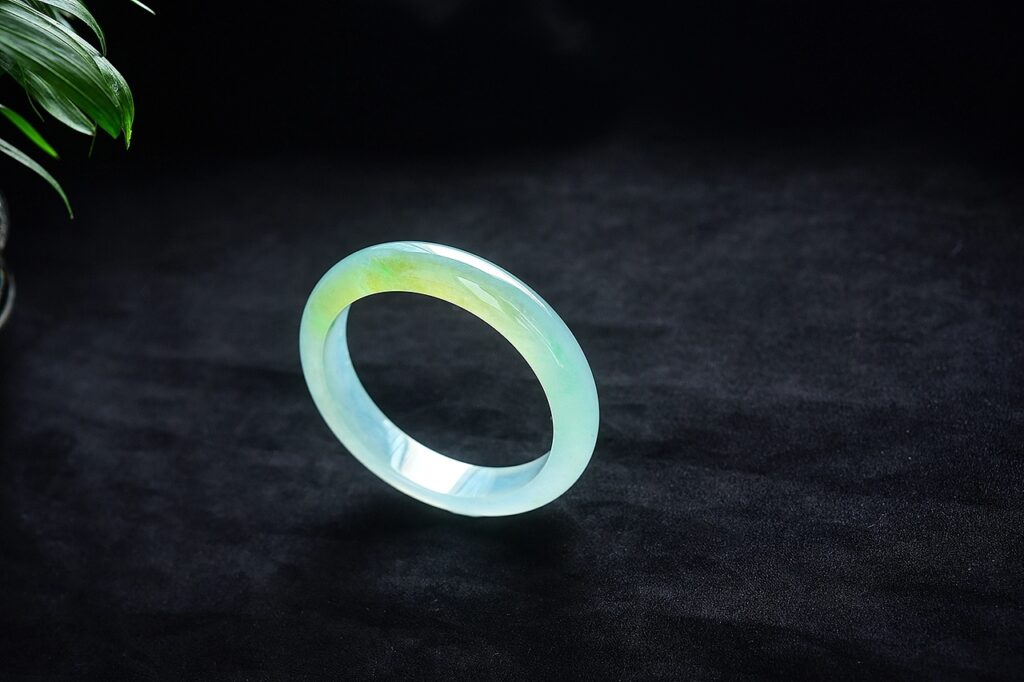
1. Check for impurities. Since jadeite forms naturally, genuine A-grade pieces inevitably contain some impurities, such as black, yellow, or gray inclusions. In contrast, treated B-grade jadeite has very few impurities because they’ve been corroded away by strong acids.
2. Examine the color roots. “Color roots” refer to a single spot or thin streak of slightly darker green within a jadeite piece. These darker green areas gradually transition into lighter shades, forming what is known as the color root. In natural A-grade jadeite, the color blends naturally and elegantly with the base. The green is distributed in patterns resembling tree roots or clusters, with distinct and clear outlines. In treated B-grade jadeite, the color roots are blurred and indistinct; the transition between color and base appears smudged like a traditional Chinese painting, showing spots, black dots, or fragmented patches floating within. Most often, this green appears on a grayish-white or light green background.
3. Examine the luster. Type A jadeite typically exhibits a strong vitreous luster. Type B jadeite has a dull luster, generally appearing waxy or resinous; the surface and shallow layers are relatively translucent, but the deeper you go, the more cloudy and opaque it becomes.
4. Examine the surface. When viewed under a high-power magnifying glass, the surface of Type A jadeite is smooth and fine-grained, with subtle unevenness and interlocking grain patterns visible due to differences in the hardness of various mineral particles. In lower-quality A-grade jadeite, grooves caused by poor polishing usually appear only in localized areas, particularly in recesses that are difficult to polish. The surface of B-grade jadeite is chaotic, with lines of varying straightness and curvature, presenting spider-web-like or tree-branch-like grooves. Due to differences in hardness, the surface exhibits an orange-peel-like texture. Heavily treated B-grade jadeite displays a cracked surface.
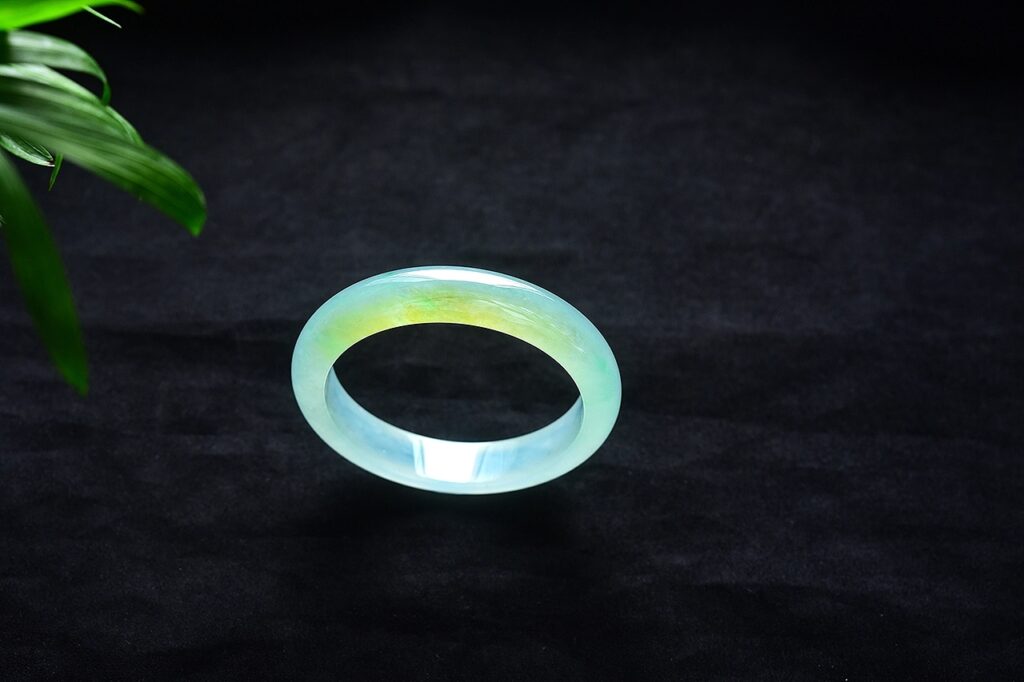
5. Examine the jadeite texture. The so-called jadeite texture refers to a structure where fibrous crystals and maculate crystals are interwoven, revealing star-like, needle-like, or plate-like lustrous surfaces, also known as “fly wings.” This is a very important characteristic of jadeite and a key indicator for authenticating genuine jadeite. However, this cannot be used as the sole evidence for distinguishing between A-grade and B-grade jadeite; it depends on the specific circumstances. Generally, the jadeite texture is distinct in A-grade jadeite. B-grade jadeite often has a blurred jadeite texture due to damage during processing; however, if the acid treatment is minimal, the jadeite texture remains visible and quite distinct.
6. Examine the color. Observe from two main perspectives: first, C-grade jadeite is often dyed very skillfully—leaving colorless areas untouched while intensifying colored areas to create an illusion, which can easily deceive buyers; second, pay attention to your first impression. After all, artificial coloring differs from natural hues. If the color of the jadeite appears unnatural at first glance, you should be wary.
7. Feel. Natural Grade A jadeite has a cool, glass-like texture to the touch. Treated Grade B and C jadeite, on the other hand, feels greasy to the touch.
8. Sound. When two pieces of natural Grade A jadeite are struck together, they produce a crisp, pleasant sound accompanied by an echo.
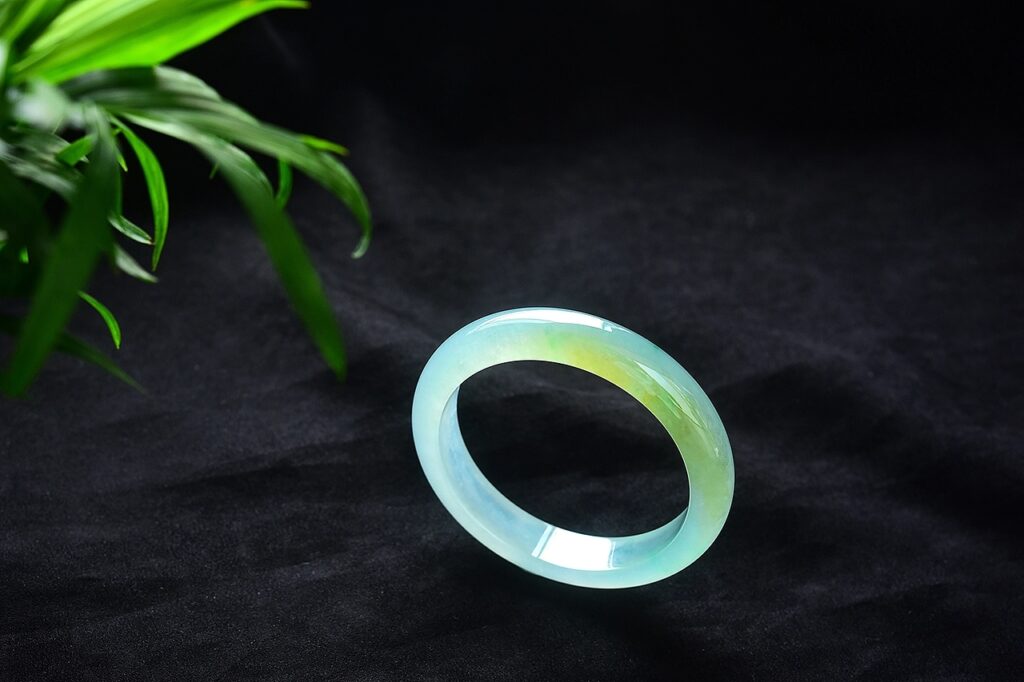
Grade B
When Grade B jadeite pieces are struck against each other, the sound produced is dull. To examine Grade B jadeite, hold it at an angle to the light and rotate it to find the angle where the surface reflection is clearly visible. Upon close inspection, you will notice numerous pits and pockmarks on the surface of Grade B jadeite, formed by the weathering, erosion, and peeling away of the surface silicone.
Additionally, the luster of B-grade jade differs from that of A-grade jade. A-grade jade has a dense structure and exhibits a glassy luster, whereas B-grade jade, due to resin injection, exhibits a waxy luster.
C-Grade
Jadeite: When viewed against the light, a close examination of the color distribution often reveals that the color follows the lines of cracks. This distribution appears unnatural and resembles a network of capillaries. Observing this pattern confirms that the color is not naturally present within the jadeite but has been introduced from the outside. Additionally, dyed colors lack depth and often appear to float on the surface of the jadeite. The colors also appear “lifeless” and “dull,” lacking the vitality of natural hues.
Simple Identification Methods Using the Naked Eye
① Water Test: Place a drop of water on the jade. If it forms a dewdrop that does not disperse for a long time, it is genuine jade; if the drop vanishes quickly, it is not A-grade.
② Tongue Test: The tip of the tongue feels a slight roughness when licking genuine jade; fake jade feels smooth.
③ Visual Inspection: Hold the jade toward a light source, such as sunlight or artificial light. If the color is translucent and the green is evenly distributed, it is genuine jade.
Is Glass-Type Jadeite Always More Expensive Than Ice-Type Jadeite?
As everyone knows, when evaluating jadeite, “type and water” are key criteria, and Glass-Type and Ice-Type are the two highest grades in terms of these qualities. Since Glass-Type clearly ranks higher than Ice-Type in terms of “type and water,” it stands to reason that its price would be higher than that of Ice-Type jadeite. However, it is incorrect to assume, in general, that Glass-Type jadeite is always more valuable than Ice-Type.
Generally speaking, the value of glass-type jadeite is indeed higher than that of ice-type jadeite—this is considered common knowledge in the jadeite industry. However, some people fall into the misconception that glass-type jadeite is always more valuable than ice-type jadeite. It is important to note that while “type and water” are key factors in determining a jadeite’s value, other aspects also play a significant role.
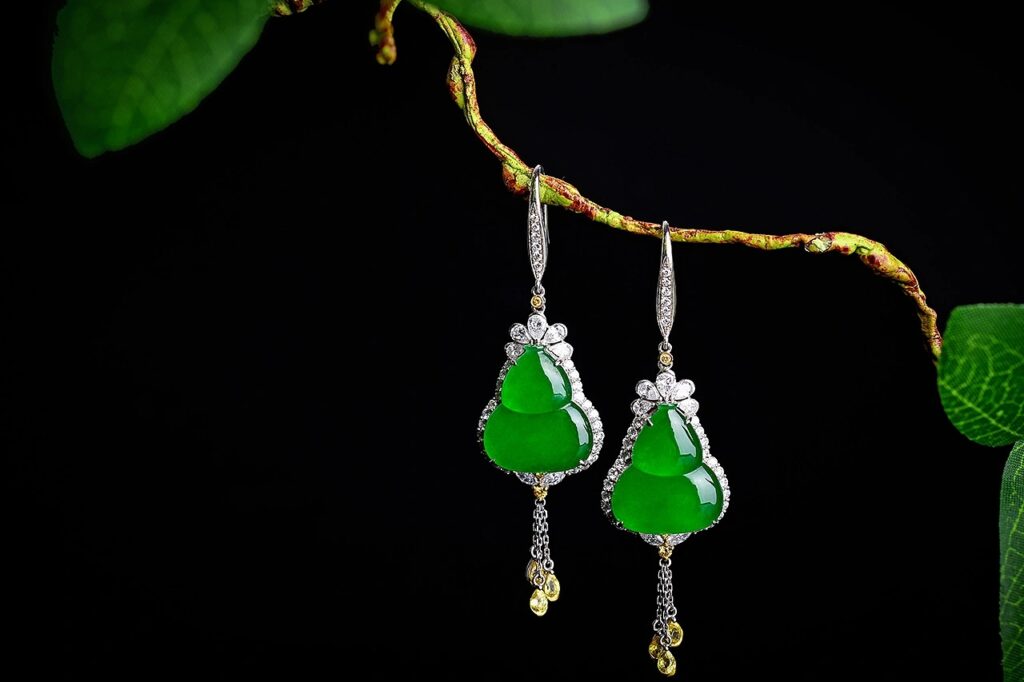
1. Quality
In terms of quality, the difference between glass-type jadeite and ice-type jadeite is self-evident. However, the distinction between high-grade ice-type jadeite and glass-type jadeite is more subtle. The transparency and texture of high-grade ice-type jadeite are similar to those of glass-type jadeite, giving it a feel that is “three parts warm and lustrous, seven parts cold and crisp.” It is important to distinguish this subtle difference.
Glass-type jadeite has a fine, translucent texture with visible fluorescence on the surface. It boasts high transparency and few impurities or flaws, making it of exceptionally high quality and, consequently, expensive. In most cases, glass-type jadeite is highly sought after, and even colorless varieties command a high price.
While ice-type jadeite is not as nearly transparent as glass-type jadeite, its transparency is second only to that of glass-type jadeite. Moreover, this lack of complete transparency lends the jadeite a unique, ethereal beauty, which has become a distinctive feature that makes it particularly appealing.
Because the crystal grains in ice-type jadeite are not as tightly packed as in glass-type jadeite, it contains more internal impurities and flaws. Consequently, ice-type jadeite is generally priced lower than glass-type jadeite. However, it is important to note that the value of jadeite is determined by more than just its type and clarity.
2. Color
Most glass-type jadeite has a relatively limited color palette, typically consisting of colorless and green hues, with colorless glass-type jadeite being the most common; other colors are quite rare. Compared to glass-type jadeite, ice-type jadeite offers a somewhat richer variety of colors. While colorless and green remain the primary hues, ice-type jadeite in other colors occasionally appears, providing buyers with more options.
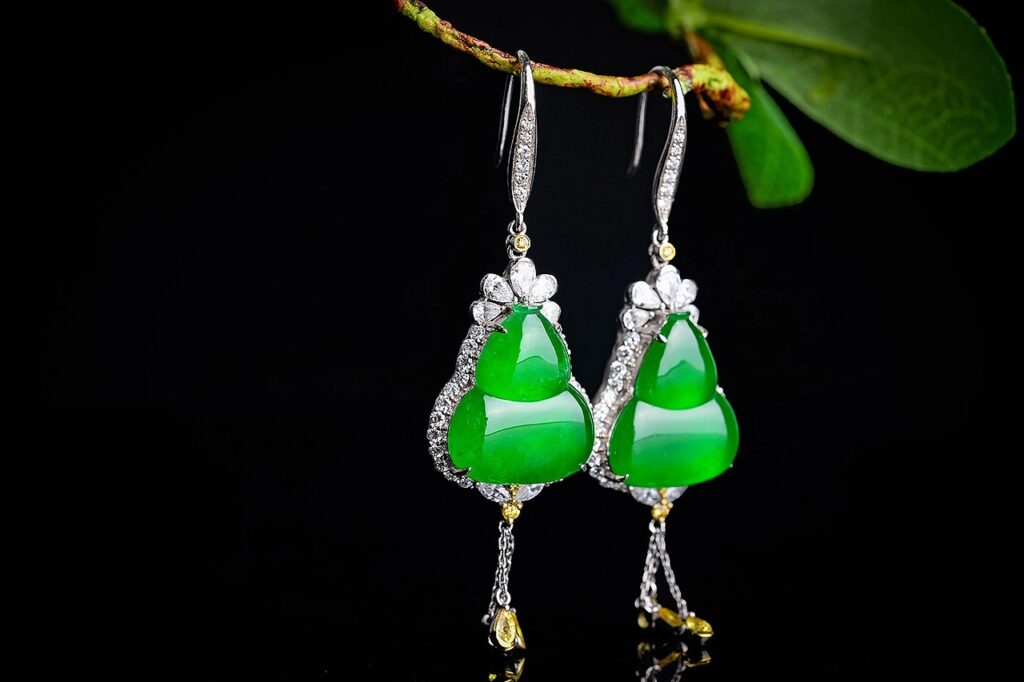
Additionally, there is a type of color in jadeite known as “floating flowers,” which can be either blue or green. Jadeite with “floating flowers” is highly prized, and such patterns are relatively rare in glass-type jadeite because its dense structure makes it nearly impossible for color-forming ions to penetrate. Since glutinous-type and bean-type jadeite lack sufficient transparency, “floating flowers” are naturally invisible in them. This feature is almost exclusive to ice-type jadeite, enriching its color palette.
If the “floating flowers” in ice-type jadeite are lively, graceful, and highly aesthetic, it is quite normal for its price to exceed that of glass-type jadeite.
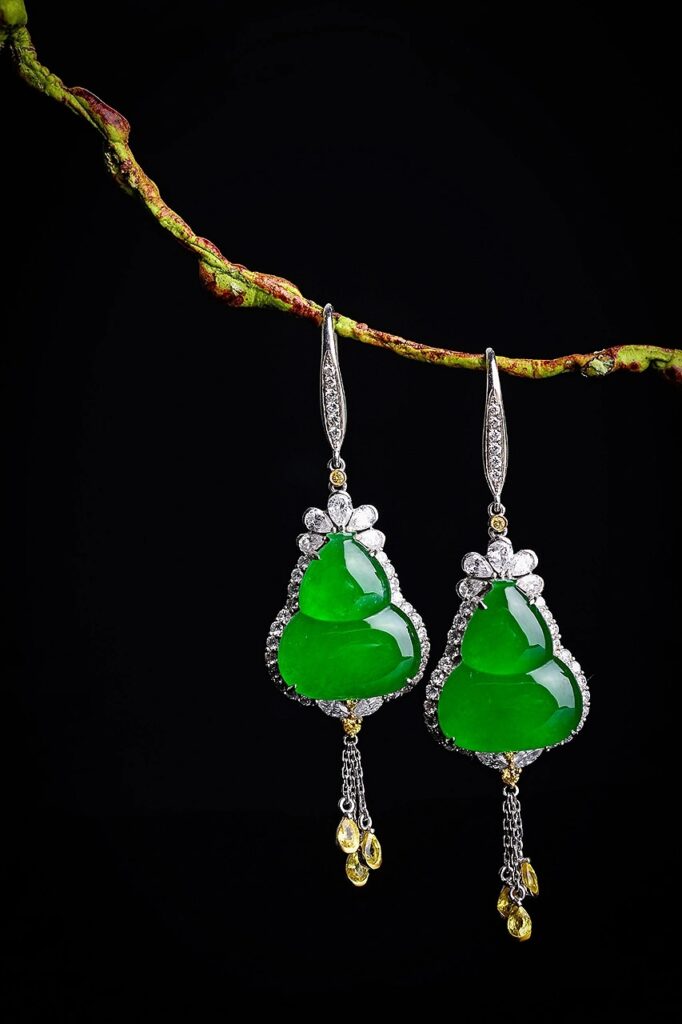
Green is the most prized color in jadeite, and full-green jadeite is naturally very valuable. There are instances where a piece of high-ice-type full-green jadeite commands a higher price than glass-type jadeite; for example, at auctions, a high-ice-type full-green jadeite piece has been sold for nearly ten million yuan.
3. Carving Craftsmanship
The value of plain jadeite can be determined by its quality and color, but when it comes to jadeite pendants and other jewelry where carving is involved, one must pay close attention, as carving craftsmanship is a crucial factor.
Generally speaking, when the jadeite material is of high quality, the carver will carefully plan the design to avoid wasting the raw material and incurring losses. Consequently, with high-quality jadeite, the cost of trial and error is high, making it rare to find pieces with extremely poor carving.
Jade carving is further divided into hand-carved and machine-carved jade, and there is a difference in value between the two. Hand-carved pieces may be the work of a master, featuring exquisite creativity and craftsmanship, and the added value of a renowned artist’s masterpiece is naturally higher.
In such cases, it is essential to analyze the situation rationally. While it is rare to find glass-type jadeite with extremely poor craftsmanship, a piece of ice-type jadeite that is rich in creativity and cultural value is also well worth purchasing.
The above description clearly outlines the core principles of selecting and appraising jadeite. The “quality” of jadeite—specifically, the fineness and density of its internal crystals—is the foundation for distinguishing its grade. From “glass-like” to “bean-like” quality, both texture and value decrease progressively. While jadeite bracelets that appear similar may vary significantly in price, the key lies in differences across multiple intangible dimensions—such as the details of texture and clarity, imperfections, color, design, and rarity. The true value of jadeite cannot be determined by visual inspection alone.